


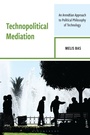
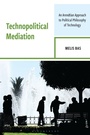
Technopolitical Mediation
An Arendtian Approach to Political Philosophy of Technology
Will be published approx. on 11. June 2026
Book
Hardback
208 pages
978-1-6669-5716-7 (ISBN)
Description
Technologies, by mediating our political interpretations and interactions, inform the way in which political communities are formed.
This book investigates technologies and their impact on socio-politics, focusing on Hannah Arendt's political theory. It goes beyond equating power with politics, which inevitably leads to a limited understanding of the political implications of technology. Melis Bas argues that technologies play a much more significant role in politics than just exerting power over individuals. They condition, frame, create, and organize politics. Through the lens of Hannah Arendt's political hermeneutics, Bas illuminates the interactional relationship between technology and politics, thus enabling an understanding of politics beyond its manifestation as power. Furthermore, Arendt's understanding of intersubjectivity-based as it is on a dynamic relationship between the self, the world, and other people-leaves room to examine the associated role of material conditions. Developing an alternative framework of politics of technology based on Arendt's political theory requires a perspective on technology that can address how the world becomes politically meaningful.
This book investigates technologies and their impact on socio-politics, focusing on Hannah Arendt's political theory. It goes beyond equating power with politics, which inevitably leads to a limited understanding of the political implications of technology. Melis Bas argues that technologies play a much more significant role in politics than just exerting power over individuals. They condition, frame, create, and organize politics. Through the lens of Hannah Arendt's political hermeneutics, Bas illuminates the interactional relationship between technology and politics, thus enabling an understanding of politics beyond its manifestation as power. Furthermore, Arendt's understanding of intersubjectivity-based as it is on a dynamic relationship between the self, the world, and other people-leaves room to examine the associated role of material conditions. Developing an alternative framework of politics of technology based on Arendt's political theory requires a perspective on technology that can address how the world becomes politically meaningful.
More details
Series
Language
English
Place of publication
United States
Publishing group
Bloomsbury Publishing Plc
Target group
Professional and scholarly
Illustrations
5 tables
Dimensions
Height: 229 mm
Width: 152 mm
ISBN-13
978-1-6669-5716-7 (9781666957167)
Copyright in bibliographic data is held by Nielsen Book Services Limited or its licensors: all rights reserved.
Schweitzer Classification
Other editions
Additional editions
E-Book
05/2026
Bloomsbury Academic
€94.99
Available for download
E-Book
05/2026
Bloomsbury Academic
€94.99
Available for download
Person
Melis Bas is Lecturer in New Media and Digital Culture at the University of Amsterdam, The Netherlands.
Content
Introduction: Technology, Power and Politics
PART I
1. Politics as Interaction: Hannah Arendt and Political Theory
2. Arendt, Phenomenology, and Technology
PART II
4. Technological Mediation of Common Sense
5. Technological Mediation of Intersubjectivity
Conclusion
Index
PART I
1. Politics as Interaction: Hannah Arendt and Political Theory
2. Arendt, Phenomenology, and Technology
PART II
4. Technological Mediation of Common Sense
5. Technological Mediation of Intersubjectivity
Conclusion
Index