


The Supreme Guide to Writing
Published on 10. February 2024
Book
Hardback
240 pages
978-0-19-775435-1 (ISBN)
Description
Learn to become a great writer and master modern grammar rules with the U.S. Supreme Court justices as your guide.
In The Supreme Guide to Writing, law professor Jill Barton cuts through competing advice to detail definitive grammar rules based on the nation's unequivocal authority: the U.S. Supreme Court. The book details a revolution in legal writing, with the justices progressing beyond the drab and technical for the deft and lyrical. With the first-ever analysis of 10,000 pages of Court opinions, the book pinpoints grammar and style rules that the justices follow--and describes the outdated rules they leave behind.
Today's Court casts aside formality in favor of pop-culture references, contractions, and approachable language. In addition to establishing grammar and style rules, the book illustrates best practices with hundreds of examples of the justices' most brilliant sentences from the past several years. With step-by-step instructions, the book describes how to emulate the justices' writing styles by breaking down their strategies and techniques. It shows how Justice Elena Kagan lands amusing quips and weaves together down-to-earth analogies, how Justice Neil Gorsuch executes witty retorts, and how Chief Justice John Roberts pens unforgettable lines with understated style and humor. The best writing appears effortless, but it also takes tremendous effort. Legal writing even more so. The Supreme Guide to Writing provides a nonpartisan look at how the justices present their words to the world.
In The Supreme Guide to Writing, law professor Jill Barton cuts through competing advice to detail definitive grammar rules based on the nation's unequivocal authority: the U.S. Supreme Court. The book details a revolution in legal writing, with the justices progressing beyond the drab and technical for the deft and lyrical. With the first-ever analysis of 10,000 pages of Court opinions, the book pinpoints grammar and style rules that the justices follow--and describes the outdated rules they leave behind.
Today's Court casts aside formality in favor of pop-culture references, contractions, and approachable language. In addition to establishing grammar and style rules, the book illustrates best practices with hundreds of examples of the justices' most brilliant sentences from the past several years. With step-by-step instructions, the book describes how to emulate the justices' writing styles by breaking down their strategies and techniques. It shows how Justice Elena Kagan lands amusing quips and weaves together down-to-earth analogies, how Justice Neil Gorsuch executes witty retorts, and how Chief Justice John Roberts pens unforgettable lines with understated style and humor. The best writing appears effortless, but it also takes tremendous effort. Legal writing even more so. The Supreme Guide to Writing provides a nonpartisan look at how the justices present their words to the world.
Reviews / Votes
Taking a unique approach as a DIY instructional guide on the art and craft of writing, Jill Barton's The Supreme Guide to Writing: Become a great writer with the U.S. Supreme Court as Your Guide from the Oxford University Press is essentially a complete, comprehensive, and thoroughly 'reader friendly' in terms of content, organization and presentation. * Midwest Book Review * This is a brief and straightforward reference work that, given it is based on US legal writing, is refreshingly accessible and potentially useful for the non-US lawyer. The rules identified are to the point and of general application: keep sentences short; use the active voice; brevity is key. * Tom Proverbs-Garbett, The Law Society Gazette * Very few books offer pointed, nuts-and-bolts guidance-as opposed to general advice-on legal writing. This book does. It is directed mainly at an US audience, but there may be tips that those wishing to improve their writing styles may profit from. * Journal of the Commonwealth Lawyers' Association *More details
Language
English
Place of publication
New York
United States
Target group
Professional and scholarly
Dimensions
Height: 235 mm
Width: 156 mm
Weight
1030 gr
ISBN-13
978-0-19-775435-1 (9780197754351)
Copyright in bibliographic data is held by Nielsen Book Services Limited or its licensors: all rights reserved.
Schweitzer Classification
Other editions
Additional editions
Jill Barton
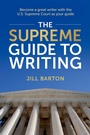
The Supreme Guide to Writing
Book
12/2024
Oxford University Press Inc
€26.50
Shipment within 15-20 days
Person
Jill Barton has published two legal writing textbooks and hundreds of news articles as a journalist for the Associated Press, reaching more than a billion readers worldwide. She currently serves as a professor and the legal writing director at the University of Miami School of Law. She authored So Ordered: The Writer's Guide for Aspiring Judges, Judicial Clerks, and Interns. And she coauthored The Handbook for the New Legal Writer, a popular law school textbook now in its third edition, that aims to demystify the process of legal writing and inspire beginning and experienced legal writers. She has worked as an appellate judicial clerk, conducted workshops for regional and national law firms, and presented her work at conferences nationally, becoming a leading voice in the conversation on the best practices in writing.
Content
Introduction
Part I ~ Punctuation Marks
Chapter 1. Apostrophes
Chapter 2. Brackets
Chapter 3. Colons
Chapter 4. Commas
Chapter 5. Ellipses
Chapter 6. Em-dash
Chapter 7. En-dash
Chapter 8. Emoticon and Emojis
Chapter 9. Exclamation marks
Chapter 10. Hyphens
Chapter 11. Parentheses
Chapter 12. Periods
Chapter 13. Question marks
Chapter 14. Quotation marks
Chapter 15. Semicolons
Chapter 16. Spaces
Part II ~ Words
Chapter 17. Adjectives and Adverbs
Chapter 18. Alliteration and Repetition
Chapter 19. Because vs. Since
Chapter 20. Conjunctions
Chapter 21. Modifiers
Chapter 22. Names and Titles
Chapter 23. Negatives
Chapter 24. Numbers
Chapter 25. Prepositions
Chapter 26. Pronouns
Chapter 27. Qualifiers and Intensifiers
Chapter 28. Relative Pronouns: When, Where, Who, Whom, and Whose
Chapter 29. Short Words-and Sentences
Chapter 30. Split Infinitives
Chapter 31. Transitions
Chapter 32. Verbs
Closing
Part I ~ Punctuation Marks
Chapter 1. Apostrophes
Chapter 2. Brackets
Chapter 3. Colons
Chapter 4. Commas
Chapter 5. Ellipses
Chapter 6. Em-dash
Chapter 7. En-dash
Chapter 8. Emoticon and Emojis
Chapter 9. Exclamation marks
Chapter 10. Hyphens
Chapter 11. Parentheses
Chapter 12. Periods
Chapter 13. Question marks
Chapter 14. Quotation marks
Chapter 15. Semicolons
Chapter 16. Spaces
Part II ~ Words
Chapter 17. Adjectives and Adverbs
Chapter 18. Alliteration and Repetition
Chapter 19. Because vs. Since
Chapter 20. Conjunctions
Chapter 21. Modifiers
Chapter 22. Names and Titles
Chapter 23. Negatives
Chapter 24. Numbers
Chapter 25. Prepositions
Chapter 26. Pronouns
Chapter 27. Qualifiers and Intensifiers
Chapter 28. Relative Pronouns: When, Where, Who, Whom, and Whose
Chapter 29. Short Words-and Sentences
Chapter 30. Split Infinitives
Chapter 31. Transitions
Chapter 32. Verbs
Closing