

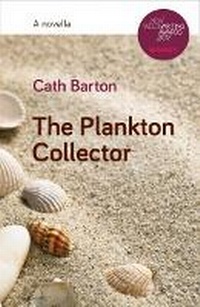
Plankton Collector, The
A Novella
Published on 19. September 2018
Book
Paperback/Softback
84 pages
978-1-9997700-7-5 (ISBN)
Description
In different guises, the Plankton Collector visits members of a family torn apart by grief and regret. He teaches them the difference between the discarded weight of unhappy memories and the lightness borne by happiness recalled. 'A delicate paean for coming together, full of understanding for the quirks and pitfalls and ultimate goodness in human nature.' Mavis Cheek -- Cyngor Llyfrau Cymru
Reviews / Votes
A family already struggling is flung headlong apart from each other in grief....In this atmospheric novella, the mysterious Plankton Collector visits members of a family torn apart by grief and regret. He comes in different guises. For ten-year old Mary, he is Mr Smith who takes her on a train journey to the seaside. Her mother, Rose, meets him as Stephen, by her son's graveside. Each manifestation teaches the difference between the discarded weight of unhappy memories and the lightness borne by happiness recalled. Rose's youngest, Bunny, encounters him as the gardener. For husband and father David, meanwhile, the meeting is with a love from his youth, Colin. And long-lost Uncle Barnaby takes the children for a week's holiday during which their parents begin a reconciliation.
A wound will heal, and knit them back together....
All visitors are manifestations of the Plankton Collector who teaches those he encounters the difference between the discarded weight of unhappy memories and the lightness borne by happiness recalled.
'A beautifully controlled mix of magical realism and nature writing about time, healing, trauma and the fluid, unreliable nature of memory.'
David Lloyd, co-judge of the New Welsh Writing Awards 2017, novella category.
'Painterly... lush dreamy prose creates a vivid landscape, while its lyricism transports the reader. Cleverly creates a universe of new realities.'
Cathryn Summerhayes
'Cath Barton writes her story... with such confidence and in prose that is so delightful to read, that I just couldn't put it down. It's beautiful. A delicate paean for coming together, full of understanding for the quirks and pitfalls and ultimate goodness in human nature.' Mavis Cheek
'A brilliantly evoked examination of memory and innocence... delivers
a kaleidoscope of compelling voices united by a spectral visitor, not from the heights, but the apparent depths. Haunting.' James Clammer, author of Why I Went Back
'Cath Barton tells the story... with a lyrical voice that is very much her own. This beautifully structured novella leads the reader to a resolution that is both moving and deeply satisfying.' Francesca Rhydderch, author of The Rice Paper Diaries
'In haunting, exquisite prose the author explores the disconnects that exist within families as each deals with the internal difficulties inherent in life as it progresses. Moments of happiness can be overshadowed by loss, yet it is the former that should be granted attention and treasured... In this short novella a world has been conjured that recognises the depths of unhappiness yet offers hope. It reminds that reactions when grieving are neither uniform nor prescriptive, but that individuals, once known, are never entirely lost.' Jackie Law, @followthehens
Haunts like memory, shimmering in and out of love and loss with unexpected, poignant hope. Richly lyrical, beautifully original.' Helen Sedgwick, author of The Growing Season
'A text to savour, one of those that remain with the reader well after the end. A wonderful blend of the imaginary and the real, both haunting and deeply moving.' Curtis Bausse -- Publisher: New Welsh Review Cath Barton's debut novella won the New Welsh Writing Awards 2017, and it is a joy to see it published in full here in New Welsh Review's New Welsh Rarebyte series, alongside Mandy Sutter's Bush Meat and Eluned Gramich's Woman Who Brings the Rain - three slim books that support this year's Man Booker Prize judges' view that long doesn't necessarily equal good. In each case here, small is beautiful.
One of the beauties of The Plankton Collector is the perfectly paced, hypnotic rhythm of the writing. The slightly formal language, the use of sometimes very short sentences or slightly unusual syntax, the repetition of quiet commands, 'Look ...', 'And look ...', But look ...', give the book a slow, dream-like quality that immediately evokes the experience of grief. One of the ways in which we cope with the tragedies of life and make sense of them is to separate out, to tell the story as if it belonged to somebody else: 'Look now for a moment at Mary in her bedroom, lost in her book. She hears the commotion, but as if it is very far away, as if it is something happening to another family.'
Mary's older brother Edgar is dying. There is nothing anyone can do. The family waits in limbo until the inevitable happens, which simply moves them into another limbo: ' ... when something or someone comes along to throw our routine in the air we are not content with the disordered way in which the pieces come down. We crave the old routine. What we know suits us, imperfect as it is.' But there is no going back. Mary is ten years old and withdraws by curling up with a book; twelve-year-old Bunny, the middle child, curls up in his bed. Father disappears himself by spending longer and longer hours at the office, often not coming home until after even Mother has gone to bed. The family is fractured, each of them alone in their grief, with no idea how to move forward.
And now each of them is visited by the Plankton Collector, who 'goes to those who are ready and willing to receive his help'. He appears in different guises. For Mary, he is Mr Smith, who takes her on a trip to the seaside and who has a kitten called Charlie, which was Edgar's middle name; for Mother, Rose, he is Stephen, who shares time with her at Edgar's grave and who has the same name as a boy she had a teenage crush on; for Bunny, he is Mr George the gardener, who helps him tidy the den he and Edgar had made in the garden; and for Father, David, he is Colin - the name of David's young and secret love, who died in the war. And finally, for them all, he is Uncle Barnaby, who takes the children away to an island for a week, giving Mother and Father time alone together, giving them all space to heal.
Have I given away too much here? I don't think so. The beauty lies in the telling, in the way Cath Barton captures the individual and the universal, so that, just as the Plankton Collector shapeshifts his identity to suit each character, so this novella will speak differently to us all. -- Suzy Ceulan Hughes @ www.gwales.com
More details
Language
English
Place of publication
United Kingdom
Publishing group
Parthian Books
Dimensions
Height: 165 mm
Width: 120 mm
ISBN-13
978-1-9997700-7-5 (9781999770075)
Copyright in bibliographic data and cover images is held by Nielsen Book Services Limited or by the publishers or by their respective licensors: all rights reserved.
Schweitzer Classification