

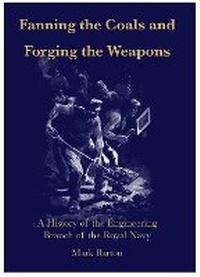
Fanning the Coals and Forging the Weapons
A History of the Engineering Branch of the Royal Navy
Published on 13. August 2025
Book
Hardback
270 pages
978-1-917109-52-9 (ISBN)
Description
Throughout the past 200 years of naval history, naval engineers have made a significant contribution to operations afloat, ashore and in the air, and many have received gallantry awards yet few of us are familiar with their stories. This comprehensive work is the first publicly available book that follows the history of the Engineering Branch of the Royal Navy, looking at how it came to be established in 1837 and then following the Branch through its challenges as it and the Navy developed, bringing the account right up to date. It is a celebration of the members of the Branch and tells the stories of many of the acts of heroism undertaken by naval engineers, including the VC won in support of the war in Crimea and all the members of the Branch who won Albert Medals and George Crosses. It links this into the changes in employment, training, status and branch structures that occurred. This book offers the opportunity to enjoy and understand this rich history, to enjoy the stories of the branch and revel in the deeds of those that came before us. As Admiral Le Bailey quoted:
In spite of all fictions to the contrary, the engineering personnel are combatants: they either sink or swim with the ship and their participation in the sinking process is attended by trials of morale of a very severe and exceptional character.
Therefore, whether you are an engineer, technician, artificer, mechanician, mechanic, torpedoman, greenie, grubber, shipwright, plumber or stoker or related to one - or just wish to understand this group of people - then I hope you enjoy this book.
In spite of all fictions to the contrary, the engineering personnel are combatants: they either sink or swim with the ship and their participation in the sinking process is attended by trials of morale of a very severe and exceptional character.
Therefore, whether you are an engineer, technician, artificer, mechanician, mechanic, torpedoman, greenie, grubber, shipwright, plumber or stoker or related to one - or just wish to understand this group of people - then I hope you enjoy this book.
Reviews / Votes
"This book celebrates our Branch and all we have done in our rich history to contribute to fighting effectiveness through driving change, it celebrates our place as the backbone of the Royal Navy, capturing it's rich history that has always been at the forefront of driving change and inspiring the generations of Naval Engineers to come on their vital professional formation and career contribution to our National Stability, Security and Prosperity.I commend this book to you and congratulate the author and contributors who had the vision to create it. Embrace this rich history, share in the bravery and brilliance, delight in our diversity and celebrate the contribution that the Engineering Branch has made to the evolution and success of the Royal Navy. We have much to be proud of."
More details
Language
English
Place of publication
Portsmouth
United Kingdom
Illustrations
211
Dimensions
Height: 234 mm
Width: 156 mm
Thickness: 20 mm
Weight
1200 gr
ISBN-13
978-1-917109-52-9 (9781917109529)
Copyright in bibliographic data and cover images is held by Nielsen Book Services Limited or by the publishers or by their respective licensors: all rights reserved.
Schweitzer Classification
Person
Dr Mark Barton BEng MA PhD CEng FRINA served thirty-five years in the Royal Navy as a Marine Engineer Officer retiring as a Commander with a Masters in Defence Studies and having completed a Doctorate on the Patriotic Fund at Lloyd's. He now has a portfolio of roles within Naval Architecture and Naval History. As a naval architect he is operating in academia as a lecturer and an accreditor while also being Chairman of Professional Affairs at RINA and a regular contributor to The Naval Architect. As a naval historian he is Honorary Secretary of the Society for Nautical Research and has published articles for various journals mostly on engineering/naval architecture or in the area of his first book British Naval Swords and Swordsmanship. Despite the technical nature of the subjects, it is the social history that interests him and his research continues in these arenas.