

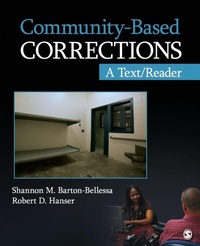
Community-Based Corrections
A Text/Reader
1st Edition
Published on 2. March 2011
Book
Paperback/Softback
656 pages
978-1-4129-8746-2 (ISBN)
Description
An innovative text/reader featuring the best of both worlds: author-written text and carefully selected articles
Presenting a more practical viewpoint than other texts available for the course, this book offers a unique textbook/reader alternative to the traditional textbook format. The book is divided into 11 author-written sections that present basic concepts, key terms, and recent data. Each section is followed by two to three cutting-edge, research-based articles.
Presenting a more practical viewpoint than other texts available for the course, this book offers a unique textbook/reader alternative to the traditional textbook format. The book is divided into 11 author-written sections that present basic concepts, key terms, and recent data. Each section is followed by two to three cutting-edge, research-based articles.
More details
Series
Language
English
Place of publication
Thousand Oaks
United States
Target group
College/higher education
Dimensions
Height: 235 mm
Width: 191 mm
Thickness: 35 mm
Weight
1208 gr
ISBN-13
978-1-4129-8746-2 (9781412987462)
Copyright in bibliographic data and cover images is held by Nielsen Book Services Limited or by the publishers or by their respective licensors: all rights reserved.
Schweitzer Classification
Persons
Shannon M. Barton-Bellessa is a professor of criminology and criminal justice at Indiana State University. She earned her undergraduate degree from Kentucky Wesleyan College, her master's degree from Eastern Kentucky University, and her PhD from the University of Cincinnati. Her journal publications have been in the area of community corrections, correctional officer job satisfaction, cognitive programming, and the juvenile justice system. Robert D. Hanser is a past professor of criminal justice and the coordinator of the Criminal Justice program at the University of Louisiana at Monroe. He is now a professor of Marriage and Family Therapy at the University of Louisiana at Monroe. Dr. Hanser has a PhD in marriage and family therapy and a PhD in criminal justice. He is a national certified counselor, a licensed professional counselor in the states of Louisiana and Texas, a licensed addiction counselor, a certified hypnotherapist, and a certified anger management therapist. He is the President Elect for the Louisiana Marriage and Family Counselor chapter of the Louisiana Counseling Association. He is also the Board President for the Arkansas Association for the Treatment and Prevention of Sexual Abuse (AR-ATSA). He holds a gubernatorial appointment on the Reentry Advisory Council of Louisiana, serves on the Board of Directors of the Louisiana Coalition Against Domestic Violence (LCADV), a member of the Louisiana Domestic Abuse Fatality Review (LADAFR) board. has been appointed to the Professional Educational Counsel with the American Correctional Association (ACA), and is an Executive Counselor for the Corrections section for the Academy of Criminal Justice Sciences (ACJS). He is a past member of the 4th Judicial District's Youth Services Planning Board, a past therapeutic director of the 4th Judicial District Drug Court, and is the director of the Northeast Louisiana Batterer's Intervention Program. For fourteen years, he was the Clinical Director for New Day Recovery with facilities in West Monroe and Shreveport. In addition, for 13 years, he was the program director at Richwood Correctional Center (RCC), Madison Parish Correctional Center (MPCC), and the Louisiana Transitional Center for Women (LTCW). He has written Introduction to Corrections (3rd ed.), Community Corrections (2nd ed.), Correctional Counseling, Multiculturalism in the Criminal Justice System, Special Needs Offenders, and over 65 other textbooks, anthologies, and peer-reviewed articles.
Content
Foreword
Preface
Acknowledgments
Section I. History and Development of Community-Based Corrections
How to Read a Research Article
Readings:
1. The Ethics of Community-Based Sanctions, by Andrew von Hirsch
2. What Influences Offenders' Willingness to Serve Alternative Sanctions? by David C. May and Peter B. Wood
3. When the Policy Becomes the Problem: Criminal Justice in the New Millennium, by Sara Steen and Rachel Bandy
Section II. Pretrial Release and Diversion
Readings:
4. The Impact of Gender and Race-Ethnicity in the Pretrial Release Process, by Stephen Demuth and Darrell Steffensmeier
5. State Administration of Drug Courts: Exploring Issues of Authority, Funding, and Legitimacy, by Cary Heck and Aaron Roussell
Section III. Restorative Justice
Readings:
6. Restorative Practices in Instituttional Settings and at Release: Victim Wrap Around Programs, by Martha Henderson Hurley
7. The Effectiveness of Restorative Justice Practices: A Meta-Analysis, by Jeff Latimer, Craig Dowden, and Danielle Muise
Section IV. The Viability of Treatment Perspectives
Readings:
8. A Quasi-Experimental Evaluation of Thinking for a Change: A "Real-World" Application, by Christopher T. Lowenkamp, Dana Hubbard, Matthew D. Makarios, and Edward J. Latessa
9. Offender Coercion in Treatment: A Meta-Analysis of Effectiveness, by Karen K. Parhar, J. Stephen Wormith, Dena M. Derkzen, and Adele M. Beauregard
Section V. Assessment and Risk Prediction
Readings:
10. The LSI-R and the COMPAS: Validation Data on Two Risk-Needs Tools, by Tracy L. Fass, Kirk Heilbrun, David DeMatteo, and Ralph Fretz
11. Can 14,737 Women Be Wrong? A Meta-Analysis of the LSI-R and Recidivism for Female Offenders, by Paula Smith, Francis T. Cullen, and Edward J. Latessa
Section VI. Probation Management and Case Planning
Readings:
12. Attorney Views on the Use of Private Agencies for Probation Supervision and Treatment, by Leanne Fiftal Alarid and Christine S. Schloss
13. From the Inside: The Meaning of Probation to Probationers, by Brandon K. Applegate, Hayden P. Smith, Alicia H. Sitren, and Nicolette Fariello Springer
14. Gender Matters: Differences in State Probation Officer Stress, by Terry Wells, Sharla Colbert, and Risdon N. Slate
Section VII. Community-Based Residential Intermediate Sanctions
Readings:
15. Removing a Nail From the Boot Camp Coffin: An Outcome Evaluation of Minnesota's Challenge Incarceration Program, by Grant Duwe and Deborah Kerschner
16. Post-Release Substance Abuse Treatment for Criminal Offenders: A Cost-Effectiveness Analysis, by Kathryn E. McCollister, Michael T. French, James A. Inciardi, Clifford A. Butzin, Steven S. Martin, and Robert M. Hooper
Section VIII. Community-Based Nonresidential and Economic Intermediate Sanctions
Readings:
17. The Effectiveness of Community Service Sentences Compared to Traditional Fines for Low-Level Offenders, by Jeffrey A. Bouffard and Lisa R. Mufti
18. Day Reporting Center Completion: Comparison of Individual and Multilevel Models, by Amy Craddock
19. Under Surveillance: An Empirical Test of the Effectiveness and Consequences of Electronic Monitoring, by Kathy G. Padgett, William D. Bales, and Thomas G. Blomberg
Section IX. Parole Management, Case Planning, and Reentry
Readings:
20. Does Parole Work? - Revisited: Reframing the Discussion of the Impact of Postprison Supervision on Offender Outcome, by Melinda D. Schlager and Kelly Robbins
21. "Punishment on the Installment Plan": Individual-Level Predictors of Parole Revocations in Four States, by Sara Steen and Tara Opsal
Section X. Juvenile Offenders
Readings:
22. An Experimental Juvenile Probation Program: Effects on Parent and Peer Relationships, by Eve Brank, Jodi Lane, Susan Turner, Terry Fain, and Amber Sehgal
23. Reconciling the Differences Between the "Gender-Responsive" and the "What Works" Literatures to Improve Services for Girls, by Dana Jones Hubbard and Betsy Matthews
Section XI. Specialized and Problematic Offender Typologies in a Changing Era
Readings:
24. Closing the Revolving Door? Substance Abuse Treatment as an Alternative to Traditional Sentencing for Drug-Dependent Offenders, by Tara D. Warner and John H. Kramer
25. Assessment of Community Reintegration on Planning for Sex Offenders: Poor Planning Predicts Recidivism, by Gwenda M. Willis and Randolph C. Grace
Glossary
References
Credits and Sources
Index
About the Authors
Preface
Acknowledgments
Section I. History and Development of Community-Based Corrections
How to Read a Research Article
Readings:
1. The Ethics of Community-Based Sanctions, by Andrew von Hirsch
2. What Influences Offenders' Willingness to Serve Alternative Sanctions? by David C. May and Peter B. Wood
3. When the Policy Becomes the Problem: Criminal Justice in the New Millennium, by Sara Steen and Rachel Bandy
Section II. Pretrial Release and Diversion
Readings:
4. The Impact of Gender and Race-Ethnicity in the Pretrial Release Process, by Stephen Demuth and Darrell Steffensmeier
5. State Administration of Drug Courts: Exploring Issues of Authority, Funding, and Legitimacy, by Cary Heck and Aaron Roussell
Section III. Restorative Justice
Readings:
6. Restorative Practices in Instituttional Settings and at Release: Victim Wrap Around Programs, by Martha Henderson Hurley
7. The Effectiveness of Restorative Justice Practices: A Meta-Analysis, by Jeff Latimer, Craig Dowden, and Danielle Muise
Section IV. The Viability of Treatment Perspectives
Readings:
8. A Quasi-Experimental Evaluation of Thinking for a Change: A "Real-World" Application, by Christopher T. Lowenkamp, Dana Hubbard, Matthew D. Makarios, and Edward J. Latessa
9. Offender Coercion in Treatment: A Meta-Analysis of Effectiveness, by Karen K. Parhar, J. Stephen Wormith, Dena M. Derkzen, and Adele M. Beauregard
Section V. Assessment and Risk Prediction
Readings:
10. The LSI-R and the COMPAS: Validation Data on Two Risk-Needs Tools, by Tracy L. Fass, Kirk Heilbrun, David DeMatteo, and Ralph Fretz
11. Can 14,737 Women Be Wrong? A Meta-Analysis of the LSI-R and Recidivism for Female Offenders, by Paula Smith, Francis T. Cullen, and Edward J. Latessa
Section VI. Probation Management and Case Planning
Readings:
12. Attorney Views on the Use of Private Agencies for Probation Supervision and Treatment, by Leanne Fiftal Alarid and Christine S. Schloss
13. From the Inside: The Meaning of Probation to Probationers, by Brandon K. Applegate, Hayden P. Smith, Alicia H. Sitren, and Nicolette Fariello Springer
14. Gender Matters: Differences in State Probation Officer Stress, by Terry Wells, Sharla Colbert, and Risdon N. Slate
Section VII. Community-Based Residential Intermediate Sanctions
Readings:
15. Removing a Nail From the Boot Camp Coffin: An Outcome Evaluation of Minnesota's Challenge Incarceration Program, by Grant Duwe and Deborah Kerschner
16. Post-Release Substance Abuse Treatment for Criminal Offenders: A Cost-Effectiveness Analysis, by Kathryn E. McCollister, Michael T. French, James A. Inciardi, Clifford A. Butzin, Steven S. Martin, and Robert M. Hooper
Section VIII. Community-Based Nonresidential and Economic Intermediate Sanctions
Readings:
17. The Effectiveness of Community Service Sentences Compared to Traditional Fines for Low-Level Offenders, by Jeffrey A. Bouffard and Lisa R. Mufti
18. Day Reporting Center Completion: Comparison of Individual and Multilevel Models, by Amy Craddock
19. Under Surveillance: An Empirical Test of the Effectiveness and Consequences of Electronic Monitoring, by Kathy G. Padgett, William D. Bales, and Thomas G. Blomberg
Section IX. Parole Management, Case Planning, and Reentry
Readings:
20. Does Parole Work? - Revisited: Reframing the Discussion of the Impact of Postprison Supervision on Offender Outcome, by Melinda D. Schlager and Kelly Robbins
21. "Punishment on the Installment Plan": Individual-Level Predictors of Parole Revocations in Four States, by Sara Steen and Tara Opsal
Section X. Juvenile Offenders
Readings:
22. An Experimental Juvenile Probation Program: Effects on Parent and Peer Relationships, by Eve Brank, Jodi Lane, Susan Turner, Terry Fain, and Amber Sehgal
23. Reconciling the Differences Between the "Gender-Responsive" and the "What Works" Literatures to Improve Services for Girls, by Dana Jones Hubbard and Betsy Matthews
Section XI. Specialized and Problematic Offender Typologies in a Changing Era
Readings:
24. Closing the Revolving Door? Substance Abuse Treatment as an Alternative to Traditional Sentencing for Drug-Dependent Offenders, by Tara D. Warner and John H. Kramer
25. Assessment of Community Reintegration on Planning for Sex Offenders: Poor Planning Predicts Recidivism, by Gwenda M. Willis and Randolph C. Grace
Glossary
References
Credits and Sources
Index
About the Authors