

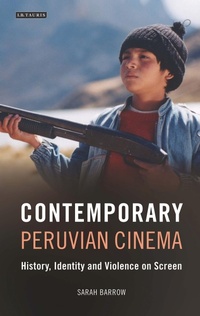
Contemporary Peruvian Cinema
History, Identity and Violence on Screen
Published on 30. March 2018
Book
Hardback
256 pages
978-1-78453-821-7 (ISBN)
Description
WINNER OF A CHOICE OUTSTANDING ACADEMIC TITLE AWARD 2019
The political violence that erupted towards the end of the twentieth century between the Peruvian state and militant group `Shining Path' left an indelible mark on the country that resonates even today. This study explores representations of the insurgency on screen, and asks what these tell us about the relationship between state, fiction cinema and identity in Peru. In the process, Sarah Barrow highlights the Peruvian experience as a paradigm for the wider study of film-making in societies faced with violence and terrorism.
This book provides in-depth analyses of the pivotal films from the 1980s through to the present day that interpret the events, characters and consequences of the bloody conflict. Setting the films in the context of a time of turbulent transition for both Peruvian society and cinema - addressing developments in film policy and production - it reveals the attempts by filmmakers to reflect, shape, define and contest the identity of a fractured population. By interrogating important themes such as memory, trauma and cultural responses to terrorism, chapters explore local perception of nationhood, and highlight links to other Latin American cinemas and global issues. Featuring discussions of the work of Francisco Lombardi, Marianne Eyde, Fabrizio Aguilar and Josue Mendez, amongst others, this detailed investigation of the growing success and political importance of the industry's output traces the complexities of modern Peruvian history.
The political violence that erupted towards the end of the twentieth century between the Peruvian state and militant group `Shining Path' left an indelible mark on the country that resonates even today. This study explores representations of the insurgency on screen, and asks what these tell us about the relationship between state, fiction cinema and identity in Peru. In the process, Sarah Barrow highlights the Peruvian experience as a paradigm for the wider study of film-making in societies faced with violence and terrorism.
This book provides in-depth analyses of the pivotal films from the 1980s through to the present day that interpret the events, characters and consequences of the bloody conflict. Setting the films in the context of a time of turbulent transition for both Peruvian society and cinema - addressing developments in film policy and production - it reveals the attempts by filmmakers to reflect, shape, define and contest the identity of a fractured population. By interrogating important themes such as memory, trauma and cultural responses to terrorism, chapters explore local perception of nationhood, and highlight links to other Latin American cinemas and global issues. Featuring discussions of the work of Francisco Lombardi, Marianne Eyde, Fabrizio Aguilar and Josue Mendez, amongst others, this detailed investigation of the growing success and political importance of the industry's output traces the complexities of modern Peruvian history.
Reviews / Votes
Meticulously researched, clearly organized, well-written study ... Summing Up: Highly recommended. Upper-division undergraduates through faculty. * D. West, emeritus, University of Idaho, CHOICE *More details
Series
Language
English
Place of publication
United Kingdom
Publishing group
Bloomsbury Publishing PLC
Target group
College/higher education
Illustrations
24 colour illustrations in a 16 page plate section
Dimensions
Height: 222 mm
Width: 145 mm
Thickness: 18 mm
Weight
460 gr
ISBN-13
978-1-78453-821-7 (9781784538217)
Copyright in bibliographic data and cover images is held by Nielsen Book Services Limited or by the publishers or by their respective licensors: all rights reserved.
Schweitzer Classification
Other editions
Additional editions
E-Book
03/2018
1st Edition
I.B. Tauris
€105.99
Available for download
E-Book
03/2018
1st Edition
I.B. Tauris
€105.99
Available for download
Person
Sarah Barrow is Professor of Film and Media Studies at the University of East Anglia, UK. She has published numerous studies of Hispanic film including special issues of journals Transnational Cinemas and New Cinemas. She co-edited The Routledge Encyclopaedia of Films (2015), a major collection of 200 essays on films from all over the world.
Content
Introduction Reframing the national for Peruvian cinema
Chapter One Cinema, state and national identity
Chapter Two Cinema, transition and turmoil, 1988-1991
Conflicting identities and national crisis: La boca del lobo
The hybridization of national identity : Ni con Dios ni con el diablo
Identity, violence and social responsibility: Alias la gringa
Chapter Three Cinema, oppression and ideology, 1992-2000
Female interventions: La vida es una sola
Identity, agency and social development: Anda, corre, vuela ...
Creating an icon: Coraje
Chapter Four Cinema, memory and truth, 2000-2004
Shaping memories of national trauma: Paloma de papel
Stasis, dislocation and open wounds: Dias de Santiago
Conclusion Seeking closure, the new generation
Chapter One Cinema, state and national identity
Chapter Two Cinema, transition and turmoil, 1988-1991
Conflicting identities and national crisis: La boca del lobo
The hybridization of national identity : Ni con Dios ni con el diablo
Identity, violence and social responsibility: Alias la gringa
Chapter Three Cinema, oppression and ideology, 1992-2000
Female interventions: La vida es una sola
Identity, agency and social development: Anda, corre, vuela ...
Creating an icon: Coraje
Chapter Four Cinema, memory and truth, 2000-2004
Shaping memories of national trauma: Paloma de papel
Stasis, dislocation and open wounds: Dias de Santiago
Conclusion Seeking closure, the new generation