

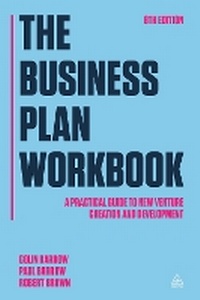
The Business Plan Workbook
A Practical Guide to New Venture Creation and Development
8th Edition
Published on 3. March 2016
Book
Hardback
352 pages
978-0-7494-7897-1 (ISBN)
Description
One of the most important steps in launching a new venture or expanding an existing one is the creation of a business plan. Time after time, studies and real-life examples reveal that the absence of a written business plan leads to a higher incidence of failure for new businesses, and inhibits growth and development.
Based on methodology developed at Cranfield School of Management, The Business Plan Workbook takes a practical approach to topic of business planning for new venture creation and development. Equally suitable for a range of academic and professional courses and for those developing small businesses, it takes the reader through 29 assignments to help you create and present your business plan, from learning how to create a competitive business strategy through to forecasting sales volume and value. It will help you to validate your business idea, brand your business, research and segment your market, and raise finance; all through one persuasive plan.
With new additional material covering the 7 Ps of Marketing, a section of Planning for Growth and a range of new and updated case studies of real life entrepreneurs, this classic text is an invaluable guide to all aspects of business planning.
Based on methodology developed at Cranfield School of Management, The Business Plan Workbook takes a practical approach to topic of business planning for new venture creation and development. Equally suitable for a range of academic and professional courses and for those developing small businesses, it takes the reader through 29 assignments to help you create and present your business plan, from learning how to create a competitive business strategy through to forecasting sales volume and value. It will help you to validate your business idea, brand your business, research and segment your market, and raise finance; all through one persuasive plan.
With new additional material covering the 7 Ps of Marketing, a section of Planning for Growth and a range of new and updated case studies of real life entrepreneurs, this classic text is an invaluable guide to all aspects of business planning.
Reviews / Votes
"Brings together the processes and procedures required to write a business plan." * Commerce and Industry * "A pleasing read, unlike many books on this topic; full of practical and professional advice." * Professional Manager * "Highly informative and instructive." * City Business Magazine * "[A] strong pick for business and management collections, especially for those who have their own aspirations for business ownership." * The Midwest Book Review *More details
Edition
Re-issue
Language
English
Place of publication
London
United Kingdom
Target group
College/higher education
Professional and scholarly
Edition type
Revised edition
Product notice
Cloth over boards
Dimensions
Height: 241 mm
Width: 164 mm
Thickness: 24 mm
Weight
678 gr
ISBN-13
978-0-7494-7897-1 (9780749478971)
Copyright in bibliographic data and cover images is held by Nielsen Book Services Limited or by the publishers or by their respective licensors: all rights reserved.
Schweitzer Classification
Other editions
Additional editions
Colin Barrow | Paul Barrow | Robert Brown
The Business Plan Workbook
A Practical Guide to New Venture Creation and Development
Book
01/2015
8th Edition
Kogan Page Ltd
€50.94
Article exhausted; check for reprint
Persons
Colin Barrow, previously Head of the Enterprise Group at Cranfield School of Management where he taught entrepreneurship modules for the MBA programme, is a Visiting Professor at business schools across the globe. A best-selling author his other books include The 30 Day MBA, Starting a Business from Home, Practical Financial Management and Cut Costs Not Corners, all published by Kogan Page.
Paul Barrow is an author, a Visiting Fellow at Cranfield, and also a consultant advising SMEs on growth strategies.
Robert Brown directed the Graduate Enterprise Programme at Cranfield where he led a course on entrepreneurship.
Paul Barrow is an author, a Visiting Fellow at Cranfield, and also a consultant advising SMEs on growth strategies.
Robert Brown directed the Graduate Enterprise Programme at Cranfield where he led a course on entrepreneurship.
Content
Section - ONE: Strategy and purpose;
Chapter - 01: Coming up with a winning idea for your business plan;
Chapter - 02: Strategy - the big picture;
Chapter - 03: You and your team;
Section - TWO: Market research;
Chapter - 04: Researching customers;
Chapter - 05: Researching competitors;
Chapter - 06: A plan for market research;
Section - THREE: Competitive marketing strategies;
Chapter - 07: Products and/or services;
Chapter - 08: Pricing;
Chapter - 09: Advertising and promotion;
Chapter - 10: Place and distribution;
Chapter - 11: People, Process and Physical Environment;
Section - FOUR: Operations and staffing;
Chapter - 12: The selling methods plan;
Chapter - 13: Making, outsourcing and supplies;
Chapter - 14: People and related matters;
Chapter - 15: Legal and regulatory factors;
Chapter - 16: Building a website;
Chapter - 17: Communication systems;
Section - FIVE: Forecasting results;
Chapter - 18: The sales forecast;
Chapter - 19: Cash-flow projections;
Chapter - 20: The profit and loss account;
Chapter - 21: The balance sheet;
Chapter - 22: Break-even analysis;
Chapter - 23: Estimating financing requirements;
Chapter - 24: Stress testing your business projections;
Section - SIX: Business controls;
Chapter - 25: Financial controls;
Chapter - 26: Sales and marketing controls;
Chapter - 27: Other business controls;
Chapter - 28: Planning for growth;
Section - SEVEN: Writing up and presenting your business plan;
Chapter - 29: Writing up and presenting your business plan
Chapter - 01: Coming up with a winning idea for your business plan;
Chapter - 02: Strategy - the big picture;
Chapter - 03: You and your team;
Section - TWO: Market research;
Chapter - 04: Researching customers;
Chapter - 05: Researching competitors;
Chapter - 06: A plan for market research;
Section - THREE: Competitive marketing strategies;
Chapter - 07: Products and/or services;
Chapter - 08: Pricing;
Chapter - 09: Advertising and promotion;
Chapter - 10: Place and distribution;
Chapter - 11: People, Process and Physical Environment;
Section - FOUR: Operations and staffing;
Chapter - 12: The selling methods plan;
Chapter - 13: Making, outsourcing and supplies;
Chapter - 14: People and related matters;
Chapter - 15: Legal and regulatory factors;
Chapter - 16: Building a website;
Chapter - 17: Communication systems;
Section - FIVE: Forecasting results;
Chapter - 18: The sales forecast;
Chapter - 19: Cash-flow projections;
Chapter - 20: The profit and loss account;
Chapter - 21: The balance sheet;
Chapter - 22: Break-even analysis;
Chapter - 23: Estimating financing requirements;
Chapter - 24: Stress testing your business projections;
Section - SIX: Business controls;
Chapter - 25: Financial controls;
Chapter - 26: Sales and marketing controls;
Chapter - 27: Other business controls;
Chapter - 28: Planning for growth;
Section - SEVEN: Writing up and presenting your business plan;
Chapter - 29: Writing up and presenting your business plan