

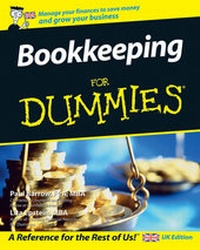
Bookkeeping For Dummies
1st Edition
Published on 16. February 2007
Book
Paperback/Softback
392 pages
978-0-470-05815-2 (ISBN)
Description
Includes practical advice on using accounting software
The easiest way to master the art of bookkeeping
Accurate bookkeeping is crucial to every business - but few people relish the task. This straight-talking guide simplifies every aspect of financial record keeping, walking you through all the basic skills you need. From tracking transactions and keeping ledgers to producing balance sheets and year-end reports, this book makes bookkeeping your best friend in business.
Discover how to
* Keep accurate and complete financial records
* Produce a profit and loss statement
* Complete year-end payroll and reports
* Manage assets and liabilities
* Keep the tax inspector happy
The easiest way to master the art of bookkeeping
Accurate bookkeeping is crucial to every business - but few people relish the task. This straight-talking guide simplifies every aspect of financial record keeping, walking you through all the basic skills you need. From tracking transactions and keeping ledgers to producing balance sheets and year-end reports, this book makes bookkeeping your best friend in business.
Discover how to
* Keep accurate and complete financial records
* Produce a profit and loss statement
* Complete year-end payroll and reports
* Manage assets and liabilities
* Keep the tax inspector happy
Reviews / Votes
"...a good refresher for any professional who feels rusty on the basics." (Accounting Technician, May 2007)More details
Edition
1., Auflage
Language
English
Place of publication
Chichester
United Kingdom
Publishing group
John Wiley and Sons Ltd
Target group
Professional and scholarly
Edition type
New edition
Dimensions
Height: 23.5 cm
Width: 18.9 cm
Thickness: 23 mm
Weight
716 gr
ISBN-13
978-0-470-05815-2 (9780470058152)
Schweitzer Classification
Other editions
New editions
Book
03/2011
2nd Edition
Wiley
€21.90
Article exhausted; check for reprint
Persons
Paul Barrow, FCA, MBA, is a Chartered Accountant with over 20 years' consulting, training, writing, and commercial experience within a wide range of business sectors and companies.
Lita Epstein, MBA, designs and teaches online courses in investing, finance, and tax.
Lita Epstein, MBA, designs and teaches online courses in investing, finance, and tax.
Content
Introduction.
About This Book.
Conventions Used in This Book.
Foolish Assumptions.
What You're Not to Read.
How This Book Is Organized.
Part I: Basic Bookkeeping: Why You Need It.
Chapter 1: So You Want to Do the Books.
Chapter 2: Getting Down to Bookkeeping Basics.
Chapter 3: Outlining Your Financial Roadmap with a Chart of Accounts.
Part II: Keeping a Paper Trail.
Chapter 4: The Nominal Ledger: A One-Stop Summary of Your Business Transactions.
Chapter 5: Keeping Journals.
Chapter 6: Computer Options for Your Bookkeeping.
Chapter 7: Controlling Your Books, Your Records, and Your Money.
Part III: Tracking Day-to-Day Operations with Your Books.
Chapter 8: Buying and Tracking Your Purchases.
Chapter 9: Counting Your Sales.
Chapter 10: Employee Payroll and Benefits.
Chapter 11: Employer-Paid Taxes and Government Payroll Reporting.
Part IV: Preparing the Books for Year's (or Month's) End.
Chapter 12: Depreciating Your Assets.
Chapter 13: Paying and Collecting Interest.
Chapter 14: Checking the cash and bank.
Chapter 15: Closing the Journals.
Chapter 16: Checking Your Accuracy --By Trial and Hopefully No Error.
Chapter 17: Adjusting the Books.
Part V: Reporting Results and Starting Over.
Chapter 18: Developing a Balance Sheet.
Chapter 19: Producing a Profit and Loss Statement.
Chapter 20: Reporting for Non Profit Organisations
Chapter 21: Completing Year-End Payroll and Reports.
Chapter 22: Keeping the Tax Man Happy.
Chapter 23: Preparing for Year-End.
Part VI: The Part of Tens.
Chapter 24: Top Ten Ways to Manage Your Business Cash with Your Books.
Chapter 25: Top Ten Most Important Accounts for Any Bookkeeper.
Appendix: Glossary.
About This Book.
Conventions Used in This Book.
Foolish Assumptions.
What You're Not to Read.
How This Book Is Organized.
Part I: Basic Bookkeeping: Why You Need It.
Chapter 1: So You Want to Do the Books.
Chapter 2: Getting Down to Bookkeeping Basics.
Chapter 3: Outlining Your Financial Roadmap with a Chart of Accounts.
Part II: Keeping a Paper Trail.
Chapter 4: The Nominal Ledger: A One-Stop Summary of Your Business Transactions.
Chapter 5: Keeping Journals.
Chapter 6: Computer Options for Your Bookkeeping.
Chapter 7: Controlling Your Books, Your Records, and Your Money.
Part III: Tracking Day-to-Day Operations with Your Books.
Chapter 8: Buying and Tracking Your Purchases.
Chapter 9: Counting Your Sales.
Chapter 10: Employee Payroll and Benefits.
Chapter 11: Employer-Paid Taxes and Government Payroll Reporting.
Part IV: Preparing the Books for Year's (or Month's) End.
Chapter 12: Depreciating Your Assets.
Chapter 13: Paying and Collecting Interest.
Chapter 14: Checking the cash and bank.
Chapter 15: Closing the Journals.
Chapter 16: Checking Your Accuracy --By Trial and Hopefully No Error.
Chapter 17: Adjusting the Books.
Part V: Reporting Results and Starting Over.
Chapter 18: Developing a Balance Sheet.
Chapter 19: Producing a Profit and Loss Statement.
Chapter 20: Reporting for Non Profit Organisations
Chapter 21: Completing Year-End Payroll and Reports.
Chapter 22: Keeping the Tax Man Happy.
Chapter 23: Preparing for Year-End.
Part VI: The Part of Tens.
Chapter 24: Top Ten Ways to Manage Your Business Cash with Your Books.
Chapter 25: Top Ten Most Important Accounts for Any Bookkeeper.
Appendix: Glossary.