

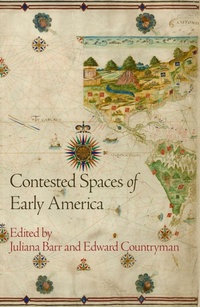
Contested Spaces of Early America
Published on 9. March 2017
Book
Paperback/Softback
444 pages
978-0-8122-2399-6 (ISBN)
Description
Colonial America stretched from Quebec to Buenos Aires and from the Atlantic littoral to the Pacific coast. Although European settlers laid claim to territories they called New Spain, New England, and New France, the reality of living in those spaces had little to do with European kingdoms. Instead, the New World's holdings took their form and shape from the Indian territories they inhabited. These contested spaces throughout the western hemisphere were not unclaimed lands waiting to be conquered and populated but a single vast space, occupied by native communities and defined by the meeting, mingling, and clashing of peoples, creating societies unlike any that the world had seen before.
Contested Spaces of Early America brings together some of the most distinguished historians in the field to view colonial America on the largest possible scale. Lavishly illustrated with maps, Native art, and color plates, the twelve chapters span the southern reaches of New Spain through Mexico and Navajo Country to the Dakotas and Upper Canada, and the early Indian civilizations to the ruins of the nineteenth-century West. At the heart of this volume is a search for a human geography of colonial relations: Contested Spaces of Early America aims to rid the historical landscape of imperial cores, frontier peripheries, and modern national borders to redefine the way scholars imagine colonial America.
Contributors: Matthew Babcock, Ned Blackhawk, Chantal Cramaussel, Brian DeLay, Elizabeth Fenn, Allan Greer, Pekka HAEmAElAEinen, RaUl JosE Mandrini, Cynthia Radding, Birgit Brander Rasmussen, Alan Taylor, and Samuel Truett.
Contested Spaces of Early America brings together some of the most distinguished historians in the field to view colonial America on the largest possible scale. Lavishly illustrated with maps, Native art, and color plates, the twelve chapters span the southern reaches of New Spain through Mexico and Navajo Country to the Dakotas and Upper Canada, and the early Indian civilizations to the ruins of the nineteenth-century West. At the heart of this volume is a search for a human geography of colonial relations: Contested Spaces of Early America aims to rid the historical landscape of imperial cores, frontier peripheries, and modern national borders to redefine the way scholars imagine colonial America.
Contributors: Matthew Babcock, Ned Blackhawk, Chantal Cramaussel, Brian DeLay, Elizabeth Fenn, Allan Greer, Pekka HAEmAElAEinen, RaUl JosE Mandrini, Cynthia Radding, Birgit Brander Rasmussen, Alan Taylor, and Samuel Truett.
Reviews / Votes
"Contested Spaces of Early America offers readers a cross section of thoughtful new approaches to American history, which is finally beginning to fulfill its promise as a history of all Americans."-Journal of Historical Geography"Bold, innovative, and ambitious, Contested Spaces of Early America is an excellent volume that engages with the state of the field like few others."-AndrEs ResEndez, University of California, Davis
More details
Series
Language
English
Place of publication
Pennsylvania
United States
Target group
College/higher education
Product notice
Paperback (trade)
Illustrations
29 b/w illus.
Dimensions
Height: 229 mm
Width: 152 mm
Thickness: 30 mm
Weight
590 gr
ISBN-13
978-0-8122-2399-6 (9780812223996)
Copyright in bibliographic data and cover images is held by Nielsen Book Services Limited or by the publishers or by their respective licensors: all rights reserved.
Schweitzer Classification
Other editions
Additional editions
Juliana Barr | Edward Countryman
Contested Spaces of Early America
E-Book
03/2014
1st Edition
University of Pennsylvania Press
from
€48.39
Available for download
Persons
Juliana Barr is Associate Professor of History at Duke University and author of Peace Came in the Form of a Woman: Indians and Spaniards in the Texas Borderlands. Edward Countryman is University Distinguished Professor at Southern Methodist University and author of several books, including The American Revolution, Americans: A Collision of Histories, and most recently Enjoy the Same Liberty: Black Americans and the Revolutionary Era.
Content
Introduction. Maps and Spaces, Paths to Connect, and Lines to Divide
-Juliana Barr and Edward Countryman
PART I. SPACES AND POWER
Chapter 1. The Shapes of Power: Indians, Europeans, and North American Worlds from the Seventeenth to the Nineteenth Century
-Pekka HAEmAElAEinen
Chapter 2. Dispossession in a Commercial Idiom: From Indian Deeds to Land Cession Treaties
-Allan Greer
PART II. SPACES AND LANDSCAPES
Chapter 3. The Mandans: Ecology, Population, and Adaptation on the Northern Plains
-Elizabeth Fenn
Chapter 4. Colonial Spaces in the Fragmented Communities of Northern New Spain
-Cynthia Radding
Chapter 5. Transformations: The Rio de la Plata During the Bourbon Era
-RaUl JosE Mandrini
PART III. SPACE AND RESETTLEMENTS
Chapter 6. Blurred Borders: North America's Forgotten Apache Reservations
-Matthew Babcock
Chapter 7. The Forced Transfer of Indians in Nueva Vizcaya and Sinaloa: A Hispanic Method of Colonization
-Chantal Cramaussel
Chapter 8. Remaking Americans: Louisiana, Upper Canada, and Texas
-Alan Taylor
PART IV. SPACES AND MEMORY
Chapter 9. Blood Talk: Violence and Belonging in the Navajo-New Mexican Borderland
-Brian DeLay
Chapter 10. Toward a New Literary History of the West: Etahdleuh Doanmoe's Captivity Narrative
-Birgit Brander Rasmussen
Chapter 11. Toward an Indigenous Art History of the West: The Segesser Hide Paintings
-Ned Blackhawk
Chapter 12. The Borderlands and Lost Worlds of Early America
-Samuel Truett
Notes
List of Contributors
Index
Acknowledgments
-Juliana Barr and Edward Countryman
PART I. SPACES AND POWER
Chapter 1. The Shapes of Power: Indians, Europeans, and North American Worlds from the Seventeenth to the Nineteenth Century
-Pekka HAEmAElAEinen
Chapter 2. Dispossession in a Commercial Idiom: From Indian Deeds to Land Cession Treaties
-Allan Greer
PART II. SPACES AND LANDSCAPES
Chapter 3. The Mandans: Ecology, Population, and Adaptation on the Northern Plains
-Elizabeth Fenn
Chapter 4. Colonial Spaces in the Fragmented Communities of Northern New Spain
-Cynthia Radding
Chapter 5. Transformations: The Rio de la Plata During the Bourbon Era
-RaUl JosE Mandrini
PART III. SPACE AND RESETTLEMENTS
Chapter 6. Blurred Borders: North America's Forgotten Apache Reservations
-Matthew Babcock
Chapter 7. The Forced Transfer of Indians in Nueva Vizcaya and Sinaloa: A Hispanic Method of Colonization
-Chantal Cramaussel
Chapter 8. Remaking Americans: Louisiana, Upper Canada, and Texas
-Alan Taylor
PART IV. SPACES AND MEMORY
Chapter 9. Blood Talk: Violence and Belonging in the Navajo-New Mexican Borderland
-Brian DeLay
Chapter 10. Toward a New Literary History of the West: Etahdleuh Doanmoe's Captivity Narrative
-Birgit Brander Rasmussen
Chapter 11. Toward an Indigenous Art History of the West: The Segesser Hide Paintings
-Ned Blackhawk
Chapter 12. The Borderlands and Lost Worlds of Early America
-Samuel Truett
Notes
List of Contributors
Index
Acknowledgments