

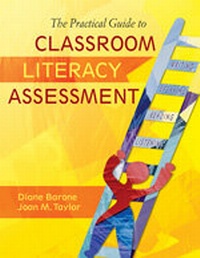
The Practical Guide to Classroom Literacy Assessment
1st Edition
Published on 6. February 2007
Book
Hardback
192 pages
978-1-4129-3913-3 (ISBN)
Description
"The authors have taken a complex topic and presented it in a very readable, accessible manner. An ideal candidate for school-based professional development organized on the study group model."
-Joan Irwin, Education Consultant
Former Director of Publications, IRA
Use assessment to meet the strengths and needs of students and enhance learning!
Whether it is standardized test data, student journals, or informal classroom question and answer, assessments provide invaluable, ongoing diagnostic information for making key instructional decisions. In this engaging and comprehensive resource, Diane Barone and Joan Taylor demonstrate practical ways for embedding test preparation into teaching by integrating assessments and instruction to boost learning.
The authors provide testing content and procedures developed for inservice and preservice teachers, administrators, and coaches to help all students, including those who have previously failed. With rich classroom examples, dialogues, scenarios, checklists, and student work samples, this book illustrates multiple assessment formats with expert how-to and when-to guidelines for literacy, writing, listening, and speaking.
In language that speaks straight to educators, this handy, indispensable guide discusses:
Real cases and conversations that demonstrate actual assessment strategies in classrooms
Specific applications for math and science literacy
Preparation and grading for high-stakes testing
Practical help for portfolios
Rubric construction tips
The importance of oral and written literacy
Using The Practical Guide to Classroom Literacy Assessment, educators can measure students' abilities to navigate content and apply what they learn, and effectively support their academic success on standardized and formative assessments.
-Joan Irwin, Education Consultant
Former Director of Publications, IRA
Use assessment to meet the strengths and needs of students and enhance learning!
Whether it is standardized test data, student journals, or informal classroom question and answer, assessments provide invaluable, ongoing diagnostic information for making key instructional decisions. In this engaging and comprehensive resource, Diane Barone and Joan Taylor demonstrate practical ways for embedding test preparation into teaching by integrating assessments and instruction to boost learning.
The authors provide testing content and procedures developed for inservice and preservice teachers, administrators, and coaches to help all students, including those who have previously failed. With rich classroom examples, dialogues, scenarios, checklists, and student work samples, this book illustrates multiple assessment formats with expert how-to and when-to guidelines for literacy, writing, listening, and speaking.
In language that speaks straight to educators, this handy, indispensable guide discusses:
Real cases and conversations that demonstrate actual assessment strategies in classrooms
Specific applications for math and science literacy
Preparation and grading for high-stakes testing
Practical help for portfolios
Rubric construction tips
The importance of oral and written literacy
Using The Practical Guide to Classroom Literacy Assessment, educators can measure students' abilities to navigate content and apply what they learn, and effectively support their academic success on standardized and formative assessments.
Reviews / Votes
"The authors have taken a complex topic and presented it in a very readable, accessible manner. An ideal candidate for school-based professional development organized on the study group model." -- Joan Irwin "I found the monthly focuses for the portfolio to be wonderful!" -- Amy Huether, SD READS Literacy CoachMore details
Language
English
Place of publication
Thousand Oaks
United States
Publishing group
SAGE Publications Inc
Target group
Professional and scholarly
Dimensions
Height: 279 mm
Width: 216 mm
Weight
765 gr
ISBN-13
978-1-4129-3913-3 (9781412939133)
Copyright in bibliographic data and cover images is held by Nielsen Book Services Limited or by the publishers or by their respective licensors: all rights reserved.
Schweitzer Classification
Other editions
Additional editions
Diane Barone | Joan M. Taylor
The Practical Guide to Classroom Literacy Assessment
Book
01/2007
1st Edition
Corwin Press Inc
€39.70
Shipment within 10-20 days
Persons
Diane M. Barone is Professor Literacy Studies at the University of Nevada, Reno. In her role at the university, she teaches courses in early literacy, diversity and literacy, and qualitative research. Her research interests center on young children, especially in high poverty schools, and how they develop in literacy. Her most current study followed 16 children from kindergarten through to Grade 6 to document their literacy growth. She has been an editor of Reading Research Quarterly and has written numerous articles, book chapters, and books. Some of her recent books include Reading First in the Classroom with Joan Taylor and Darrin Hardman, Literacy and Young Children: Research-Based Practices with Lesley Morrow, Teaching Early Literacy: Development, Assessment, and Instruction with Marla Mallette and Shelley Xu, and The National Board Certification Handbook. She is also Principal Investigator for Reading First in Nevada and serves as a member of the board for the International Reading Association.
Joan Taylor is a teacher-consultant who works with teachers and students in Title I schools in the Reno/Sparks area of Northern Nevada. She recently completed a dissertation on A History of Written Composition Instruction in U.S. Elementary Schools. Her research interests, in addition to historical and current perspectives on writing instruction, are focused on exploring teachers' stories on learning and teaching.
She has been a long-time middle school teacher in Washoe County Schools. She is also Nevada State Networks Writing Project Co-Director, and during the past several years has authored a number of federally funded state literacy grants from the U.S. Department of Education totaling approximately $53 million. These include the Nevada Reading Excellence Act and Nevada Reading First grants.
Joan Taylor is a teacher-consultant who works with teachers and students in Title I schools in the Reno/Sparks area of Northern Nevada. She recently completed a dissertation on A History of Written Composition Instruction in U.S. Elementary Schools. Her research interests, in addition to historical and current perspectives on writing instruction, are focused on exploring teachers' stories on learning and teaching.
She has been a long-time middle school teacher in Washoe County Schools. She is also Nevada State Networks Writing Project Co-Director, and during the past several years has authored a number of federally funded state literacy grants from the U.S. Department of Education totaling approximately $53 million. These include the Nevada Reading Excellence Act and Nevada Reading First grants.
Content
Acknowledgments
About the Authors
Introduction
1. Assessments With a Focus on Learning: Purposes and Promises
The Historical Root of the Matter
Which Literacies?
Audiences and Types of Assessments
Timing of Tests
Reasons for Assessments
Final Thoughts
2. Writing Assessments
Brief Historical Overview of Writing Assessments
Writing Assessments Today
Types of Writing Assessments
Writing Tasks
Evaluation Tools
Writing Assessment Formats
Assessing Processes
Assessing Products
Organizing and Administering Your Own Scoring Session
Final Thoughts
3. Reading Asessment
Teacher-Created Assessments
Commercial Assessments
Ongoing Assessments Used to Monitor Progress
End-of-Year Assessment
Final Thoughts
4. Oral and Visual Assessments
Speaking
Listening
Viewing and Experiencing
Audience and Purpose
Importance of a Variety of Assessment
Forms and Products
Final Thoughts
5. Assessment Portfolios
What Is an Assessment Portfolio?
What Are the Issues Surrounding Portfolios?
Final Thoughts
6. Putting Assessment in Perspective
Overview of Assessment Data
Uses of Assessment
A Few Final Assessment Caveats
Additional Resources for Assessment
Final Thoughts
Index
About the Authors
Introduction
1. Assessments With a Focus on Learning: Purposes and Promises
The Historical Root of the Matter
Which Literacies?
Audiences and Types of Assessments
Timing of Tests
Reasons for Assessments
Final Thoughts
2. Writing Assessments
Brief Historical Overview of Writing Assessments
Writing Assessments Today
Types of Writing Assessments
Writing Tasks
Evaluation Tools
Writing Assessment Formats
Assessing Processes
Assessing Products
Organizing and Administering Your Own Scoring Session
Final Thoughts
3. Reading Asessment
Teacher-Created Assessments
Commercial Assessments
Ongoing Assessments Used to Monitor Progress
End-of-Year Assessment
Final Thoughts
4. Oral and Visual Assessments
Speaking
Listening
Viewing and Experiencing
Audience and Purpose
Importance of a Variety of Assessment
Forms and Products
Final Thoughts
5. Assessment Portfolios
What Is an Assessment Portfolio?
What Are the Issues Surrounding Portfolios?
Final Thoughts
6. Putting Assessment in Perspective
Overview of Assessment Data
Uses of Assessment
A Few Final Assessment Caveats
Additional Resources for Assessment
Final Thoughts
Index