

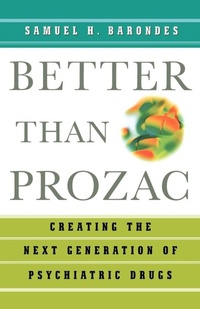
Better than Prozac
Creating the Next Generation of Psychiatric Drugs
Published on 14. January 2005
Book
Paperback/Softback
240 pages
978-0-19-517979-8 (ISBN)
Description
Every day millions of people take psychiatric drugs. In Better Than Prozac Samuel Barondes considers the benefits and limitations of Prozac, Ritalin, Valium, Risperdal, and other widely used medications and the ways that superior ones are being created.
In tracing the early history of these drugs Barondes describes the accidental observations that led to their discovery and their great impact on our view of mental illness. He goes on to show how their unexpected therapeutic effects were attributed to their influence on neurotransmitters that carry signals in the brain and how this guided their improvement.
But Barondes reminds us that, like the originals, current psychiatric drugs don't always work, and often have negative side effects. Furthermore, none were crafted as remedies for known brain abnormalities. In contrast, the design of the drugs of the future will be based on a different approach: an understanding of the molecular mechanisms that give rise to specific patterns of mental symptoms. Using colorful examples of contemporary research, he shows how it is gradually leading to a new generation of psychiatric medications.
A lucid evaluation of psychopharmacology, Better Than Prozac offers a deep understanding of psychiatric drugs for people who take them, those who are considering them, and those who are just fascinated by the powerful effects of these simple chemicals on our thoughts and our feelings.
In tracing the early history of these drugs Barondes describes the accidental observations that led to their discovery and their great impact on our view of mental illness. He goes on to show how their unexpected therapeutic effects were attributed to their influence on neurotransmitters that carry signals in the brain and how this guided their improvement.
But Barondes reminds us that, like the originals, current psychiatric drugs don't always work, and often have negative side effects. Furthermore, none were crafted as remedies for known brain abnormalities. In contrast, the design of the drugs of the future will be based on a different approach: an understanding of the molecular mechanisms that give rise to specific patterns of mental symptoms. Using colorful examples of contemporary research, he shows how it is gradually leading to a new generation of psychiatric medications.
A lucid evaluation of psychopharmacology, Better Than Prozac offers a deep understanding of psychiatric drugs for people who take them, those who are considering them, and those who are just fascinated by the powerful effects of these simple chemicals on our thoughts and our feelings.
Reviews / Votes
Case Studies combined with solid descriptions of research reveal an interesting path of development for psychiatric drugs. * Science News * A fascinating chronology of just where Prozac, Ritalin, Valium and other medications come from and what our future drugs may be able to do. * Chicago Tribune * This extensively documented book describes the bumpy road from Thorazine to Prozac * a thoroughfare paved with quirky strokes of luck and sometimes tragic side effects, with fascinating anecdotes and eye-opening facts. The history Barondes provides then serves as a background for his report of recent scientific advances, such as the human genome project, which aims at a time when drugs can be customized to suit each person's unique needs and physiology, averting unwelcome side effects. Barondes discusses the world of psychiatric drug therapy with candor and compassion, painting a hopeful future for anyone suffering disorders ranging from clinical depression to schizophrenia.Booklist * A good, short introduction to the history and current methodology of drug development, from the accidental discovery of Thorazine (it was supposed to be an antihistamine) to the current use of 'designer' mice, bred to mimic human psychiatric conditions, to the quest for genetic markers of Alzheimer's disease, schizophrenia, and Parkinson's disease. * Library Journal * An excellent read.... A well-written and comprehensive account of a field that has developed rapidly in the past few decades. It was written for intelligent non-scientific readers, but experts will also find much entertaining material about the scientists who were involved in some of the major discoveries, and in the case histories. * Nature * An engaging guide to the new biological paradigm of psychiatry. * Publishers Weekly * A lively, informative, well-written and authoritative source about likely future developments in the treatment of mental illness. * Washington Times * Better than Prozac is more than just an excellent history of drugs developed to treat mental illness. It is also a fascinating account of the scientists who explore the brain and who are providing us with a new and remarkable understanding of how it works. Dr. Barondes * a lucid writer, esteemed neuroscientist, and respected physicianis uniquely able to tell this important story.Kay Redfield Jamison, Professor of Psychiatry at Johns Hopkins Medical School, and author of An Unquiet Mind and Night Falls Fast * Samuel Barondes is a scientist with a knack for making technical material accessible to the general reader. Better than Prozac is a lucid and thorough account of the history and likely future of medications for the mind. * Peter D. Kramer, author of Listening to Prozac and Spectacular Happiness * Samuel Barondes, one of the great expositors of biological psychiatry, has done it again! He has used his wonderful knowledge of medicine and psychiatry and his insights into the biological basis of drug therapy to give us an historical overview of the development of psychiatric drugs. In so doing, he not only explains how these drugs work and the benefits they bring, he also teaches us about their shortcomings and the roads we have to traverse to go beyond the currently available pharmacological therapies. These roads include, at their core, a better understanding of the biological bases of mental processes and mental disorders, areas which Barondes describes masterfully. In short, this book is a must read for those who want to know where drug therapy in psychiatry is, where it has come from, and where it is heading. * Eric R. Kandel, University Professor, Columbia University, and Nobel Laureate * This is likely the finest book I have ever read on psychopharmacology. * Solomon H. Snyder, American Journal of Psychiatry * It is accessible to all and accomplishes the seemingly impossible task of making complex issues in psychopharmacology understandable and clear. * Allan Young, New England Journal of Medicine * Barondes provides this information better that any other account I have read. Moreover, he does it in such a creative way that researches as well as clinical practitioners will learn from and enjoy the material which he has so skillfully assembled. * Herbert Y. Meltzer,Nature Medicine * Better Than Prozac is like a conversation with a genuine expert about the psychiatric medications used to treat clinical depression and other disorders of mental life. * J. Raymond DePaulo, Cerebrum *More details
Language
English
Place of publication
New York
United States
Target group
Professional and scholarly
Dimensions
Height: 216 mm
Width: 140 mm
Thickness: 14 mm
Weight
339 gr
ISBN-13
978-0-19-517979-8 (9780195179798)
Copyright in bibliographic data and cover images is held by Nielsen Book Services Limited or by the publishers or by their respective licensors: all rights reserved.
Schweitzer Classification
Other editions
Additional editions
E-Book
06/2003
1st Edition
OUP eBook
€8.99
Available for download
Person
Samuel H. Barondes, M.D., is Jeanne and Sanford Robertson Professor and Director of the Center for Neurobiology and Psychiatry at the University of California, San Francisco. His books include Molecules and Mental Illness and Mood Genes: Hunting for Origins of Mania and Depression, both selected as "Great Brain Books" by the Dana Alliance for Brain Initiatives.