


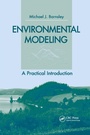
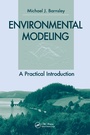
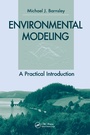
Environmental Modeling
A Practical Introduction
1st Edition
Published on 13. February 2007
Book
Hardback
432 pages
978-0-415-30054-4 (ISBN)
Description
Increasingly used to represent climatic, biogeochemical, and ecological systems, computer modeling has become an important tool that should be in every environmental professional's toolbox. Environmental Modeling: A Practical Introduction is just what it purports to be, a practical introduction to the various methods, techniques, and skills required for computerized environmental modeling. Exploring the broad arena of environmental modeling, the book demonstrates how to represent an environmental problem in conceptual terms, formalize the conceptual model using mathematical expressions, convert the mathematical model into a program that can be run on a desktop or laptop computer, and examine the results produced by the computational model.
Equally important, the book imparts skills that allow you to develop, implement, and experiment with a range of computerized environmental models. The emphasis is on active engagement in the modeling process rather than on passive learning about a suite of well-established models. The author takes a practical approach throughout, one that does not get bogged down in the details of the underlying mathematics and that encourages learning through "hands on" experimentation. He provides a set of software tools and data sets that you can use to work through the various examples and exercises presented in each chapter, as well as presentational material and handouts for course tutors. Comprehensive and up-to-date, the book discusses how computational models can be used to represent environmental systems and illustrates how such models improve understanding of the ways in which environmental systems function.
Equally important, the book imparts skills that allow you to develop, implement, and experiment with a range of computerized environmental models. The emphasis is on active engagement in the modeling process rather than on passive learning about a suite of well-established models. The author takes a practical approach throughout, one that does not get bogged down in the details of the underlying mathematics and that encourages learning through "hands on" experimentation. He provides a set of software tools and data sets that you can use to work through the various examples and exercises presented in each chapter, as well as presentational material and handouts for course tutors. Comprehensive and up-to-date, the book discusses how computational models can be used to represent environmental systems and illustrates how such models improve understanding of the ways in which environmental systems function.
More details
Language
English
Place of publication
London
United Kingdom
Publishing group
Taylor & Francis Ltd
Target group
Adult education
Professional and scholarly
Academic and Professional Practice & Development
Illustrations
193 s/w Abbildungen, 39 s/w Tabellen
39 Tables, black and white; 193 Illustrations, black and white
Dimensions
Height: 234 mm
Width: 156 mm
Weight
960 gr
ISBN-13
978-0-415-30054-4 (9780415300544)
Copyright in bibliographic data and cover images is held by Nielsen Book Services Limited or by the publishers or by their respective licensors: all rights reserved.
Schweitzer Classification
Other editions
Additional editions
Book
09/2019
1st Edition
CRC Press
€102.70
Shipment within 15-20 days
E-Book
02/2007
CRC Press
€73.99
Available for download
E-Book
02/2007
CRC Press
€73.99
Available for download
Person
Barnsley, Mike J.
Content
Models and Modeling. Visualizing Environmental Data. Processing Environmental Data. Windspeed and Wind Power. Solar Radiation at Earth's Surface. Light Interaction with a Plant Canopy. Analytical and Numerical Solutions. Population Dynamics. Biospheric Feedback on Daisy World. Modeling Incident Solar Radiation and Hydrological Networks over Natural Terrain. Installing and Running the Software. Gnu General Public License. Gnuplot License. Standards. Solutions to Exercises. Acronyms and Abbreviations. List of Symbols. References. Index.