

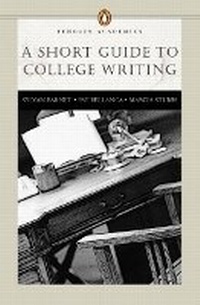
A Short Guide to College Writing
Published on 4. March 2002
Book
Paperback/Softback
400 pages
978-0-321-09101-7 (ISBN)
Description
As part of Longman's Penguin Academic Series, A Short Guide to College Writing is a brief rhetoric focused on academic writing.
With a well-known author team, this book offers practical advice on writing college essays from the beginning of the process to the end. The student can turn to this book for advice about matters large and small-choosing a topic, writing an analysis, constructing a paragraph, using and documenting a source, punctuating a quotation. The instructor can suggest chapters for students to consult in revising a draft, editing a revision, or preparing final copy. Although discussion and examples of description and narration are included, the emphasis is on analysis, argument, and research. Students are taught the essential skills for effective college writing-skills one needs when writing an essay for a first-year composition course, or an art history class, or a cultural studies seminar.
With a well-known author team, this book offers practical advice on writing college essays from the beginning of the process to the end. The student can turn to this book for advice about matters large and small-choosing a topic, writing an analysis, constructing a paragraph, using and documenting a source, punctuating a quotation. The instructor can suggest chapters for students to consult in revising a draft, editing a revision, or preparing final copy. Although discussion and examples of description and narration are included, the emphasis is on analysis, argument, and research. Students are taught the essential skills for effective college writing-skills one needs when writing an essay for a first-year composition course, or an art history class, or a cultural studies seminar.
More details
Language
English
Place of publication
United States
Publishing group
Pearson Education (US)
Target group
Professional and scholarly
Dimensions
Height: 210 mm
Width: 648 mm
Weight
1000 gr
ISBN-13
978-0-321-09101-7 (9780321091017)
Copyright in bibliographic data and cover images is held by Nielsen Book Services Limited or by the publishers or by their respective licensors: all rights reserved.
Schweitzer Classification
Other editions
New editions
Sylvan Barnet | Pat Bellanca | Marcia Stubbs
A Short Guide to College Writing (Penguin Academics Series)
Book
08/2004
2nd Edition
Pearson
€24.75
Article exhausted; check for reprint
Content
Preface.
Ancillaries.
I. DRAFTING AND REVISING.
1. Developing Ideas.
Starting.
How to Write: Writing as a Physical Act.
Some Ideas About Ideas: Strategies for Invention.
Listing.
Clustering.
Freewriting.
Focusing.
What to Write About: Subject, Topic, Thesis.
Developing a Thesis.
Developing Ideas.
Thinking About Audience and Purpose.
Writing the Draft.
2. Drafting and Revising.
Reading Drafts.
Imagining Your Audience and Asking Questions.
Notes, Drafts, Revisions: An Historian Revises Her Work.
Frances FitzGerald, Prospero's Army.
3. Shaping Paragraphs.
Paragraph Form and Substance.
Paragraph Unity: Topic Sentences, Topic Ideas.
Examples of Topic Sentences at Beginning and at End, and of Topic Ideas.
Unifying Ideas into Paragraphs.
Organization in Paragraphs.
Coherence in Paragraphs.
Transitions.
Repetition.
Linking Paragraphs Together. Cheryl Lee, The Story Behind the Gestures (student essay).
Paragraph Length.
The Use and Abuse of Short Paragraphs.
Introductory Paragraphs.
Concluding Paragraphs.
Checklist for Revising Paragraphs.
4. Revising for Conciseness.
Instant Prose.
How to Avoid Instant Prose.
Extra Words and Empty Words.
Weak Intensifiers.
Circumlocutions.
Wordy Beginnings.
Empty Conclusions.
Wordy Uses of the Verbs To Be, To Have, and To Make.
Redundancy.
Negative Constructions.
Extra Sentences, Extra Clauses: Subordination.
Who, Which, That.
It Is, This Is, There Are.
Some Concluding Remarks About Conciseness.
A Checklist for Revising for Conciseness.
5. Revising for Clarity.
Clarity.
Clarity and Exactness: Using the Right Word.
Denotation.
Connotation.
Avoiding Sexist Language.
Quotation Marks as Apologies.
Being Specific.
Using Examples.
Jargon and Technical Language.
Cliches.
Metaphors and Mixed Metaphors.
Euphemisms.
Passive or Active Voice?
The Writer's "I."
Clarity and Coherence.
Cats Are Dogs.
Items in a Series.
Modifiers.
Misplaced Modifiers.
Squinting Modifiers.
Dangling Modifiers.
Reference of Pronouns.
Vague Reference of Pronouns.
Shift in Pronouns.
Ambiguous Reference of Pronouns.
Agreement.
Noun and Pronoun.
Subject and Verb.
Three Additional Points.
Repetition and Variation.
Clarity and Sentence Structure: Parallelism.
A Checklist for Revising for Clarity.
6. Writing with Style.
Academic Styles, Academic Audiences.
Defining Style.
Style and Tone.
Acquiring Style.
Clarity and Texture.
A Repertory of Styles.
Originality and Imitation.
Practice in Acquiring Style.
Benjamin Franklin's Exercise.
Paraphrasing.
Imitating the Cumulative Sentence.
II. COLLEGE WRITING.
7. Analyzing Texts.
Analyzing a Drawing.
Analyzing Texts.
Analysis at Work: A Student Analyzes a Short Story.
Kate Chopin, Ripe Figs.
Marilyn Brown, Images of Ripening in Kate Chopin's "Ripe Figs" (Student Essay).
A Brief Analysis of the Student's Analysis.
A Note on the Use of Summary in the Analytic Essay.
Classifying and Thinking.
Examples of Classifying.
Cause and Effect.
Dolores Hayden, Advertising, Pornography, and Public Space.
Analysis and Description.
Description at Work in the Analytic Essay.
Comparing.
Organizing Short Comparisons.
Longer Comparisons.
Ways of Organizing an Essay Devoted to a Comparison.
A Checklist for Revising Comparisons.
Analyzing a Process.
Anne Hebald Mandelbaum, It's the Portly Penguin That Gets the Girl, French Biologist Claims.
Explaining an Analysis.
Arthur Conan Doyle, The Science of Deduction.
8. Persuading Readers.
Making Reasonable Arguments.
Claims and Evidence.
Three Kinds of Claims.
Claims of Fact.
Claims of Value.
Claims of Policy.
Three Kinds of Evidence: Examples, Testimony, Statistics.
Examples.
Testimony.
Statistics.
A Note on Definition in the Persuasive Essay.
Definition at Work in the Persuasive Essay.
Lena Flora, The Plight of the Politically Correct (Student Essay).
How Much Evidence Is Enough?
Avoiding Fallacies.
Wit.
Avoiding Sarcasm.
Organizing an Argument.
A Checklist for Revising Drafts of Persuasive Essays.
Persuasion at Work: Two Writers Consider the Death Penalty.
Edward Koch, Death and Justice: How Capital Punishment Affirms Life.
A Brief Analysis of Koch's Argument.
David Bruck, The Death Penalty.
A Brief Analysis of Bruck's Response to Koch.
9. Using Sources.
Why Use Sources?
What is a Source? Primary and Secondary Materials.
Developing a Research Topic.
Finding Sources.
The Library's Central Information System.
Using the Internet.
A Checklist for Evaluating Websites.
Reading and Taking Notes on Secondary Sources.
A Guide to Note Taking.
Acknowledging Sources.
Using Sources Without Plagiarizing.
Acknowledging a Direct Quotation.
Acknowledging a Paraphrase or Summary.
Acknowledging an Idea.
Fair Use of Common Knowledge.
"But How Else Can I Put It?".
Writing the Research Essay.
A Checklist for Reading Drafts of Research Essays.
A Sample Research Essay (MLA Format).
Beatrice Cody, Politics and Psychology in the Awakening (Student Essay).
A Brief Analysis of Beatrice Cody's Use of Sources.
III. A COLLEGE WRITER'S HANDBOOK.
10. Punctuation.
A Word on Computer Grammar and Punctuation Checks.
Three Common Errors: Fragments, Comma Splices, and Run-on Sentences.
Fragments and How to Correct Them.
Comma Splices and Run-On Sentences, and How to Correct Them.
The Period.
The Question Mark.
The Colon.
The Semicolon.
The Comma.
The Dash.
Parentheses.
Italics.
Capital Letters.
The Hyphen.
The Apostrophe.
Abbreviations.
Numbers.
Exercises.
11. Usage.
A Note on Idioms.
Glossary.
12. Documentation.
MLA Format.
Citations Within the Text.
A Note on Footnotes in an Essay Using Parenthetic Citations.
The List of Works Cited.
APA Format.
An Overview of the APA Format.
Citations Within the Text.
The List of References.
Sample References.
A Note on Other Systems of Documentation.
A Sample Research Essay in APA Format.
Jacob Alexander, Nitrite: Preservative or Carcinogen? (student essay).
13. Manuscript Preparation.
Basic Manuscript Form.
Using Quotations (and Punctuating Quotations Correctly).
Corrections in the Final Copy.
Last Words.
Ancillaries.
I. DRAFTING AND REVISING.
1. Developing Ideas.
Starting.
How to Write: Writing as a Physical Act.
Some Ideas About Ideas: Strategies for Invention.
Listing.
Clustering.
Freewriting.
Focusing.
What to Write About: Subject, Topic, Thesis.
Developing a Thesis.
Developing Ideas.
Thinking About Audience and Purpose.
Writing the Draft.
2. Drafting and Revising.
Reading Drafts.
Imagining Your Audience and Asking Questions.
Notes, Drafts, Revisions: An Historian Revises Her Work.
Frances FitzGerald, Prospero's Army.
3. Shaping Paragraphs.
Paragraph Form and Substance.
Paragraph Unity: Topic Sentences, Topic Ideas.
Examples of Topic Sentences at Beginning and at End, and of Topic Ideas.
Unifying Ideas into Paragraphs.
Organization in Paragraphs.
Coherence in Paragraphs.
Transitions.
Repetition.
Linking Paragraphs Together. Cheryl Lee, The Story Behind the Gestures (student essay).
Paragraph Length.
The Use and Abuse of Short Paragraphs.
Introductory Paragraphs.
Concluding Paragraphs.
Checklist for Revising Paragraphs.
4. Revising for Conciseness.
Instant Prose.
How to Avoid Instant Prose.
Extra Words and Empty Words.
Weak Intensifiers.
Circumlocutions.
Wordy Beginnings.
Empty Conclusions.
Wordy Uses of the Verbs To Be, To Have, and To Make.
Redundancy.
Negative Constructions.
Extra Sentences, Extra Clauses: Subordination.
Who, Which, That.
It Is, This Is, There Are.
Some Concluding Remarks About Conciseness.
A Checklist for Revising for Conciseness.
5. Revising for Clarity.
Clarity.
Clarity and Exactness: Using the Right Word.
Denotation.
Connotation.
Avoiding Sexist Language.
Quotation Marks as Apologies.
Being Specific.
Using Examples.
Jargon and Technical Language.
Cliches.
Metaphors and Mixed Metaphors.
Euphemisms.
Passive or Active Voice?
The Writer's "I."
Clarity and Coherence.
Cats Are Dogs.
Items in a Series.
Modifiers.
Misplaced Modifiers.
Squinting Modifiers.
Dangling Modifiers.
Reference of Pronouns.
Vague Reference of Pronouns.
Shift in Pronouns.
Ambiguous Reference of Pronouns.
Agreement.
Noun and Pronoun.
Subject and Verb.
Three Additional Points.
Repetition and Variation.
Clarity and Sentence Structure: Parallelism.
A Checklist for Revising for Clarity.
6. Writing with Style.
Academic Styles, Academic Audiences.
Defining Style.
Style and Tone.
Acquiring Style.
Clarity and Texture.
A Repertory of Styles.
Originality and Imitation.
Practice in Acquiring Style.
Benjamin Franklin's Exercise.
Paraphrasing.
Imitating the Cumulative Sentence.
II. COLLEGE WRITING.
7. Analyzing Texts.
Analyzing a Drawing.
Analyzing Texts.
Analysis at Work: A Student Analyzes a Short Story.
Kate Chopin, Ripe Figs.
Marilyn Brown, Images of Ripening in Kate Chopin's "Ripe Figs" (Student Essay).
A Brief Analysis of the Student's Analysis.
A Note on the Use of Summary in the Analytic Essay.
Classifying and Thinking.
Examples of Classifying.
Cause and Effect.
Dolores Hayden, Advertising, Pornography, and Public Space.
Analysis and Description.
Description at Work in the Analytic Essay.
Comparing.
Organizing Short Comparisons.
Longer Comparisons.
Ways of Organizing an Essay Devoted to a Comparison.
A Checklist for Revising Comparisons.
Analyzing a Process.
Anne Hebald Mandelbaum, It's the Portly Penguin That Gets the Girl, French Biologist Claims.
Explaining an Analysis.
Arthur Conan Doyle, The Science of Deduction.
8. Persuading Readers.
Making Reasonable Arguments.
Claims and Evidence.
Three Kinds of Claims.
Claims of Fact.
Claims of Value.
Claims of Policy.
Three Kinds of Evidence: Examples, Testimony, Statistics.
Examples.
Testimony.
Statistics.
A Note on Definition in the Persuasive Essay.
Definition at Work in the Persuasive Essay.
Lena Flora, The Plight of the Politically Correct (Student Essay).
How Much Evidence Is Enough?
Avoiding Fallacies.
Wit.
Avoiding Sarcasm.
Organizing an Argument.
A Checklist for Revising Drafts of Persuasive Essays.
Persuasion at Work: Two Writers Consider the Death Penalty.
Edward Koch, Death and Justice: How Capital Punishment Affirms Life.
A Brief Analysis of Koch's Argument.
David Bruck, The Death Penalty.
A Brief Analysis of Bruck's Response to Koch.
9. Using Sources.
Why Use Sources?
What is a Source? Primary and Secondary Materials.
Developing a Research Topic.
Finding Sources.
The Library's Central Information System.
Using the Internet.
A Checklist for Evaluating Websites.
Reading and Taking Notes on Secondary Sources.
A Guide to Note Taking.
Acknowledging Sources.
Using Sources Without Plagiarizing.
Acknowledging a Direct Quotation.
Acknowledging a Paraphrase or Summary.
Acknowledging an Idea.
Fair Use of Common Knowledge.
"But How Else Can I Put It?".
Writing the Research Essay.
A Checklist for Reading Drafts of Research Essays.
A Sample Research Essay (MLA Format).
Beatrice Cody, Politics and Psychology in the Awakening (Student Essay).
A Brief Analysis of Beatrice Cody's Use of Sources.
III. A COLLEGE WRITER'S HANDBOOK.
10. Punctuation.
A Word on Computer Grammar and Punctuation Checks.
Three Common Errors: Fragments, Comma Splices, and Run-on Sentences.
Fragments and How to Correct Them.
Comma Splices and Run-On Sentences, and How to Correct Them.
The Period.
The Question Mark.
The Colon.
The Semicolon.
The Comma.
The Dash.
Parentheses.
Italics.
Capital Letters.
The Hyphen.
The Apostrophe.
Abbreviations.
Numbers.
Exercises.
11. Usage.
A Note on Idioms.
Glossary.
12. Documentation.
MLA Format.
Citations Within the Text.
A Note on Footnotes in an Essay Using Parenthetic Citations.
The List of Works Cited.
APA Format.
An Overview of the APA Format.
Citations Within the Text.
The List of References.
Sample References.
A Note on Other Systems of Documentation.
A Sample Research Essay in APA Format.
Jacob Alexander, Nitrite: Preservative or Carcinogen? (student essay).
13. Manuscript Preparation.
Basic Manuscript Form.
Using Quotations (and Punctuating Quotations Correctly).
Corrections in the Final Copy.
Last Words.