

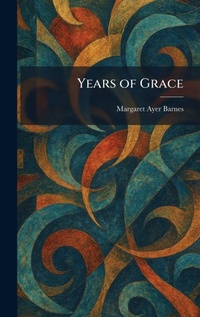
Years of Grace
Description
"Years of Grace" is a sweeping domestic saga that traces the life of Jane Ward from her late-nineteenth-century childhood in Chicago through the transformative decades leading into the 1920s. As Jane matures, she navigates the complexities of family expectations, romantic yearnings, and the evolving social landscape of an American city in transition. The narrative provides a rich, detailed look at the constraints and freedoms faced by women across two generations, capturing the subtle shifts in manners and morals that define the passage of time.
Through Jane's eyes, readers witness the transition from the Victorian era's rigid structures to the vibrant, often turbulent modernity of the early twentieth century. The work explores themes of duty, personal fulfillment, and the inevitable tension between traditional values and new cultural realities. "Years of Grace" is a poignant reflection on the cyclical nature of life and the quiet dignity found in the endurance of the human spirit. This novel remains a significant exploration of the American experience and the personal history of a woman living through an era of profound change.
This work has been selected by scholars as being culturally important, and is part of the knowledge base of civilization as we know it. This work was reproduced from the original artifact, and remains as true to the original work as possible. Therefore, you may see the original copyright references, library stamps (as most of these works have been housed in our most important libraries around the world), and other notations in the work.
This work is in the public domain in the United States of America, and possibly other nations. Within the United States, you may freely copy and distribute this work, as no entity (individual or corporate) has a copyright on the body of the work.
As a reproduction of a historical artifact, this work may contain missing or blurred pages, poor pictures, errant marks, etc. Scholars believe, and we concur, that this work is important enough to be preserved, reproduced, and made generally available to the public. We appreciate your support of the preservation process, and thank you for being an important part of keeping this knowledge alive and relevant.