

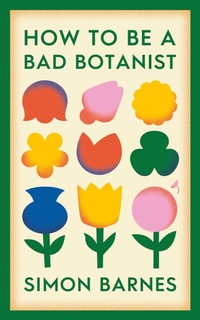
How to be a Bad Botanist
Published on 25. April 2024
Book
Hardback
288 pages
978-1-3985-1891-9 (ISBN)
Description
Chosen by WATERSTONES as one of their BEST NATURE WRITING BOOKS of 2024
Can you tell a tomato from a grape? A patch of grass from a Christmas tree? Then congratulations - you're a botanist.
Self-confessed bad birdwatcher Simon Barnes thought he knew nothing about plants. He didn't have anything against them: trees are interesting because birds perch in them; plants are useful because they create habitats, and all birds live in habitats. But while admiring the tenacity of some yellow horned poppies thriving on a shingle beach - a place where it seemed no plant had a hope of surviving - he was struck by a simple yet profound truth. It all begins with plants.
In this charming and inspiring book, Barnes takes us on a fascinating journey, from the simple genius of photosynthesis to the complex and bizarre ways that plants reproduce. We consider plants as varied as cabbages and conifers, familiar wildflowers and enigmatic orchids, nefarious parasites and plants that carry deadly poisons - helping us better appreciate the beauty and diversity of the natural world.
Both a primer on botany and an exploration of how plants make our external and interior worlds, How to Be a Bad Botanist opens our eyes to the wonders around us. Plants are everywhere, in every part of your life, and you know more than you think.
Can you tell a tomato from a grape? A patch of grass from a Christmas tree? Then congratulations - you're a botanist.
Self-confessed bad birdwatcher Simon Barnes thought he knew nothing about plants. He didn't have anything against them: trees are interesting because birds perch in them; plants are useful because they create habitats, and all birds live in habitats. But while admiring the tenacity of some yellow horned poppies thriving on a shingle beach - a place where it seemed no plant had a hope of surviving - he was struck by a simple yet profound truth. It all begins with plants.
In this charming and inspiring book, Barnes takes us on a fascinating journey, from the simple genius of photosynthesis to the complex and bizarre ways that plants reproduce. We consider plants as varied as cabbages and conifers, familiar wildflowers and enigmatic orchids, nefarious parasites and plants that carry deadly poisons - helping us better appreciate the beauty and diversity of the natural world.
Both a primer on botany and an exploration of how plants make our external and interior worlds, How to Be a Bad Botanist opens our eyes to the wonders around us. Plants are everywhere, in every part of your life, and you know more than you think.
Reviews / Votes
'I'd give Simon Barnes's How to Be a Bad Botanist to anyone interested in what we take for granted, the plants around us. He writes as an everyman, not an expert, which makes the book accessible and appealing.' -- Michael Palin * Observer Best Books of 2024 * 'I can't think of a better introduction for an intelligent reader . . . a book whose time has come' * Country Living * 'Funny and inspiring' * People's Friend *More details
Language
English
Place of publication
London
United Kingdom
Dimensions
Height: 219 mm
Width: 138 mm
Thickness: 30 mm
Weight
398 gr
ISBN-13
978-1-3985-1891-9 (9781398518919)
Copyright in bibliographic data and cover images is held by Nielsen Book Services Limited or by the publishers or by their respective licensors: all rights reserved.
Schweitzer Classification
Other editions
Additional editions
Person
Simon Barnes is the author of many wild volumes, including the bestselling Bad Birdwatcher trilogy, Rewild Yourself, On The Marsh and The History of the World in 100 Animals. He is a council member of World Land Trust, trustee of Conservation South Luangwa and patron of Save the Rhino. In 2014, he was awarded the Rothschild Medal for services to conservation. He lives in Norfolk with his family and horses, where he manages several acres for wildlife. He was the Chief Sports Writer for The Times until 2014, having worked for the paper for 30 years.