

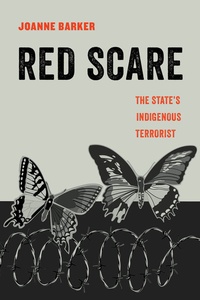
Red Scare
The State's Indigenous Terrorist
1st Edition
Published on 3. December 2021
Book
Paperback/Softback
192 pages
978-0-520-30318-8 (ISBN)
Description
How the rhetoric of terrorism has been used against high-profile movements to justify the oppression and suppression of Indigenous activists.
New Indigenous movements are gaining traction in North America: the Missing and Murdered Women and Idle No More movements in Canada, and the Native Lives Matter and NoDAPL movements in the United States. These do not represent new demands for social justice and treaty rights, which Indigenous groups have sought for centuries. But owing to the extraordinary visibility of contemporary activism, Indigenous people have been newly cast as terrorists-a designation that justifies severe measures of policing, exploitation, and violence. Red Scare investigates the intersectional scope of these four movements and the broader context of the treatment of Indigenous social justice movements as threats to neoliberal and imperialist social orders.
In Red Scare, Joanne Barker shows how US and Canadian leaders leverage the fear-driven discourses of terrorism to allow for extreme responses to Indigenous activists, framing them as threats to social stability and national security. The alignment of Indigenous movements with broader struggles against sexual, police, and environmental violence puts them at the forefront of new intersectional solidarities in prominent ways. The activist-as-terrorist framing is cropping up everywhere, but the historical and political complexities of Indigenous movements and state responses are unique. Indigenous criticisms of state policy, resource extraction and contamination, intense surveillance, and neoliberal values are met with outsized and shocking measures of militarized policing, environmental harm, and sexual violence. Red Scare provides students and readers with a concise and thorough survey of these movements and their links to broader organizing; the common threads of historical violence against Indigenous people; and the relevant alternatives we can find in Indigenous forms of governance and relationality.
New Indigenous movements are gaining traction in North America: the Missing and Murdered Women and Idle No More movements in Canada, and the Native Lives Matter and NoDAPL movements in the United States. These do not represent new demands for social justice and treaty rights, which Indigenous groups have sought for centuries. But owing to the extraordinary visibility of contemporary activism, Indigenous people have been newly cast as terrorists-a designation that justifies severe measures of policing, exploitation, and violence. Red Scare investigates the intersectional scope of these four movements and the broader context of the treatment of Indigenous social justice movements as threats to neoliberal and imperialist social orders.
In Red Scare, Joanne Barker shows how US and Canadian leaders leverage the fear-driven discourses of terrorism to allow for extreme responses to Indigenous activists, framing them as threats to social stability and national security. The alignment of Indigenous movements with broader struggles against sexual, police, and environmental violence puts them at the forefront of new intersectional solidarities in prominent ways. The activist-as-terrorist framing is cropping up everywhere, but the historical and political complexities of Indigenous movements and state responses are unique. Indigenous criticisms of state policy, resource extraction and contamination, intense surveillance, and neoliberal values are met with outsized and shocking measures of militarized policing, environmental harm, and sexual violence. Red Scare provides students and readers with a concise and thorough survey of these movements and their links to broader organizing; the common threads of historical violence against Indigenous people; and the relevant alternatives we can find in Indigenous forms of governance and relationality.
Reviews / Votes
"Illuminating and interesting." * American Indian Quarterly * "The scare in the title of this provocative work evokes state-based representational strategies aimed at manipulating the public, the courts, and other institutions to view Indigenous peoples as subhuman domestic terrorists so that policies and practices of dispossession and violence can operate with impunity. . . . Barker suggests that Indigenous peoples might 'oppose and dissociate imperial relations' by drawing from Indigenous feminist thought, particularly addressing rematriation, rootedness, and relationality. Highly recommended." * CHOICE *More details
Series
Edition
First Edition
Language
English
Place of publication
Berkerley
United States
Target group
Professional and scholarly
Product notice
Paperback (trade)
Dimensions
Height: 210 mm
Width: 140 mm
Thickness: 15 mm
Weight
227 gr
ISBN-13
978-0-520-30318-8 (9780520303188)
Copyright in bibliographic data and cover images is held by Nielsen Book Services Limited or by the publishers or by their respective licensors: all rights reserved.
Schweitzer Classification
Other editions
Additional editions
E-Book
12/2021
1st Edition
Naval Institute Press
€9.49
Available for download
Person
Joanne Barker (Lenape) is Professor of American Indian Studies at San Francisco State University. She is author of Native Acts: Law, Recognition, and Cultural Authenticity and editor of Critically Sovereign: Indigenous Gender, Sexuality, and Feminist Studies.
Content
Overview
Prologue
Scared Red
The Murderable Indian: Terror as State (In)Security
The Kinless Indian: Terror as Social (In)Stability
Radical Alterities from Huckleberry Roots
Acknowledgments
Appendix I: A Chronology
Appendix II: Cherokee Treaties and Membership/Census Rolls
Notes
Glossary
Selected Bibliography
Prologue
Scared Red
The Murderable Indian: Terror as State (In)Security
The Kinless Indian: Terror as Social (In)Stability
Radical Alterities from Huckleberry Roots
Acknowledgments
Appendix I: A Chronology
Appendix II: Cherokee Treaties and Membership/Census Rolls
Notes
Glossary
Selected Bibliography