

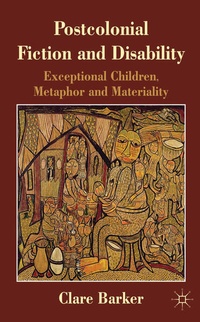
Postcolonial Fiction and Disability
Exceptional Children, Metaphor and Materiality
Published on 6. January 2012
Book
Hardback
IX, 242 pages
978-0-230-30788-9 (ISBN)
Description
This book is the first study of disability in postcolonial fiction. Focusing on canonical novels, it explores the metaphorical functions and material presence of disabled child characters. Barker argues that progressive disability politics emerge from postcolonial concerns, and establishes dialogues between postcolonialism and disability studies.
Reviews / Votes
'Clare Barker's Exceptional Children is a very timely and distinctive book, which makes a strong ethical argument for a critical negotiation of postcolonial studies and disability studies through some illuminating readings of the figure of the child in postcolonial fiction.' - Stephen Morton, Senior Lecturer in English, University of Southampton.
More details
Edition
2011 edition
Language
English
Place of publication
London
United Kingdom
Target group
Professional and scholarly
Product notice
Unsewn / adhesive bound
Paper over boards
Illustrations
IX, 242 p.
Dimensions
Height: 218 mm
Width: 142 mm
Thickness: 23 mm
Weight
476 gr
ISBN-13
978-0-230-30788-9 (9780230307889)
DOI
10.1057/9780230360006
Schweitzer Classification
Other editions
Additional editions
E-Book
01/2012
1st Edition
Palgrave Macmillan
€106.99
Available for download
Book
01/2011
Palgrave Macmillan
€117.69
Shipment within 15-20 days
Person
CLARE BARKER Lecturer in English at the University of Birmingham, UK.
Content
Acknowledgements Introduction 'Decrepit, Deranged, Deformed': Indigeneity and Cultural Health in Potiki Hunger, Normalcy, and Postcolonial Disorder in Nervous Conditions and The Book of Not Cracking India and Partition: Dismembering the National Body The Nation as Freak Show: Monstrosity and Biopolitics in Midnight's Children 'Redreaming the World': Ontological Difference and Abiku Perception in The Famished Road Conclusion: Growing Up Bibliography Index