


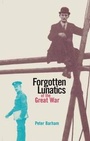
Forgotten Lunatics of the Great War
Book
Hardback
350 pages
978-0-00-257135-7 (ISBN)
Description
This volume presents the unwritten history of a forgotten underclass: the men who went mad at the horrors of World War I. Barham reconstructs the life histories of some of the 12,000 "soldier lunatics" admitted into British asylums by the end of the World War I. Some of the certified 'lunatics,' such as Siegfried Sassoon, escaped incarceration. Others were less lucky and remained in the asylum system until their deaths, some as recently as the 1980s. These were the most extreme "hopeless" cases of battlefront trauma, whose condition went beyond the "milder" shell shock. Barham uncovers a lamentable story of their abandonment by the State, their struggle to secure pensions and compensation and how it took a campaign of public pressure to bring them some redress. The book chronicles the men's experiences at the battlefront that led to their derangement and the progress and lives of inmates after life in the asylums.
For instance, George Henderson who fought a lifelong battle with the Ministry of Pensions after his complete mental breakdown at Gallipoli in 1915, until his death in 1967; Leonard "the idiot" and Ernest "the moral imbecile", who attempted to lead normal lives in society despite their demeaning ascriptions. Barham presents an indictment of society's unwillingness to take responsibility for the damaged minds of its World War I soldiers and gives a voice to a population previously cast into oblivion.
This volume presents the unwritten history of a forgotten underclass: the men who went mad at the horrors of World War I. Barham reconstructs the life histories of some of the 12,000 "soldier lunatics" admitted into British asylums by the end of the World War I. Some of the certified 'lunatics,' such as Siegfried Sassoon, escaped incarceration. Others were less lucky and remained in the asylum system until their deaths, some as recently as the 1980s. These were the most extreme "hopeless" cases of battlefront trauma, whose condition went beyond the "milder" shell shock. Barham uncovers a lamentable story of their abandonment by the State, their struggle to secure pensions and compensation and how it took a campaign of public pressure to bring them some redress. The book chronicles the men's experiences at the battlefront that led to their derangement and the progress and lives of inmates after life in the asylums.
For instance, George Henderson who fought a lifelong battle with the Ministry of Pensions after his complete mental breakdown at Gallipoli in 1915, until his death in 1967; Leonard "the idiot" and Ernest "the moral imbecile", who attempted to lead normal lives in society despite their demeaning ascriptions. Barham presents an indictment of society's unwillingness to take responsibility for the damaged minds of its World War I soldiers and gives a voice to a population previously cast into oblivion.
For instance, George Henderson who fought a lifelong battle with the Ministry of Pensions after his complete mental breakdown at Gallipoli in 1915, until his death in 1967; Leonard "the idiot" and Ernest "the moral imbecile", who attempted to lead normal lives in society despite their demeaning ascriptions. Barham presents an indictment of society's unwillingness to take responsibility for the damaged minds of its World War I soldiers and gives a voice to a population previously cast into oblivion.
This volume presents the unwritten history of a forgotten underclass: the men who went mad at the horrors of World War I. Barham reconstructs the life histories of some of the 12,000 "soldier lunatics" admitted into British asylums by the end of the World War I. Some of the certified 'lunatics,' such as Siegfried Sassoon, escaped incarceration. Others were less lucky and remained in the asylum system until their deaths, some as recently as the 1980s. These were the most extreme "hopeless" cases of battlefront trauma, whose condition went beyond the "milder" shell shock. Barham uncovers a lamentable story of their abandonment by the State, their struggle to secure pensions and compensation and how it took a campaign of public pressure to bring them some redress. The book chronicles the men's experiences at the battlefront that led to their derangement and the progress and lives of inmates after life in the asylums.
For instance, George Henderson who fought a lifelong battle with the Ministry of Pensions after his complete mental breakdown at Gallipoli in 1915, until his death in 1967; Leonard "the idiot" and Ernest "the moral imbecile", who attempted to lead normal lives in society despite their demeaning ascriptions. Barham presents an indictment of society's unwillingness to take responsibility for the damaged minds of its World War I soldiers and gives a voice to a population previously cast into oblivion.
More details
Language
English
Place of publication
London
United Kingdom
Publishing group
HarperCollins Publishers
Dimensions
Height: 234 mm
Width: 153 mm
ISBN-13
978-0-00-257135-7 (9780002571357)
Copyright in bibliographic data is held by Nielsen Book Services Limited or its licensors: all rights reserved.
Schweitzer Classification
Other editions
New editions
Peter Barham
Forgotten Lunatics of the Great War
Book
09/2004
Yale University Press
€43.33
Article is exhausted; no reprint
Person
Peter Barham is a psychologist and medical historian and protege of Roy Porter. Recent books include Closing The Asylum: The Mental Patient in Modern Society (Penguin, 1997)
Peter Barham is a psychologist and medical historian and protege of Roy Porter. Recent books include Closing The Asylum: The Mental Patient in Modern Society (Penguin, 1997)
Peter Barham is a psychologist and medical historian and protege of Roy Porter. Recent books include Closing The Asylum: The Mental Patient in Modern Society (Penguin, 1997)