

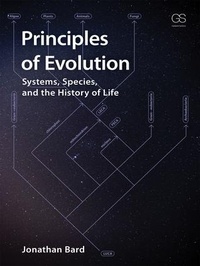
Principles of Evolution
Systems, Species, and the History of Life
1st Edition
Published on 23. September 2016
Book
Paperback/Softback
376 pages
978-0-8153-4539-8 (ISBN)
Description
Principles of Evolution covers all aspects of the subject. Following an introductory section that provides necessary background, it has chapters on the evidence for evolution that cover the fossil record, DNA-sequence homologies, and protein homologies (evo-devo). It also includes a full history of life from the first universal common ancestor, through the rise of the eukaryote and on to the major groups of phyla. This section is followed by one on the mechanism of evolution with chapters on variation, selection and speciation. The main part of the book ends with a chapter on human evolution and this is followed by appendices that expand on the making of fossils, the history of the subject and creationism.
What marks this book as different from others on evolution is its systems-biology perspective. This new area focuses on the role of protein networks and on multi-level complexity, and is used in three contexts. First, most biological activity is driven by such networks and this has direct implications for understanding evo-devo and for seeing how variation is initiated, mainly during embryogenesis. Second, it provides the natural language for discussing phylogenetics. Third, evolutionary change involves events at levels ranging from the genome to the ecosystem and systems biology provides a context for integrating material of this complexity.
The book assumes a basic grounding in biology but little mathematics as the difficult subject of evolutionary population genetics is mainly covered qualitatively, with major results being discussed and used rather than derived. Principles of Evolution will be an interesting and thought-provoking text for undergraduates and graduates across the biological sciences.
What marks this book as different from others on evolution is its systems-biology perspective. This new area focuses on the role of protein networks and on multi-level complexity, and is used in three contexts. First, most biological activity is driven by such networks and this has direct implications for understanding evo-devo and for seeing how variation is initiated, mainly during embryogenesis. Second, it provides the natural language for discussing phylogenetics. Third, evolutionary change involves events at levels ranging from the genome to the ecosystem and systems biology provides a context for integrating material of this complexity.
The book assumes a basic grounding in biology but little mathematics as the difficult subject of evolutionary population genetics is mainly covered qualitatively, with major results being discussed and used rather than derived. Principles of Evolution will be an interesting and thought-provoking text for undergraduates and graduates across the biological sciences.
More details
Language
English
Place of publication
Bosa Roca
United States
Publishing group
Taylor & Francis Inc
Target group
College/higher education
Product notice
Paperback (trade)
Unsewn / adhesive bound
Illustrations
85 s/w Abbildungen, 13 s/w Photographien bzw. Rasterbilder, 72 s/w Zeichnungen, 20 s/w Tabellen
20 Tables, black and white; 72 Line drawings, black and white; 13 Halftones, black and white; 85 Illustrations, black and white
Dimensions
Height: 244 mm
Width: 173 mm
Thickness: 20 mm
Weight
2540 gr
ISBN-13
978-0-8153-4539-8 (9780815345398)
Copyright in bibliographic data and cover images is held by Nielsen Book Services Limited or by the publishers or by their respective licensors: all rights reserved.
Schweitzer Classification
Other editions
Additional editions
E-Book
09/2016
1st Edition
Garland Science
€125.99
Available for download
E-Book
09/2016
1st Edition
Garland Science
€125.99
Available for download
Person
Content
SECTION 1: AN INTRODUCTION TO EVOLUTION
1. Approaching Evolution
2. A Potted History of Evolutionary Science
3. Life Today: Species, Diversity, and Classification
SECTION 2: THE EVIDENCE FOR EVOLUTION
4. The Fossil Record
5. Darwinian Descent With Modification: Evolutionary Taxonomy and Cladistics
6. The Anatomical Evidence for Vertebrate Evolution: From Fish to Birds
7. The Anatomical Evidence for Vertebrate Evolution: Mammals
8. The Genomic Evidence for Evolution
9. The First Three Billion Years of Life: From the First Universal Common Ancestor to the Last Eukaryote Common Ancestor and Beyond
10. Evo-devo 1: Embryos
11. Evo-devo 2: The Evidence From Functional Homologies
SECTION 3: THE MECHANISMS OF EVOLUTION
12. Variation 1: Populations and Genes
13. Variation 2: Clades and Networks
14. Adaptation, Fitness, and Selection
15. Speciation
16. Human Evolution
17. Conclusions
APPENDICES
Appendix 1. Systems Biology
Appendix 2. A History of Evolutionary Thought
Appendix 3. Rocks, Dates, and Fossils
Appendix 4. Evolution Versus Creationism
1. Approaching Evolution
2. A Potted History of Evolutionary Science
3. Life Today: Species, Diversity, and Classification
SECTION 2: THE EVIDENCE FOR EVOLUTION
4. The Fossil Record
5. Darwinian Descent With Modification: Evolutionary Taxonomy and Cladistics
6. The Anatomical Evidence for Vertebrate Evolution: From Fish to Birds
7. The Anatomical Evidence for Vertebrate Evolution: Mammals
8. The Genomic Evidence for Evolution
9. The First Three Billion Years of Life: From the First Universal Common Ancestor to the Last Eukaryote Common Ancestor and Beyond
10. Evo-devo 1: Embryos
11. Evo-devo 2: The Evidence From Functional Homologies
SECTION 3: THE MECHANISMS OF EVOLUTION
12. Variation 1: Populations and Genes
13. Variation 2: Clades and Networks
14. Adaptation, Fitness, and Selection
15. Speciation
16. Human Evolution
17. Conclusions
APPENDICES
Appendix 1. Systems Biology
Appendix 2. A History of Evolutionary Thought
Appendix 3. Rocks, Dates, and Fossils
Appendix 4. Evolution Versus Creationism