

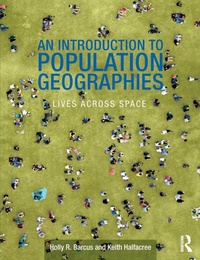
An Introduction to Population Geographies
Lives Across Space
1st Edition
Published on 31. August 2017
Book
Paperback/Softback
398 pages
978-0-415-56995-8 (ISBN)
Description
An Introduction to Population Geographies provides a foundation to the incredibly diverse, topical and interesting field of twenty-first-century population geography. It establishes the substantive concerns of the subdiscipline, acknowledges the sheer diversity of its approaches, key concepts and theories and engages with the resulting major areas of academic debate that stem from this richness.
Written in an accessible style and assuming little prior knowledge of topics covered, yet drawing on a wide range of diverse academic literature, the book's particular originality comes from its extended definition of population geography that locates it firmly within the multiple geographies of the life course. Consequently, issues such as childhood and adulthood, family dynamics, ageing, everyday mobilities, morbidity and differential ability assume a prominent place alongside the classic population geography triumvirate of births, migrations and deaths. This broader framing of the field allows the book to address more holistically aspects of lives across space often provided little attention in current textbooks. Particular note is given to how these lives are shaped though hybrid social, biological and individual arenas of differential life course experience. By engaging with traditional quantitative perspectives and newer qualitative insights, the authors engage students from the quantitative macro scale of population to the micro individual scale.
Aimed at higher-level undergraduate and graduate students, this introductory text provides a well-developed pedagogy, including case studies that illustrate theory, concepts and issues.
Written in an accessible style and assuming little prior knowledge of topics covered, yet drawing on a wide range of diverse academic literature, the book's particular originality comes from its extended definition of population geography that locates it firmly within the multiple geographies of the life course. Consequently, issues such as childhood and adulthood, family dynamics, ageing, everyday mobilities, morbidity and differential ability assume a prominent place alongside the classic population geography triumvirate of births, migrations and deaths. This broader framing of the field allows the book to address more holistically aspects of lives across space often provided little attention in current textbooks. Particular note is given to how these lives are shaped though hybrid social, biological and individual arenas of differential life course experience. By engaging with traditional quantitative perspectives and newer qualitative insights, the authors engage students from the quantitative macro scale of population to the micro individual scale.
Aimed at higher-level undergraduate and graduate students, this introductory text provides a well-developed pedagogy, including case studies that illustrate theory, concepts and issues.
Reviews / Votes
"Open, lively, and path-breaking - Barcus and Halfacree re-centre our understandings of population geographies through their life course framing and inspire and provoke in equal measure: brilliant!"Professor Adrian J. Bailey, Hong Kong Baptist University, Hong Kong.
"At the core of this textbook is the argument that population geography should center on human beings and the myriad ways human beings live their lives across space. It is a more intimate approach to demography than is found in most other textbooks. The authors introduce students to life course theory and incorporate stories from around the globe in a way that humanizes the field and widens its scope."
John Cromartie, Geographer at Economic Research Service, U.S. Department of Agriculture, USA.
More details
Language
English
Place of publication
London
United Kingdom
Publishing group
Taylor & Francis Ltd
Target group
College/higher education
Undergraduate
Illustrations
103 s/w Abbildungen, 33 s/w Photographien bzw. Rasterbilder, 70 s/w Zeichnungen, 82 s/w Tabellen
82 Tables, black and white; 70 Line drawings, black and white; 33 Halftones, black and white; 103 Illustrations, black and white
Dimensions
Height: 246 mm
Width: 189 mm
Thickness: 22 mm
Weight
797 gr
ISBN-13
978-0-415-56995-8 (9780415569958)
Copyright in bibliographic data and cover images is held by Nielsen Book Services Limited or by the publishers or by their respective licensors: all rights reserved.
Schweitzer Classification
Other editions
Additional editions
E-Book
09/2017
1st Edition
Routledge
€59.49
Available for download
E-Book
09/2017
1st Edition
Routledge
€59.49
Available for download
Book
08/2017
1st Edition
Routledge
€231.80
Shipment within 15-20 days
Persons
Holly R. Barcus is a Professor and Chair in Geography at Macalester College, St. Paul, Minnesota, USA.
Keith Halfacree is a Reader in Human Geography at Swansea University, Swansea, UK.
Keith Halfacree is a Reader in Human Geography at Swansea University, Swansea, UK.
Content
List of Figures
List of Tables
List of Boxes
Preface
Chapter 1: Viewing Populations Spatially: Population Geography as Lives Across Space
1.1 Introduction: Lives Across Space
1.2 Of Populations and Population Geography
1.3 A Short History of Population Geography
1.4 Towards Relational Population Geographies
1.5 Lives Across Space
Chapter 2: Population Geographies of the Life Course
Introduction
Lives Individual and Common
Arenas of Differential Life Course Experience
Conclusion: Representing Lives Across Space
Chapter 3: Global Spatial Distributions of Population
3.1 Introduction: Snapshots of People in the World
3.2 The Populated World: a Global Demographic Perspective
3.3 The Populated World: Urban, Intra-Urban, Rural Spaces
3.4 Conclusion: Dynamism of Lives Across Space
Chapter 4: Fertility and Births
4.1 Introduction: Production of Children
4.2 Modelling Geographies of Fertility
4.3 Global Fertility Patterns
4.4 The "Value" of a Child
4.5 Managing Timing and Spacing of Births
4.6 State Policies and Fertility
4.7 "New" Fertilities
4.8 Conclusion: Fertility's Multiple Entanglements
Chapter 5: Placing Human Migration
5.1 Introduction: Defining Migration
5.2 The Era of Mobilities?
5.3 Migration as Natural Expression
5.4 Migration as Societal Expression
5.5 Migration as Individual Expression
5.6 Migration as Life Course Expression
5.7 Conclusion: Broadening Understanding of Human Migration
Chapter 6: From Everyday to Residential Mobilities
6.1 Introduction: Mobilities to Migrations
6.2 Everyday Mobilities
6.3 Residential Mobility
6.4 Conclusion
Chapter 7: Employment Migrations
7.1 Introduction: Beyond Commuting
7.2 Student Migrations
7.3 General Employment Migrations
7.4 Specialist Employment Migrations
7.5 Employment Migrations as Family and Community Practices
7.6 Conclusion
Chapter 8: Lifestyle Migrations
8.1 Introduction: Migration for the Project of the Self
8.2 The Lure of the City
8.3 The Lure of the Country
8.4 Lifestyle Retirement Migrations
8.5 Conclusion: Relational Lifestyle Migrations
Chapter 9: Forced Migrations
9.1 Introduction: the Importance of Labels
9.2 Recognizing Forced Migration and Mobilities
9.3 Forced Mobilities
9.4 Refugees, Internally Displaced Persons (IDPs) and Asylum-Seekers
9.5 Conclusion: looking beyond victimhood
Chapter 10: Mortality and Ageing
10.1 Introduction: the Ageing Body and the End of a Life Course
10.2 Elderly Lives
10.3 Mortality: Measurement and Global Trends and Patterns
10.4 Modeling Mortality Geographies
10.5 Differentiating Mortality: Causes of Death
10.6 Conclusion: Mortality, Resources and Access in an Ageing World
Chapter 11: 21st Century Lives Across Space
11.1. 21st Century Perspectives
11.2 21st Century Challenges
11.3 21st Century Populations
11.4 Conclusion: 21st Century Population Geography
Bibliography
Index
List of Tables
List of Boxes
Preface
Chapter 1: Viewing Populations Spatially: Population Geography as Lives Across Space
1.1 Introduction: Lives Across Space
1.2 Of Populations and Population Geography
1.3 A Short History of Population Geography
1.4 Towards Relational Population Geographies
1.5 Lives Across Space
Chapter 2: Population Geographies of the Life Course
Introduction
Lives Individual and Common
Arenas of Differential Life Course Experience
Conclusion: Representing Lives Across Space
Chapter 3: Global Spatial Distributions of Population
3.1 Introduction: Snapshots of People in the World
3.2 The Populated World: a Global Demographic Perspective
3.3 The Populated World: Urban, Intra-Urban, Rural Spaces
3.4 Conclusion: Dynamism of Lives Across Space
Chapter 4: Fertility and Births
4.1 Introduction: Production of Children
4.2 Modelling Geographies of Fertility
4.3 Global Fertility Patterns
4.4 The "Value" of a Child
4.5 Managing Timing and Spacing of Births
4.6 State Policies and Fertility
4.7 "New" Fertilities
4.8 Conclusion: Fertility's Multiple Entanglements
Chapter 5: Placing Human Migration
5.1 Introduction: Defining Migration
5.2 The Era of Mobilities?
5.3 Migration as Natural Expression
5.4 Migration as Societal Expression
5.5 Migration as Individual Expression
5.6 Migration as Life Course Expression
5.7 Conclusion: Broadening Understanding of Human Migration
Chapter 6: From Everyday to Residential Mobilities
6.1 Introduction: Mobilities to Migrations
6.2 Everyday Mobilities
6.3 Residential Mobility
6.4 Conclusion
Chapter 7: Employment Migrations
7.1 Introduction: Beyond Commuting
7.2 Student Migrations
7.3 General Employment Migrations
7.4 Specialist Employment Migrations
7.5 Employment Migrations as Family and Community Practices
7.6 Conclusion
Chapter 8: Lifestyle Migrations
8.1 Introduction: Migration for the Project of the Self
8.2 The Lure of the City
8.3 The Lure of the Country
8.4 Lifestyle Retirement Migrations
8.5 Conclusion: Relational Lifestyle Migrations
Chapter 9: Forced Migrations
9.1 Introduction: the Importance of Labels
9.2 Recognizing Forced Migration and Mobilities
9.3 Forced Mobilities
9.4 Refugees, Internally Displaced Persons (IDPs) and Asylum-Seekers
9.5 Conclusion: looking beyond victimhood
Chapter 10: Mortality and Ageing
10.1 Introduction: the Ageing Body and the End of a Life Course
10.2 Elderly Lives
10.3 Mortality: Measurement and Global Trends and Patterns
10.4 Modeling Mortality Geographies
10.5 Differentiating Mortality: Causes of Death
10.6 Conclusion: Mortality, Resources and Access in an Ageing World
Chapter 11: 21st Century Lives Across Space
11.1. 21st Century Perspectives
11.2 21st Century Challenges
11.3 21st Century Populations
11.4 Conclusion: 21st Century Population Geography
Bibliography
Index