

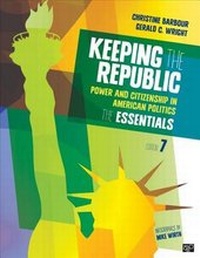
Keeping the Republic
Power and Citizenship in American Politics, THE ESSENTIALS
7th Edition
Published on 4. February 2015
Book
Paperback/Softback
696 pages
978-1-4833-5274-9 (ISBN)
Description
Every section and every feature in the book has one goal in mind: to get students to think critically and be sceptical of received wisdom. Serving as a true aid to teachers, each chapter is designed to build students' analytical abilities By introducing them to the seminal work in the field and showing them how to employ the themes of power and citizenship, this proven brief text builds confidence in students who want to take an active part in their communities and government-to play their part in keeping the republic, and to consider the consequences of that engagement (or lack thereof).
Reviews / Votes
"I am happier than ever with Keeping the Republic. Its accessibility and practical approach is very effective, and its emphasis on citizenship makes the book absolutely engaging for many of my students." -- William Haltom "Keeping the Republic is very balanced in presenting factual information and explaining how and why structure matters. It is also quite good meeting social science requirements by showing how various propositions can be fashioned into research questions. At the same time, KTR doesn't slam freshman and sophomores with too much information. It contains a good balance of history, current events, social science, law, and basic structure." -- Eric Herzik "Barbour and Wright's Keeping the Republic is the most comprehensive, accessible text for my students, with strong supplemental ancillaries that help them get information on specific topics quickly. My students react very positively to the book." -- Shoua YangMore details
Edition
7th Revised edition
Language
English
Place of publication
Thousand Oaks
United States
Target group
College/higher education
Professional and scholarly
Edition type
Revised edition
Dimensions
Height: 279 mm
Width: 216 mm
ISBN-13
978-1-4833-5274-9 (9781483352749)
Copyright in bibliographic data and cover images is held by Nielsen Book Services Limited or by the publishers or by their respective licensors: all rights reserved.
Schweitzer Classification
Other editions
New editions
Christine Barbour | Gerald Wright
Keeping the Republic
Power and Citizenship in American Politics, THE ESSENTIALS
Book
12/2016
8th Edition
CQ Press
€112.85
Shipment within 15-20 days
Previous edition
Christine Barbour | Gerald C. Wright
Keeping the Republic
Power and Citizenship in American Politics, THE ESSENTIALS
Book
03/2013
6th Edition
CQ Press
€99.23
Article exhausted; check for reprint
Persons
Christine Barbour teaches in the Political Science Department and the Hutton Honors College at Indiana University, where she has become increasingly interested in how teachers of large classes can maximize what their students learn. She is working with online course designers to create an online version of her Intro to American Politics class. At Indiana, Professor Barbour has been a Lilly Fellow, working on a project to increase student retention in large introductory courses, and a member of the Freshman Learning Project, a university-wide effort to improve the first-year undergraduate experience. She has served on the New York Times College Advisory Board, working with other educators to develop ways to integrate newspaper reading into the undergraduate curriculum. She has won several teaching honors, but the two awarded by her students mean the most to her: the Indiana University Student Alumni Association Award for Outstanding Faculty and the Indiana University Chapter of the Society of Professional Journalists Brown Derby Award. When not teaching or writing textbooks, Professor Barbour enjoys playing with her dogs, traveling with her coauthor, and writing about food. She is the food editor for Bloom Magazine of Bloomington and is a coauthor of Indiana Cooks!(2005) and Home Grown Indiana (2008). She also makes jewelry from precious metals and rough gemstones and if she ever retires, she will open a jewelry shop in a renovated air-stream on the beach in Apalachicola, Florida, where she plans to write another cookbook and a book about the local politics, development, and fishing industry.
Gerald C. Wright has taught political science at Indiana University since 1981, and he is currently the chair of the political science department. An accomplished scholar of American politics, and the 2010 winner of the State Politics and Policy Association's Career Achievement Award, his books include Statehouse Democracy: Public Opinion and Policy in the American States (1993), coauthored with Robert S. Erikson and John P. McIver, and he has published more than fifty articles on elections, public opinion, and state politics. Professor Wright has long studied the relationship among citizens, their preferences, and public policy.
He is currently conducting research funded by grants from the National Science Foundation and the Russell Sage Foundation on the factors that influence the equality of policy representation in the states and in Congress. He is also writing a book about representation in U.S. legislatures. He has been a consultant for Project Vote Smart in the past several elections. Professor Wright is a member of Indiana University's Freshman Learning Project, a university-wide effort to improve the first-year undergraduate experience by focusing on how today's college students learn and how teachers can adapt their pedagogical methods to best teach them. In his nonworking hours, Professor Wright also likes to spend time with his dogs, travel, eat good food, fish, and play golf.
Gerald C. Wright has taught political science at Indiana University since 1981, and he is currently the chair of the political science department. An accomplished scholar of American politics, and the 2010 winner of the State Politics and Policy Association's Career Achievement Award, his books include Statehouse Democracy: Public Opinion and Policy in the American States (1993), coauthored with Robert S. Erikson and John P. McIver, and he has published more than fifty articles on elections, public opinion, and state politics. Professor Wright has long studied the relationship among citizens, their preferences, and public policy.
He is currently conducting research funded by grants from the National Science Foundation and the Russell Sage Foundation on the factors that influence the equality of policy representation in the states and in Congress. He is also writing a book about representation in U.S. legislatures. He has been a consultant for Project Vote Smart in the past several elections. Professor Wright is a member of Indiana University's Freshman Learning Project, a university-wide effort to improve the first-year undergraduate experience by focusing on how today's college students learn and how teachers can adapt their pedagogical methods to best teach them. In his nonworking hours, Professor Wright also likes to spend time with his dogs, travel, eat good food, fish, and play golf.
Content
Chapter 1: Politics: Who Gets What, And How?
What is Politics?
Political Systems and the Concept of Citizenship
Origins of Democracy in America
Citizenship in America
America Citizenship Today
Thinking Critically About American Politics
Chapter 2: American Citizens And Political Culture
Who is an American?
The Ideas That Unite Us
The Ideas That Divide Us
The Citizens and American Political Beliefs
Chapter 3: Politics Of The American Founding
Politics in the English Colonies
The Split From England
The Articles of Confederation
The Constitutional Convention
Ratification
The Citizens and the Founding
Chapter 4: Federalism And The U.S. Constitution
The Three Branches of Government
Separation of Powers and Checks and Balances
Federalism
Amending the Constitution
The Citizens and the Constitution
Chapter 5: Fundamental American Liberties
Rights in a Democracy
The Bill of Rights and Incorporation
Freedom of Religion
Freedom of Expression
The Right to Bear Arms
The Rights of Criminal Defendants
The Right to Privacy
The Citizens and Civil Liberties
Chapter 6: The Struggle For Equal Rights
The Meaning of Political Inequality
Rights Denied on the Basis of Race
Rights Denied on the Basis of Race and Ethnicity
Rights Denied on the Basis of Gender
Rights Denied on Other Bases
The Citizens and Civil Rights
Chapter 7: Congress
Understanding Congress
Congressional Powers and Responsibilities
Congressional Elections
Congressional Organization
How Congress Works
The Citizens and Congress
Chapter 8: The Presidency
The Double Expectations Gap
The Evolution of the American Presidency
Presidential Politics
Managing the Presidential Establishment
The Presidential Personality
The Citizens and the Presidency
Chapter 9: The Bureaucracy
What is Bureaucracy?
The American Federal Bureaucracy
Politics inside the Bureaucracy
External Bureaucratic Politics
The Citizens and the Bureaucracy
Chapter 10: The American Legal System And The Courts
Law and the American Legal System
Constitutional Provisions and the Development of Judicial Review
Federalism and the American Courts
The Supreme Court
The Citizens and the Courts
Chapter 11: Public Opinion
The Role of Public Opinion in a Democracy
Citizen Values
What Influences Our Opinions About Politics?
Measuring and Tracking Public Opinion
The Citizens and Public Opinion
Chapter 12: Political Parties
What Are Political Parties?
Do American Parties Offer Voters a Choice?
The History of Parties in America
What Do Parties Do?
Characteristics of the American Party System
The Citizens and Political Parties
Chapter 13: Interest Groups
The Role and Formation of Interest Groups
Types of Interest Groups
Interest Group Politics
Interest Group Resources
The Citizens and Interest Groups
Chapter 14: Voting, Campaigns, And Elections
Voting in a Democratic Society
Exercising the Right to Vote in America
How the Voter Decides
Presidential Campaigns
The Citizens and Elections
Chapter 15: The Media
Where Do We Get Our Information?
Who Owns the Media, and How Does That Affect Our News?
Who Are the Journalists?
The Media and Politics
The Citizens and the Media
What is Politics?
Political Systems and the Concept of Citizenship
Origins of Democracy in America
Citizenship in America
America Citizenship Today
Thinking Critically About American Politics
Chapter 2: American Citizens And Political Culture
Who is an American?
The Ideas That Unite Us
The Ideas That Divide Us
The Citizens and American Political Beliefs
Chapter 3: Politics Of The American Founding
Politics in the English Colonies
The Split From England
The Articles of Confederation
The Constitutional Convention
Ratification
The Citizens and the Founding
Chapter 4: Federalism And The U.S. Constitution
The Three Branches of Government
Separation of Powers and Checks and Balances
Federalism
Amending the Constitution
The Citizens and the Constitution
Chapter 5: Fundamental American Liberties
Rights in a Democracy
The Bill of Rights and Incorporation
Freedom of Religion
Freedom of Expression
The Right to Bear Arms
The Rights of Criminal Defendants
The Right to Privacy
The Citizens and Civil Liberties
Chapter 6: The Struggle For Equal Rights
The Meaning of Political Inequality
Rights Denied on the Basis of Race
Rights Denied on the Basis of Race and Ethnicity
Rights Denied on the Basis of Gender
Rights Denied on Other Bases
The Citizens and Civil Rights
Chapter 7: Congress
Understanding Congress
Congressional Powers and Responsibilities
Congressional Elections
Congressional Organization
How Congress Works
The Citizens and Congress
Chapter 8: The Presidency
The Double Expectations Gap
The Evolution of the American Presidency
Presidential Politics
Managing the Presidential Establishment
The Presidential Personality
The Citizens and the Presidency
Chapter 9: The Bureaucracy
What is Bureaucracy?
The American Federal Bureaucracy
Politics inside the Bureaucracy
External Bureaucratic Politics
The Citizens and the Bureaucracy
Chapter 10: The American Legal System And The Courts
Law and the American Legal System
Constitutional Provisions and the Development of Judicial Review
Federalism and the American Courts
The Supreme Court
The Citizens and the Courts
Chapter 11: Public Opinion
The Role of Public Opinion in a Democracy
Citizen Values
What Influences Our Opinions About Politics?
Measuring and Tracking Public Opinion
The Citizens and Public Opinion
Chapter 12: Political Parties
What Are Political Parties?
Do American Parties Offer Voters a Choice?
The History of Parties in America
What Do Parties Do?
Characteristics of the American Party System
The Citizens and Political Parties
Chapter 13: Interest Groups
The Role and Formation of Interest Groups
Types of Interest Groups
Interest Group Politics
Interest Group Resources
The Citizens and Interest Groups
Chapter 14: Voting, Campaigns, And Elections
Voting in a Democratic Society
Exercising the Right to Vote in America
How the Voter Decides
Presidential Campaigns
The Citizens and Elections
Chapter 15: The Media
Where Do We Get Our Information?
Who Owns the Media, and How Does That Affect Our News?
Who Are the Journalists?
The Media and Politics
The Citizens and the Media