

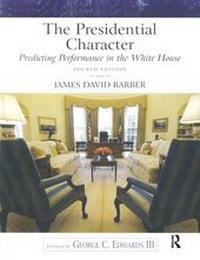
The Presidential Character
Predicting Performance in the White House (Longman Classics in Political Science), revised
4th Edition
Published on 9. July 2008
Book
Paperback/Softback
544 pages
978-0-205-65259-4 (ISBN)
Description
Dr. James David Barber's well-known, provocative examination of who has the potential to be voted into the highest office in the land - and why - is being reissued as the newest addition to the "Longman Classics in Political Science" series.
Arguing that patterns in a person's character, world view, and style can allow us to anticipate their performance as president, The Presidential Character offers explanations and predictions of the performance of presidents and presidential candidates. Drawing on historical, biographical, and psychological research, Dr. Barber hoped to help voters make judicious choices in determining the country's highest leaders. Revisiting this classic work in today's important presidential election season begs a reconsideration of Barber's probing and enduring query, "What should we look for in a president?"
Arguing that patterns in a person's character, world view, and style can allow us to anticipate their performance as president, The Presidential Character offers explanations and predictions of the performance of presidents and presidential candidates. Drawing on historical, biographical, and psychological research, Dr. Barber hoped to help voters make judicious choices in determining the country's highest leaders. Revisiting this classic work in today's important presidential election season begs a reconsideration of Barber's probing and enduring query, "What should we look for in a president?"
More details
Other editions
New editions
James Barber
The Presidential Character
Predicting Performance in the White House, With a Revised and Updated Foreword by George C. Edwards III
Book
11/2019
5th Edition
Routledge
€62.50
Shipment within 15-20 days
Additional editions
Book
07/2017
4th Edition
Routledge
€215.41
Article exhausted; check for reprint
Previous edition

Book
10/1992
4th Edition
Pearson
Unfortunately, price unknown
No shipping information available
Person
James David Barber was a Duke University political scientist and provocateur best known for exploring the psychology of Oval Office aspirants and occupants. He spent years as a consultant to "NBC Nightly News" and as a board member of the Poynter Institute, a center for the study of journalism and media ethics in St. Petersburg, Fla.
Content
Foreword by George C. Edwards, III, Texas A&M University
I. PREDICTING PRESIDENTS.
1. Presidential Character and How to Foresee It.
II. THE CONTRADICTIONS OF POWER.
2. Three Tragic Tales.
3. The Active-Negative Presidents.
4. The Origins of Presidential Compulsion.
5. Richard Nixon: Winning Tragedy.
III. OF LOVE AND POLITICAL DUTY.
6. The Passive-Negative Presidents.
7. The Passive-Positive Presidents.
8. Reagan Wrecks Reality.
IV. CONGRUENCE IN CHARACTER.
9. Franklin D. Roosevelt and Active-Positive Affection.
10 Harry S. Truman and Active-Positive Combat.
11. John F. Kennedy and Active-Positive Commitment.
12. The Crucial Ford Transition.
V. BEYOND CHARACTER.
13. President Carter and Negotiation.
14. President Bush and Worldview.
VI. THE THEORY OF PRESIDENTIAL CHARACTER.
15. Adding It Up.
I. PREDICTING PRESIDENTS.
1. Presidential Character and How to Foresee It.
II. THE CONTRADICTIONS OF POWER.
2. Three Tragic Tales.
3. The Active-Negative Presidents.
4. The Origins of Presidential Compulsion.
5. Richard Nixon: Winning Tragedy.
III. OF LOVE AND POLITICAL DUTY.
6. The Passive-Negative Presidents.
7. The Passive-Positive Presidents.
8. Reagan Wrecks Reality.
IV. CONGRUENCE IN CHARACTER.
9. Franklin D. Roosevelt and Active-Positive Affection.
10 Harry S. Truman and Active-Positive Combat.
11. John F. Kennedy and Active-Positive Commitment.
12. The Crucial Ford Transition.
V. BEYOND CHARACTER.
13. President Carter and Negotiation.
14. President Bush and Worldview.
VI. THE THEORY OF PRESIDENTIAL CHARACTER.
15. Adding It Up.