

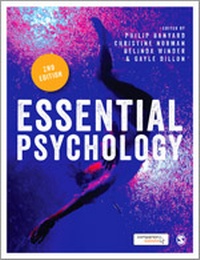
Essential Psychology
2nd Edition
Published on 17. March 2015
Book
Hardback
600 pages
978-1-4462-7481-1 (ISBN)
Description
Essential Psychology returns for a second edition with a vivid narrative writing style for undergraduates, features designed to stimulate critical thinking and inspire students to learn independently, and an expanded companion website full of useful resources for lecturers and students. This comprehensive introductory text is relevant for both the specialist and non-specialist psychology student, challenging those who studied psychology before university while remaining accessible to those who did not.
The 2nd edition:
Gives students a firm foundation in all areas covered on accredited British Psychological Society degree courses
Includes new chapters on psychopathology, research methods, language, motivation and emotion, lifespan development, health psychology, forensic psychology and critical social psychology
Relates theory to the real world to help students think about where they will employ their degree after undergraduate study
Comes with a SAGE edge companion website with a suite of resources to enhance the learning experience (https://edge.sagepub.com/banyard2e)
The 2nd edition:
Gives students a firm foundation in all areas covered on accredited British Psychological Society degree courses
Includes new chapters on psychopathology, research methods, language, motivation and emotion, lifespan development, health psychology, forensic psychology and critical social psychology
Relates theory to the real world to help students think about where they will employ their degree after undergraduate study
Comes with a SAGE edge companion website with a suite of resources to enhance the learning experience (https://edge.sagepub.com/banyard2e)
Reviews / Votes
This text provides an excellent introduction to what is essential in psychology. Its breadth of coverage and easily accessible style of presenting key findings and concepts will make it attractive to students setting out on their psychology studies. -- Chris McVittie This is an enjoyable and clearly written undergraduate introductory book, with a wide coverage of fundamental and applied psychology topics. Great resource for students and lecturers alike! -- Minna LyonsMore details
Edition
2nd Revised edition
Language
English
Place of publication
London
United Kingdom
Target group
College/higher education
Edition type
Revised edition
Dimensions
Height: 265 mm
Width: 195 mm
Weight
1637 gr
ISBN-13
978-1-4462-7481-1 (9781446274811)
Copyright in bibliographic data and cover images is held by Nielsen Book Services Limited or by the publishers or by their respective licensors: all rights reserved.
Schweitzer Classification
Other editions
New editions
Philip Banyard | Christine Norman | Gayle Dillon
Essential Psychology
Book
06/2019
3rd Edition
SAGE Publications Ltd
€270.83
Article exhausted; check for reprint
Persons
Dr Phil Banyard is Emeritus Professor of Psychology at Nottingham Trent University (NTU). In his thirty years at NTU Phil Banyard taught on a range of courses but focused on introductory modules and critical thinking. His research was concerned with the impact of digital technologies on teaching and learning, especially in schools. He was a chief examiner of A Level Psychology for many years and has written more than twenty texts. Among these is an introductory text with SAGE (now in its fourth edition) that brought in over 50 members of the department at NTU. His cultural interests are largely defined by smallpeople in the family and he is currently enjoying Captain Underpants series three which he regards as riotously creative.
Gayle Dillon is a Senior Lecturer in Psychology at Nottingham Trent University. Christine Norman is a Senior Lecturer in Psychology at Nottingham Trent University. Belinda is a Reader in Forensic Psychology. She teaches primarily within forensic psychology, with specific focus on sexual crime. She has a strong background in psychometrics and individual differences, and retains her enthusiasm for quantitative research (continuing to teach multivariate statistics in what she hopes is a fun and interactive manner). Her research is leading her to incorporate qualitative research methods as she continues to develop a programme of research in collaboration with HMP Whatton (the largest sex offender prison in Europe) that makes a significant and practical contribution to our understanding of sex offenders and sexual crime. Additional areas of interest (both in terms of teaching and research) include the psychology of fraud, lying and deception.
Gayle Dillon is a Senior Lecturer in Psychology at Nottingham Trent University. Christine Norman is a Senior Lecturer in Psychology at Nottingham Trent University. Belinda is a Reader in Forensic Psychology. She teaches primarily within forensic psychology, with specific focus on sexual crime. She has a strong background in psychometrics and individual differences, and retains her enthusiasm for quantitative research (continuing to teach multivariate statistics in what she hopes is a fun and interactive manner). Her research is leading her to incorporate qualitative research methods as she continues to develop a programme of research in collaboration with HMP Whatton (the largest sex offender prison in Europe) that makes a significant and practical contribution to our understanding of sex offenders and sexual crime. Additional areas of interest (both in terms of teaching and research) include the psychology of fraud, lying and deception.
Content
PART I: The Foundations of Modern Psychology: What We Know About Human Beings
Chapter 1: Once Upon a Time...The Evolution of Human Behaviour
Chapter 2: How Psychology Became a Science
Chapter 3: Issues and Debates in Psychology
Chapter 4: Doing Psychological Research
PART II: Cognitive Psychology: How We Think and Make Sense of the World
Chapter 5: Memory
Chapter 6: An Introduction to Sensation, Perception and Attention
Chapter 7: Thinking and Problem Solving
Chapter 8: Language
PART III: Biological Psychology: How Our Brains Affect Our Behaviour
Chapter 9: The Human Nervous System: Functional Anatomy
Chapter 10: Communication within the Brain
Chapter 11: Brain and Behaviour: Sex Differences
Chapter 12: Motivation and Emotion
PART IV: Social Psychology: How We Interact with Each Other
Chapter 13: Behaviour within Groups
Chapter 14: Behaviour between Groups
Chapter 15: Social Judgements and Behaviour
Chapter 16: Critical Social Psychology
PART V: Developmental Psychology: How We Grow and Change
Chapter 17: Development during the Early Years
Chapter 18: Development during the School Years
Chapter 19: Atypical Child Development
Chapter 20: Adolescence, Adulthood and Ageing
PART VI: The Psychology of Individual Differences: How We Know and Measure Our Individuality
Chapter 21: Personality
Chapter 22: Intelligence: Measuring the Mind
Chapter 23: Self
PART VII: Applied Psychology: How We Use Psychology
Chapter 24: Psychopathology: Theories and Causes
Chapter 25: Psychological Interventions
Chapter 26: Health Psychology
Chapter 27: Forensic Psychology
Chapter 1: Once Upon a Time...The Evolution of Human Behaviour
Chapter 2: How Psychology Became a Science
Chapter 3: Issues and Debates in Psychology
Chapter 4: Doing Psychological Research
PART II: Cognitive Psychology: How We Think and Make Sense of the World
Chapter 5: Memory
Chapter 6: An Introduction to Sensation, Perception and Attention
Chapter 7: Thinking and Problem Solving
Chapter 8: Language
PART III: Biological Psychology: How Our Brains Affect Our Behaviour
Chapter 9: The Human Nervous System: Functional Anatomy
Chapter 10: Communication within the Brain
Chapter 11: Brain and Behaviour: Sex Differences
Chapter 12: Motivation and Emotion
PART IV: Social Psychology: How We Interact with Each Other
Chapter 13: Behaviour within Groups
Chapter 14: Behaviour between Groups
Chapter 15: Social Judgements and Behaviour
Chapter 16: Critical Social Psychology
PART V: Developmental Psychology: How We Grow and Change
Chapter 17: Development during the Early Years
Chapter 18: Development during the School Years
Chapter 19: Atypical Child Development
Chapter 20: Adolescence, Adulthood and Ageing
PART VI: The Psychology of Individual Differences: How We Know and Measure Our Individuality
Chapter 21: Personality
Chapter 22: Intelligence: Measuring the Mind
Chapter 23: Self
PART VII: Applied Psychology: How We Use Psychology
Chapter 24: Psychopathology: Theories and Causes
Chapter 25: Psychological Interventions
Chapter 26: Health Psychology
Chapter 27: Forensic Psychology