

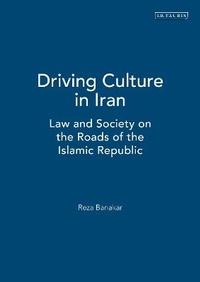
Driving Culture in Iran
Law and Society on the Roads of the Islamic Republic
Published on 18. December 2015
Book
Hardback
304 pages
978-1-78453-448-6 (ISBN)
Description
Iran has one of the highest rates of road traffic accidents worldwide and according to a recent UNICEF report, the current rate of road accidents in Iran is 20 times more than the world average. Using extensive interviews with a variety of Iranians from a range of backgrounds, this book explores their dangerous driving habits and the explanations for their disregard for traffic laws. It argues that Iranians' driving behaviour is an indicator of how they have historically related to each other and to their society at large, and how they have maintained a form of social order through law, culture and religion. By considering how ordinary Iranians experience the traffic problem in their cities and how they describe traffic rules, laws, authorities and the rights of other citizens, Driving Culture in Iran provides an original and valuable insight into Iranian legal, social and political culture.
More details
Language
English
Place of publication
United Kingdom
Publishing group
Bloomsbury Publishing PLC
Target group
College/higher education
Illustrations
8 bw integrated
Dimensions
Height: 216 mm
Width: 138 mm
Weight
501 gr
ISBN-13
978-1-78453-448-6 (9781784534486)
Copyright in bibliographic data and cover images is held by Nielsen Book Services Limited or by the publishers or by their respective licensors: all rights reserved.
Schweitzer Classification
Other editions
Additional editions
E-Book
12/2015
1st Edition
I.B. Tauris
€156.99
Available for download
E-Book
12/2015
I.B. Tauris
€156.99
Available for download
Person
Reza Banakar is Professor and Director of Research in the Sociology of Law Department at Lund University. He has previously held the positions of Professor of Socio-Legal Studies at the Department of Advanced Legal Studies at the University of Westminster and Research Fellow at the Centre for Socio-Legal Studies at the University of Oxford. He is the author of Normativity in Legal Sociology (2015) and Law and Social Theory (2010, 2013).
Content
Chapter 1: Introduction: Doing Social Research in Iran. Reza Banakar
Chapter 2: Estebd?d: Pilot Study in Shiraz and Tehran. Reza Banakar and Shahrad Narrulahi Fard
Chapter 3: The Power of Education: Interviews with Male Taxi Drivers. Reza Banakar and Shahrad Narrulahi Fard
Chapter 4: The Role of Trust: Interviews with Lawyers. Reza Banakar
Chapter 5: A Class Ridden Society: Interviews with Other Professionals. Reza Banakar
Chapter 6: Gender, Sexuality and Dominance: Interviews with Female Taxi Drivers. Reza Banakar and Behnoosh Payvar
Chapter 7: Iranian Culture: Reflections on Individualism and Community. Reza Banakar and Zara Saeidzadeh
Chapter 8: Iranian Legal Culture: Law, Gender and Class Divisions. Reza Banakar
Chapter 9: Reproduction of Meaning and Women's Autonomy. Behnoosh Payvar
Chapter 10: The Iranian Legal System. Shahrad Narrulahi Fard
Chapter 2: Estebd?d: Pilot Study in Shiraz and Tehran. Reza Banakar and Shahrad Narrulahi Fard
Chapter 3: The Power of Education: Interviews with Male Taxi Drivers. Reza Banakar and Shahrad Narrulahi Fard
Chapter 4: The Role of Trust: Interviews with Lawyers. Reza Banakar
Chapter 5: A Class Ridden Society: Interviews with Other Professionals. Reza Banakar
Chapter 6: Gender, Sexuality and Dominance: Interviews with Female Taxi Drivers. Reza Banakar and Behnoosh Payvar
Chapter 7: Iranian Culture: Reflections on Individualism and Community. Reza Banakar and Zara Saeidzadeh
Chapter 8: Iranian Legal Culture: Law, Gender and Class Divisions. Reza Banakar
Chapter 9: Reproduction of Meaning and Women's Autonomy. Behnoosh Payvar
Chapter 10: The Iranian Legal System. Shahrad Narrulahi Fard