

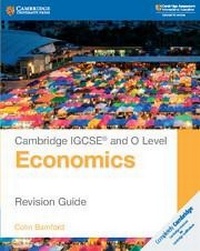
Cambridge IGCSE (R) and O Level Economics Revision Guide
Published on 20. September 2018
Book
Paperback/Softback
242 pages
978-1-108-44041-7 (ISBN)
Description
Covers the Cambridge IGCSE syllabus (0455) and the Cambridge O Level syllabus (2281), first examination from 2020. Economics relates to every aspect of our lives, from the decisions we make as individuals to the structures created by governments and firms. Thinking like an economist can help us all make better choices. With exam-style questions and specific skills practice, this revision guide helps students build their knowledge and understanding of economic theory, giving them confidence to achieve their potential in examinations. Answers are at the back of the book so that students are free to self-study.
More details
Series
Language
English
Place of publication
Cambridge
United Kingdom
Target group
Primary & secondary/elementary & high school
Product notice
Paperback (trade)
Illustrations
Worked examples or Exercises
Dimensions
Height: 278 mm
Width: 222 mm
Thickness: 12 mm
Weight
647 gr
ISBN-13
978-1-108-44041-7 (9781108440417)
Copyright in bibliographic data and cover images is held by Nielsen Book Services Limited or by the publishers or by their respective licensors: all rights reserved.
Schweitzer Classification
Content
Introduction; Section 1. The basic economic problem; 1. The nature of the economic problem; 2. Factors of production; 3. Opportunity cost; 4. Production possibility curves; Exam-style structured questions for Section 1; Section 2. The allocation of resources; 5. Microeconomics and macroeconomics; 6. The role of markets in allocating resources; 7. Demand; 8. Supply; 9. Price determination; 10. Causes of price changes; 11. Price elasticity of demand; 12. Price elasticity of supply; 13. Market economic system; 14. Market failure; 15. Mixed economic system; Exam-style structured questions for Section 2; Section 3. Microeconomic decision makers; 16. Money and banking; 17. Households; 18. Workers; 19. Trade unions; 20. Firms; 21. Firms and production; 22. Firms' costs, revenue and objectives; 23. Market structure; Exam-style structured questions for Section 3; Section 4. Government and the macroeconomy; 24. The role of government; 25. The macroeconomic aims of government; 26. Fiscal policy; 27. Monetary policy; 28. Supply-side policy; 29. Economic growth; 30. Employment and unemployment; 31. Inflation and deflation; Exam-style structured questions for Section 4; Section 5. Economic development; 32. Living standards; 33. Poverty; 34. Population; 35. Differences in economic development between countries; Exam-style structured questions for Section 5; Section 6. International trade and globalisation; 36. International specialisation; 37. Free trade and protection; 38. Foreign exchange rates; 39. Current account of balance of payments; Exam-style structured questions for Section 6; Suggested Answers; Glossary.