

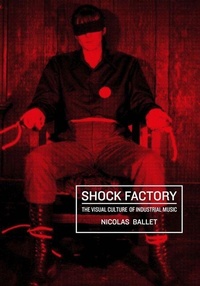
Shock Factory
The Visual Culture of Industrial Music
Published on 13. June 2025
Book
Paperback/Softback
588 pages
978-1-83595-078-4 (ISBN)
Description
Industrial music appeared in the mid-1970s, and far from being a simple sound experimentation phenomenon, it quickly spawned a coherent visual culture operating at the intersection of a multitude of media (collage, mail art, installation, film, performance, sound, video) and initiated a close inspection of the legacy of modernity and the growing, pervasive influence of technology.
Originally British, the movement soon outgrew Europe, extending into the United States and Japan during the 1980s. The sound experiments conducted by industrial bands - designing synthesizers, manipulating and transforming recorded sounds from audio tapes, either recycled or laid down by the artists - were backed up by a rich array of radical visual productions, deriving their sources from the modernist utopias of the first part of the 20th century. Such saturated sounds were translated into abrasive images, manipulated through the detournement of reprographic techniques (Xerox art), that investigated polemical themes: mind control, criminality, occultism, pornography, psychiatry and totalitarianism, among others.
This book introduces the visual and aesthetic elements of 1970s and 1980s industrial culture to a general history of contemporary art by analysing the different approaches taken and topics addressed by the primary protagonists of the movement, who perceptively anticipated the current discourse concerning the media and their collective coercive power.
Originally British, the movement soon outgrew Europe, extending into the United States and Japan during the 1980s. The sound experiments conducted by industrial bands - designing synthesizers, manipulating and transforming recorded sounds from audio tapes, either recycled or laid down by the artists - were backed up by a rich array of radical visual productions, deriving their sources from the modernist utopias of the first part of the 20th century. Such saturated sounds were translated into abrasive images, manipulated through the detournement of reprographic techniques (Xerox art), that investigated polemical themes: mind control, criminality, occultism, pornography, psychiatry and totalitarianism, among others.
This book introduces the visual and aesthetic elements of 1970s and 1980s industrial culture to a general history of contemporary art by analysing the different approaches taken and topics addressed by the primary protagonists of the movement, who perceptively anticipated the current discourse concerning the media and their collective coercive power.
Reviews / Votes
'A beautiful and somewhat seminal exploration of industrial culture that would certainly appeal to aficionados of the genre, but also to those who want to explore the more academic elements of a scene that ran side by side with punk.With a plethora of illustrations and exhaustive details collated together, this is a vade mecum for those who opt to explore more than just the clang of industrial music and how this is reflected visually to a wider populace. The level of research and detailed descriptions offers up a majestic read. 9/10' -- Lee Powell, Vive Le Rock magazine 'A deep dive into the shock tactics and artistic hybridizations employed by Early Industrial musicians and the sources they drew from. One look at the table of contents makes you realise what a huge task Ballet has taken on here. [...] Throughout I have struggled to sum up such a wide ranging and immaculately researched and executed book, one that explores, inspires and questions intelligently the concepts and influences behind Early Industrial music and culture, which was both fiercely independent and determinedly underground, yet worked hand in hand with the art establishment and followed in a long tradition of radical and deliberately shocking art that challenged the taboos of the day. Ballet has managed to crack this epic topic open as I have seen few others able to do, and my difficulty in boiling that down into a review is a testament to his diligence and tenacity.
For anyone interested in how true underground culture can develop and grow by building on the foundations set by other art radicals and pioneers, then this is the book for you.' -- Alan Rider, Outsideleft "A history of industrial music needed to be written. Nicolas Ballet has accomplished this. Thoroughly. This is the book's greatest strength. It explore the significance of noise as a reflection of a world in decay and screaming as a need. And doing it so it reveals a significant connection between industrial music and contemporary art. This is also what makes it an essential book: its contribution to dismantling categories and rethinking history from mixed creative territories." -- David G. Torres, art critic "Nicolas Ballet's in-depth analysis and comprehensive research provides a valuable insight into the objectives, attitudes and motives behind the imagery used by exponents of the many forms of industrial music." -- Cosey Fanni Tutti "Most publications concerning industrial music dealt with the old cliche of sex, drugs and rock 'n' roll. For sure there was sex and drugs but rock 'n' roll was the enemy. So I'm very happy with this very deep dive into the iconography of industrial music. It will give you a much better understanding of what it was/is all about." -- F.M. Einheit "If future generations really want to know how it happened, they will now be able to explore the dopamine darkness of this extraordinary history." -- Graeme Revell "This book is a thoroughly researched catalogue of ideas, suggestions, gestures, all intended to push existential issues to the front of your mind. To act on them, to truly explore your own. Z'EV sums it up: 'it's about being.'" -- John Duncan
More details
Series
Language
English
Place of publication
United Kingdom
Publishing group
Intellect
Target group
Professional and scholarly
Illustrations
503 Halftones, color
Dimensions
Height: 242 mm
Width: 168 mm
Thickness: 42 mm
Weight
1236 gr
ISBN-13
978-1-83595-078-4 (9781835950784)
Copyright in bibliographic data and cover images is held by Nielsen Book Services Limited or by the publishers or by their respective licensors: all rights reserved.
Schweitzer Classification
Other editions
Additional editions

E-Book
09/2025
Intellect Books
€53.99
Available for download
Person
Nicolas Ballet is an art historian and attache de conservation in the New Media Department of the Centre Pompidou in Paris, France. He is the author of books and articles exploring the visual and sonic contributions of countercultures and experimental artistic practices. In 2023, he curated the exhibition "Who You Staring At?" Visual Culture of the No Wave Scene in the 1970s and 1980s at the Centre Pompidou. He is currently leading a research project for the Centre Pompidou on pro-sex perspectives in art, from the 1960s to the present day.
Content
Foreword
Pascal Rousseau
Acknowledgements
Introduction
Alternative Postmodernity
Graphical Perspectives
Cultural Registers and Industrial Themes
Artistic Hybridizations
Part I. The Last of England: Post-Industrial Trauma and a Tradition of Subversion
Chapter 1. Dystopia for Utopia
"Proletariat & Industrie": Marginality and Post-Industrial Change
Post-Industrial Context: Transformation of the Nature of Power
Irony and Industrial Detournements
Post-Industrial Zeitgeist and "Global Village"
Atomic Paranoia: The Post-Apocalyptic Iconography of the Nuclear Age
Survivalism, Paramilitary Decorum and the Fear of Death
Breakdown and Continuity of Post-Psychedelic Violence
Post-Beat Culture
Transgression and Destruction: An Aesthetic of Carnage
Post-Apocalyptic Perspectives and Junk Culture
Urban and Industrial Ruins: Dissidence of "Dark Romanticism"
Aesthetics of Destruction: Confrontational Attitudes and Visual Parasites
Bodily Mutilation: The "Industrial Disease"
Industrial Pain
Cultural Terrorism
Chapter 2. The Legacy of Modernity and Postmodern Challenges
Informed, Marginalized Generation
Culture Clash: A Diversity of Artistic Traditions Collides
Knowledge of Previous Movements and Experimental Shifts
Redefining the Avant-Garde in the Post-Modern Era
Future Tense: Reinterpreting Futurism
Manifesto Culture
Rupture
L'Ordre par le Bruit: Constructivist and Suprematist Precedents
Influence of Propaganda
Constructive Destruction
"Mechanical Eye": Organic Machine
Dadaist Offensive
Subversive Cabaret
The Dada Cyborg: Doubting the Man-Machine
Post-War Trauma and Prosthetic Men
The Duchampian Model of "Anti-Art"
Alternative Networks
Imaginary Surrealists
Dark Surrealism: Altered Reality
The "Uncanny" of a Mechanical Sexuality Dreams Less Sweet: Surrealist Dreams
The Neo-Avant-Gardist Factory
"Fluxshoe": Behavioural Experiments
Actionist Radicality
Post-Situationist Detournements
Part II Nothing Short of a Total War: Industrial Dissidence and Shock Tactics
Chapter 3. "Persuasion": Burroughsian Strategies of Reversing Mind Control
"Spread the Virus": Electronic Revolution and Industrial Cut-Ups
Post-Industrial Biopolitics and Strategy of Recycling
The "Control Process" and Disruptive Advertising
Televisual Piracy
Bioelectronic Virus
Duty Experiment: Military and Civilian Scientific Experiments
Experimental Scientific Protocols and Torture
"War of Nerves": Acoustic Warfare and Crowd Control Military Infiltration and Civilian Conditioning
Attacking and Hijacking Popular Culture
Chapter 4. Symphony for a Genocide: Industrial Music and Totalitarianism
Detournement of Trauma and Industrial Provocation
Death Factory: Dictatorship of the Mass Media and "Dark Situationism"
Paramilitary Fetishism and Transgressive Attitudes
Laboratory of Ambiguity
Industrial Anti-Fascism
Industrial Catharsis: Psychological Mechanisms and Cognitive Tests
Shock Impressions and Historical Boundaries
Overplaying Totalitarian Brutality
Human Atrocities: Countering the Inhuman
Industrial Excesses and Political Manipulation
(Re)discovering the Shoah
Fascination for the Historical Archive and the Effect of Complacency
Radicalization of a Political Scene
Fear of Cultural Disappearance
Chapter 5. "Suture Obsession": Aestheticization of Horror
The Atrocity Exhibition: Anti-Psychiatric Interference and Tolerance Thresholds
Reflective Tradition of the Unbearable Image
Science of Perception: Psychiatric Perversion and Shock Treatment
"The Cathedral of Death"
True Gore: Fascination and Repulsion of the Unbearable Image
The Toilet Exhibition: Shared Trauma
Bleeding Images: Criminal Anxiety
The Manson Family/Jonestown: Sectarian Lure and Collective Suicide
Warped Portrait of a Serial Killer
Murderous Impulses and Creative Desires
Criminal Experience
Sex Crime Atrocities
Chapter 6. "Prostitution": Sexual Reconfiguration and Industrial Feminism
White Souls in Black Suits: Pornographic Abuse and BDSM Subculture
"Degree Xerox" and Sexual Repression
Psychopathia Sexualis and the Fascination with Sexual Transgression
Sexual Discipline: Effects of Fetishization and Reconfiguration of Pain
Unusual Perversions: Bondage Subculture
Crash Biomechanical Sexual Mutation
Brutality as a Masquerade
Gender Relations Within the Movement
"Obsession": Infiltration Tactics and Appropriation of the Female Body
"Alpha Females": Violence and the Power of Gendered Deconstruction
Engaging the Industrial Male
Part 3 "Body and Soul": Industrial Occulture
Chapter 7. Pagan Day: Occult Rituals and the Re-Enchantment of Reality
Third Esoteric Revival
(Revolutionary) Social Utopias of Magical Awakening
(Re)discovery of Occult and Artistic Practices
Crowleymass: Rehabilitated Contemporary Occultism
Magia Sexualis: Influence of a Magical System
Writing and the Language of the Occult
Astral Explorations and Queer Mysticism
Zos Kia Cultus: The Legacy of Austin Osman Spare
Sigils and Graphic Work
Automatic Drawings Under Spiritual Influence
The Alchemical "Whole": Occult Androgyny and Hermetic Challenges
The Process: Sectarian Systems and Informal Satanism
"Psychedelic Fascism": Influential Processes at the Margins
Transparency, Devotion and Overthrow of the Guru
Industrial Satanism
Demonic Possessions and Religious Reconfigurations
Modern Primitives: Neopaganism and Ritualized Body Modification
Wicca Tradition: Nature Worship
"The Orgastic Potency of the Primitives": The Anthropological Turn
"Traces of the Sacred": Marks of the Body and Mind
Conclusion
Authoritarian Reconfiguration and Cultural Assimilation
Extra-Planetary Village
Archives and Interviews
Bibliography
Pascal Rousseau
Acknowledgements
Introduction
Alternative Postmodernity
Graphical Perspectives
Cultural Registers and Industrial Themes
Artistic Hybridizations
Part I. The Last of England: Post-Industrial Trauma and a Tradition of Subversion
Chapter 1. Dystopia for Utopia
"Proletariat & Industrie": Marginality and Post-Industrial Change
Post-Industrial Context: Transformation of the Nature of Power
Irony and Industrial Detournements
Post-Industrial Zeitgeist and "Global Village"
Atomic Paranoia: The Post-Apocalyptic Iconography of the Nuclear Age
Survivalism, Paramilitary Decorum and the Fear of Death
Breakdown and Continuity of Post-Psychedelic Violence
Post-Beat Culture
Transgression and Destruction: An Aesthetic of Carnage
Post-Apocalyptic Perspectives and Junk Culture
Urban and Industrial Ruins: Dissidence of "Dark Romanticism"
Aesthetics of Destruction: Confrontational Attitudes and Visual Parasites
Bodily Mutilation: The "Industrial Disease"
Industrial Pain
Cultural Terrorism
Chapter 2. The Legacy of Modernity and Postmodern Challenges
Informed, Marginalized Generation
Culture Clash: A Diversity of Artistic Traditions Collides
Knowledge of Previous Movements and Experimental Shifts
Redefining the Avant-Garde in the Post-Modern Era
Future Tense: Reinterpreting Futurism
Manifesto Culture
Rupture
L'Ordre par le Bruit: Constructivist and Suprematist Precedents
Influence of Propaganda
Constructive Destruction
"Mechanical Eye": Organic Machine
Dadaist Offensive
Subversive Cabaret
The Dada Cyborg: Doubting the Man-Machine
Post-War Trauma and Prosthetic Men
The Duchampian Model of "Anti-Art"
Alternative Networks
Imaginary Surrealists
Dark Surrealism: Altered Reality
The "Uncanny" of a Mechanical Sexuality Dreams Less Sweet: Surrealist Dreams
The Neo-Avant-Gardist Factory
"Fluxshoe": Behavioural Experiments
Actionist Radicality
Post-Situationist Detournements
Part II Nothing Short of a Total War: Industrial Dissidence and Shock Tactics
Chapter 3. "Persuasion": Burroughsian Strategies of Reversing Mind Control
"Spread the Virus": Electronic Revolution and Industrial Cut-Ups
Post-Industrial Biopolitics and Strategy of Recycling
The "Control Process" and Disruptive Advertising
Televisual Piracy
Bioelectronic Virus
Duty Experiment: Military and Civilian Scientific Experiments
Experimental Scientific Protocols and Torture
"War of Nerves": Acoustic Warfare and Crowd Control Military Infiltration and Civilian Conditioning
Attacking and Hijacking Popular Culture
Chapter 4. Symphony for a Genocide: Industrial Music and Totalitarianism
Detournement of Trauma and Industrial Provocation
Death Factory: Dictatorship of the Mass Media and "Dark Situationism"
Paramilitary Fetishism and Transgressive Attitudes
Laboratory of Ambiguity
Industrial Anti-Fascism
Industrial Catharsis: Psychological Mechanisms and Cognitive Tests
Shock Impressions and Historical Boundaries
Overplaying Totalitarian Brutality
Human Atrocities: Countering the Inhuman
Industrial Excesses and Political Manipulation
(Re)discovering the Shoah
Fascination for the Historical Archive and the Effect of Complacency
Radicalization of a Political Scene
Fear of Cultural Disappearance
Chapter 5. "Suture Obsession": Aestheticization of Horror
The Atrocity Exhibition: Anti-Psychiatric Interference and Tolerance Thresholds
Reflective Tradition of the Unbearable Image
Science of Perception: Psychiatric Perversion and Shock Treatment
"The Cathedral of Death"
True Gore: Fascination and Repulsion of the Unbearable Image
The Toilet Exhibition: Shared Trauma
Bleeding Images: Criminal Anxiety
The Manson Family/Jonestown: Sectarian Lure and Collective Suicide
Warped Portrait of a Serial Killer
Murderous Impulses and Creative Desires
Criminal Experience
Sex Crime Atrocities
Chapter 6. "Prostitution": Sexual Reconfiguration and Industrial Feminism
White Souls in Black Suits: Pornographic Abuse and BDSM Subculture
"Degree Xerox" and Sexual Repression
Psychopathia Sexualis and the Fascination with Sexual Transgression
Sexual Discipline: Effects of Fetishization and Reconfiguration of Pain
Unusual Perversions: Bondage Subculture
Crash Biomechanical Sexual Mutation
Brutality as a Masquerade
Gender Relations Within the Movement
"Obsession": Infiltration Tactics and Appropriation of the Female Body
"Alpha Females": Violence and the Power of Gendered Deconstruction
Engaging the Industrial Male
Part 3 "Body and Soul": Industrial Occulture
Chapter 7. Pagan Day: Occult Rituals and the Re-Enchantment of Reality
Third Esoteric Revival
(Revolutionary) Social Utopias of Magical Awakening
(Re)discovery of Occult and Artistic Practices
Crowleymass: Rehabilitated Contemporary Occultism
Magia Sexualis: Influence of a Magical System
Writing and the Language of the Occult
Astral Explorations and Queer Mysticism
Zos Kia Cultus: The Legacy of Austin Osman Spare
Sigils and Graphic Work
Automatic Drawings Under Spiritual Influence
The Alchemical "Whole": Occult Androgyny and Hermetic Challenges
The Process: Sectarian Systems and Informal Satanism
"Psychedelic Fascism": Influential Processes at the Margins
Transparency, Devotion and Overthrow of the Guru
Industrial Satanism
Demonic Possessions and Religious Reconfigurations
Modern Primitives: Neopaganism and Ritualized Body Modification
Wicca Tradition: Nature Worship
"The Orgastic Potency of the Primitives": The Anthropological Turn
"Traces of the Sacred": Marks of the Body and Mind
Conclusion
Authoritarian Reconfiguration and Cultural Assimilation
Extra-Planetary Village
Archives and Interviews
Bibliography