

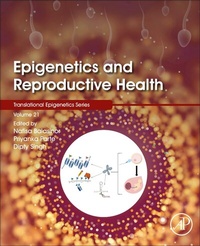
Epigenetics and Reproductive Health: Volume 21
Published on 18. September 2020
Book
Paperback/Softback
444 pages
978-0-12-819753-0 (ISBN)
Description
Epigenetics and Reproductive Health, a new volume in the Translational Epigenetics series, provides a thorough overview and discussion of epigenetics in reproduction and implications for reproductive medicine. Twenty international researchers discuss epigenetic mechanisms operating during the formation of male and female gametes, fertilization and subsequent embryo and placental development, particularly in mammals and transgenerational epigenetic inheritance. This volume also addresses aberrant epigenetic changes influencing male and female infertility, pregnancy related disorders, and those potentially linked to therapeutic manipulations and assisted reproductive technologies. Emphasis is placed on identifying biomarkers for early detection of aberrant epigenetic mechanisms.
Later chapters examine the possibility of correcting these epigenetic dysfunctions, as well as current challenges and next steps in research, enabling new translational discoveries and efforts towards developing therapeutics.
Later chapters examine the possibility of correcting these epigenetic dysfunctions, as well as current challenges and next steps in research, enabling new translational discoveries and efforts towards developing therapeutics.
Reviews / Votes
"I believe this to be the first of many textbooks on this topic. It is a much-needed summary of important advancements in the field of epigenetics and reproductive health. It is a very detailed review intended for expects in the field and those devoted to continued research in this area." --DoodyMore details
Series
Language
English
Place of publication
San Diego
United States
Publishing group
Elsevier Science Publishing Co Inc
Target group
Professional and scholarly
College/higher education
Human geneticists; human genomicists; translational researchers in genomic medicine, epigenetics, reproductive biology, endocrinology, molecular biology; life science researchers; oncologists; Obstetricians; pediatricians; immunologists; bioengineers; developmental biologists
Dimensions
Height: 235 mm
Width: 191 mm
Weight
860 gr
ISBN-13
978-0-12-819753-0 (9780128197530)
Copyright in bibliographic data and cover images is held by Nielsen Book Services Limited or by the publishers or by their respective licensors: all rights reserved.
Schweitzer Classification
Other editions
Additional editions
Persons
Dr. Tollefsbol is a Distinguished Professor of Biology and a Senior Scientist in the O'Neal Comprehensive Cancer Center, Integrative Center for Aging Research, Nutrition Obesity Research Center, University Wide Microbiome Center, and the Comprehensive Diabetes Center at the University of Alabama at Birmingham (UAB). He is Director of the UAB Cell Senescence Culture Facility which he established in 1999. Dr. Tollefsbol trained as a Postdoctoral Fellow and Assistant Research Professor with members of the National Academy of Science at Duke University and the University of North Carolina. He earned doctorates in molecular biology and osteopathic medicine from the University of North Texas Health Sciences Center and his bachelor's degree in Biology from the University of Houston. He has received prior funding from the NCI, NHLBI, NIMH and other federal institutes as well as the Glenn Foundation for Medical Research, Susan G. Komen for the Cure, the American Federation for Aging Research (AFAR), and the American Institute for Cancer Research (AICR) among many other sources. Dr. Nafisa Balisinor received her B.Sc. and M.Sc. at the Sophia College University of Mumbai, and her Ph.D. at the Institute for Research in Reproduction, University of Bombay (Biochemistry, 1989). She has published widely on topics in reproductive neuroendocrinology and epigenetics, in such peer reviewed journals as the International Journal of Biological Macromolecules, Epigenetics, Endocrinology, Andrologia, and the Journal of Steroid Biochemistry and Molecular Biology. Currently Dr. Nafisa Balasinor is a Scientist and Head of the Department of Neuroendocrinology, at the National Institute for Research in Reproductive Health India, Mumbai, India. Dr. Priyanka Parte received her first M.Sc. at the University of Mumbai (Applied Biology, 1992), and her second M.Sc at the University of Edinburgh , Scotland , U.K. (Reproductive Biology; 1996). She received her Ph.D. at the University of Mumbai, (Biochemistry, 2000), followed by a Post-Doctoral fellowship at the University of Massachusetts, Worcester (Biochemistry & Mol. Pharmacology.; 2003-2004). Currently, she is a Scientist and Head of the Department of Gamete Immunobiology at the National Institute for Research in Reproductive Health India, Mumbai, India. She has published articles in such peer reviewed journals as Fertility and Sterility, Cell and Tissue Research, Molecular Reproduction and Development, and the Journal of Proteomics. Dr. Dipty Singh received her Ph.D at the University of Mumbai (Life Sciences, 2010), and her M.Sc at the University of Allahabad (Biotechnology, 2004). Her research interests include reproductive biology, endocrine disruptors, and bacterial cell division proteins and their small molecule inhibitors. In her previous role she was a Research Associate at the Department of Biosciences & Bioengineering, IIT Mumbai, and is now a Scientist at the National Institute for Research in Reproductive Health India, Mumbai, India. She has published a range of peer journals, including Biochemistry, Chemosphere, the Journal of Pharmacopuncture, and the Journal of Nanobiotechnology.
Volume editor
Scientist and Head, Department of Neuroendocrinology, National Institute for Research in Reproductive Health India, Mumbai, India
Scientist and Head, Department of Gamete Immunobiology, National Institute for Research in Reproductive Health India, Mumbai, India
Scientist, National Institute for Research in Reproductive Health India, Mumbai, India
Series Editor
Content
SECTION I Spermatogenesis, oogenesis and fertility
1. Epigenome reprogramming in the male and female germ line
2. Genomic imprinting
3. Chromatin remodeling of the male genome during spermiogenesis and embryo development
4. Epigenetic regulation in stem cells
5. Aberrant epigenetics and reproductive disorders
SECTION II Pregnancy/developmental/placental epigenetics
6. Epigenetic reprogramming in the embryo
7. Epigenetic regulation during placentation
8. Epigenetic modulation during pregnancy and pregnancy related disorders
9. Epigenetic involvement in fetal and neonatal origins of late-onset disease
SECTION III Epigenetic - lifestyle, aging and environmental influence
10. Impact of environmental chemicals and endocrine disruptors on mammalian germ cell epigenome
11. Influence of nutrition on reproductive health through epigenetic mechanisms
12. Influence of stress and lifestyle on epigenetic modifications
13. Aging of male and female gametes
SECTION IV Reproductive cancer and epigenetics
14. Testicular and prostate cancers
15. Emerging patterns and implications of breast cancer epigenetics: An update of the current knowledge
16. Ovarian and endometrial cancers
17. Epigenetic aberrations in cervical cancer
SECTION V Epigenetics in diagnosis, prognosis and therapy
18. Natural molecules as epigenetic modifiers in reproduction
1. Epigenome reprogramming in the male and female germ line
2. Genomic imprinting
3. Chromatin remodeling of the male genome during spermiogenesis and embryo development
4. Epigenetic regulation in stem cells
5. Aberrant epigenetics and reproductive disorders
SECTION II Pregnancy/developmental/placental epigenetics
6. Epigenetic reprogramming in the embryo
7. Epigenetic regulation during placentation
8. Epigenetic modulation during pregnancy and pregnancy related disorders
9. Epigenetic involvement in fetal and neonatal origins of late-onset disease
SECTION III Epigenetic - lifestyle, aging and environmental influence
10. Impact of environmental chemicals and endocrine disruptors on mammalian germ cell epigenome
11. Influence of nutrition on reproductive health through epigenetic mechanisms
12. Influence of stress and lifestyle on epigenetic modifications
13. Aging of male and female gametes
SECTION IV Reproductive cancer and epigenetics
14. Testicular and prostate cancers
15. Emerging patterns and implications of breast cancer epigenetics: An update of the current knowledge
16. Ovarian and endometrial cancers
17. Epigenetic aberrations in cervical cancer
SECTION V Epigenetics in diagnosis, prognosis and therapy
18. Natural molecules as epigenetic modifiers in reproduction