

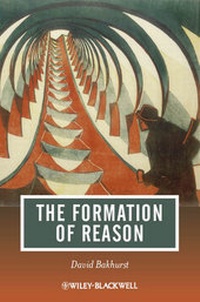
The Formation of Reason
Published on 8. April 2011
Book
Paperback/Softback
200 pages
978-1-4443-3909-3 (ISBN)
Unfortunately, price unknown
Article exhausted; check different version
Description
In The Formation of Reason, philosophy professor David Bakhurst utilizes ideas from philosopher John McDowell to develop and defend a socio-historical account of the human mind.
* Provides the first detailed examination of the relevance of John McDowell's work to the Philosophy of Education
* Draws on a wide-range of philosophical sources, including the work of 'analytic' philosophers Donald Davidson, Ian Hacking, Peter Strawson, David Wiggins, and Ludwig Wittgenstein
* Considers non-traditional ideas from Russian philosophy and psychology, represented by Ilyenkov and Vygotsky
* Discusses foundational philosophical ideas in a way that reveals their relevance to educational theory and practice
* Provides the first detailed examination of the relevance of John McDowell's work to the Philosophy of Education
* Draws on a wide-range of philosophical sources, including the work of 'analytic' philosophers Donald Davidson, Ian Hacking, Peter Strawson, David Wiggins, and Ludwig Wittgenstein
* Considers non-traditional ideas from Russian philosophy and psychology, represented by Ilyenkov and Vygotsky
* Discusses foundational philosophical ideas in a way that reveals their relevance to educational theory and practice
More details
Product info
Paperback
Series
Edition
1. Auflage
Language
English
Place of publication
Hoboken
United Kingdom
Publishing group
John Wiley and Sons Ltd
Target group
Professional and scholarly
Dimensions
Height: 22.9 cm
Width: 15.6 cm
Thickness: 1 cm
Weight
298 gr
ISBN-13
978-1-4443-3909-3 (9781444339093)
Schweitzer Classification
Other editions
Additional editions
Person
David Bakhurst is the John and Ella G. Charlton Professor of Philosophy at Queen's University, Kingston, Canada. He is the author of Consciousness and Revolution in Soviet Philosophy (1991) and co-editor (with Christine Sypnowich) of The Social Self (1995) and (with Stuart Shanker) of Jerome Bruner: Language, Culture, Self (2001).
Content
Acknowledgements
Author's Preface
1. What Can Philosophy Tell Us About How History Made the Mind?
2. Social Constructionism
3. Self and Other
4. Freedom, Reflection, and the Sources of Normativity
5. Exploring the Space of Reasons
6. Living Within Reason: Music, Mood, and Education
7. Education Makes Us What We Are
Author's Preface
1. What Can Philosophy Tell Us About How History Made the Mind?
2. Social Constructionism
3. Self and Other
4. Freedom, Reflection, and the Sources of Normativity
5. Exploring the Space of Reasons
6. Living Within Reason: Music, Mood, and Education
7. Education Makes Us What We Are