

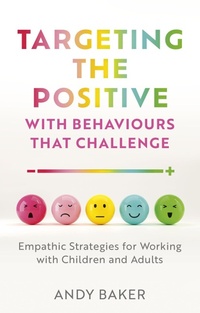
Targeting the Positive with Behaviours that Challenge
Empathic Strategies for Working with Children and Adults
Published on 21. November 2024
Book
Paperback/Softback
432 pages
978-1-83997-900-2 (ISBN)
Description
Unravel the complexities of effectively managing behaviours that challenge through the 6-stage Target model. The 6 stages offer an empowering tool kit that builds upon positive skills and abilities when working with individuals under some form of supervision or care. This includes children in home, care or school environments, and adults that need support related to mental health disorders, autism, learning disabilities or dementia.
With a focus on:
? Identifying behaviours
? Understanding and empathising
? Pro-active planning
? Recognizing escalation
? Responding appropriately
? Learning from incidents
The chapters provide significant information about why difficult situations arise and understanding people. A person-centred approach increases competency, confidence, resilience, and empathy so that caregivers feel more assured and settled about what they do. These effective methods build trusting relationships, teach new skills, and de-escalate situations safely, improving outcomes for both those who give support and those who receive it.
With a focus on:
? Identifying behaviours
? Understanding and empathising
? Pro-active planning
? Recognizing escalation
? Responding appropriately
? Learning from incidents
The chapters provide significant information about why difficult situations arise and understanding people. A person-centred approach increases competency, confidence, resilience, and empathy so that caregivers feel more assured and settled about what they do. These effective methods build trusting relationships, teach new skills, and de-escalate situations safely, improving outcomes for both those who give support and those who receive it.
Reviews / Votes
Andy Baker has written an informed must- read 'guide' based upon his wealth of experience, studying and knowledge. Such commitment and dedication to helping, supporting and educating others needs to be commended. The book is complimented with case studies which provide a deeper understanding and application of the theory. Not only will reading this book enable the reader to gain a richer understanding of the holistic benefits of managing behaviour, it will also provide an opportunity for the process of self-reflection of the readers own behaviour and/or anxieties which impact upon their ability to effectively and empathically understand the complexities of human behaviour. Read this book and embrace the possibility that empathy can build bridges across differences and create a more compassionate world. -- Yaf Yafai, Fostering Manager This book is a true representation to Andy's teachings, it captures the perspective of those receiving care but also encourages care-givers to address their own beliefs and perspectives to endorse more harmony to those receiving and providing care. This would be an innovative tool for any care giver in any setting and is a must read for anyone wanting to expand their knowledge and understanding. The case studies are very insightful, I love the concept of 'management not change is the aim' and that 'challenging behaviour' is referred to as 'behaviour that challenges', adapting to these teachings has enabled care givers to provide a more person-centred approach allowing us to achieve better outcomes. -- Rebecca Sanderson, Deputy Manager, GBA Care We have used Andys' training and the TARGET model for several years now and it has been transformative for our staff. The focus on understanding, empathy and the needs of the individual has consistently helped us to achieve better outcomes for our patients and everyone involved. -- William Inkson, Security Manager and Conflict Resolution Training Lead Andy has drawn on a variety of personal and professional experiences to create a fascinating guide to understanding behaviour and its impact. A must read for the professionally curious. -- David Speck RN, QIS, BSc (Hons), PGCert The book is informative in an easy to understand way. Andy has drawn on his own negative life experience to turn this into a positive rather than a negative. -- Tracy Thacker, Registered Manager, GBA Care A very in-depth and comprehensive resource for anyone with an interest in understanding and managing human behaviour. In particular those working in environments with people who have complex behavioural needs. -- Phil Hardy, Director, Securicare International Ltd This book is the perfect guide for anyone supporting and caring for individuals within the health and social care sector/setting - whether that be carers in a care home, teachers, or parents. Andy's approach on how we as caregivers can promote positive behaviour within our settings is invaluable and empowering. The strategies and techniques he promotes in the book on how to help manage distressed behaviours for people living with dementia are easy to understand and use, therefore making the book accessible for everyone providing care. Andy uses empathy throughout the book as the underpin for supporting anyone whose needs are different. I am looking forward to using the book within my own training and delivery sector. It really has helped me form a better understanding of how we can support people to live as well as possible. This book will really give caregivers the confidence and knowledge to better support our individuals, all through empathy and understanding. -- Nadine Sutton, Training and Development Partner, Able TrainingMore details
Language
English
Place of publication
London
United Kingdom
Target group
College/higher education
Professional and scholarly
Product notice
Paperback (UK-trade)
Illustrations
N/A
Dimensions
Height: 153 mm
Width: 230 mm
Thickness: 33 mm
Weight
626 gr
ISBN-13
978-1-83997-900-2 (9781839979002)
Copyright in bibliographic data and cover images is held by Nielsen Book Services Limited or by the publishers or by their respective licensors: all rights reserved.
Schweitzer Classification
Other editions
Additional editions
Andy Baker
Targeting the Positive with Behaviours that Challenge
Empathic Strategies for Working with Children and Adults
E-Book
11/2024
Jessica Kingsley Publishers
€33.99
Available for download
Person
Over 16 years of experience in the social care sector and training in psychology, multiple psychotherapeutic disciplines and behaviour management models inspired Andy to educate others. His passion for improving therapeutic relationships and good practice in behaviour management for care, education, non-care and even parents is infectious. Andy is the MD and head trainer of Able Training Support Ltd, the lead external trainer for the Alzheimer's Society and a director of the 'Institute of Conflict Management' He has spent over a decade supporting thousands of people to better understand and improve behaviour management.
Content
Preface.
Introduction
Chapter 1 - What is "Behaviour that Challenges"?.
Chapter 2 - Prevention Strategies.
Chapter 3 - Building a Positive Environment
Chapter 4 - Person-centred Approach.
Chapter 5 - Environmental Culture.
Chapter 6 - Behaviour Management Old Logic: Punish/Reward.
Chapter 7 - Introduction to the 6 Stage Target Model
Chapter 8 - Identify Maladaptive Behaviours.
Chapter 9 - Identify Positive Behaviours.
Chapter 10 - Causes of Behaviours that Challenge - Reflex.
Chapter 11 - Causes of Behaviours that Challenge - The Human Nervous System..
Chapter 12 - Stage 2: Understand/Empathise: Causes of Behaviours that Challenge - Trauma.
Chapter 13 - Causes of Behaviours that Challenge - Factors that Affect Brain Functioning.
Chapter 14 - Causes of Behaviours that Challenge - Reactive.
Chapter 15 - Causes of Behaviours that Challenge - Intentional
Chapter 16 - Causes of Behaviours that Challenge - The Biopsychosocial Model
Chapter 17 - Behavioural Analysis.
Chapter 18 - Introduction.
Chapter 19 - Developing a Strategy.
Chapter 20 - Step 1 - The Current Strategy.
Chapter 21 - Step 2 - Manage the Stress - Recovery from Trauma.
Chapter 22 - Step 2 - Manage the Stress - Using the HELP Principle.
Chapter 23 - Step 3 - Meet the Need.
Chapter 24 - Creating the Plan.
Chapter 25 - Teaching Methods.
Chapter 26 - Creating a competing pathway.
Chapter 27 - Relationships - Professional or Personal
Chapter 28 - Self-awareness and Self-management
Chapter 29 - The Stages of Escalation
Chapter 30 - Signs of Escalation
Chapter 31 - Introspection
Chapter 32 - Respond Appropriately
Chapter 33 - De-escalation through Positive Attitude and Empathy
Chapter 34 - Empathy
Chapter 35 - Bringing Escalation to a Solution or Resolution. 292
Chapter 36 - Eliminating or Supporting to Cope with the Stress
Chapter 37 HELP, PROMPT, WAIT, PROTECT
Chapter 38 - Planned Responses
Chapter 39 - Stage 6: Learn from Incident
APPENDIX 1 - How Angry Do You Get?
References quoted within this book.
Introduction
Chapter 1 - What is "Behaviour that Challenges"?.
Chapter 2 - Prevention Strategies.
Chapter 3 - Building a Positive Environment
Chapter 4 - Person-centred Approach.
Chapter 5 - Environmental Culture.
Chapter 6 - Behaviour Management Old Logic: Punish/Reward.
Chapter 7 - Introduction to the 6 Stage Target Model
Chapter 8 - Identify Maladaptive Behaviours.
Chapter 9 - Identify Positive Behaviours.
Chapter 10 - Causes of Behaviours that Challenge - Reflex.
Chapter 11 - Causes of Behaviours that Challenge - The Human Nervous System..
Chapter 12 - Stage 2: Understand/Empathise: Causes of Behaviours that Challenge - Trauma.
Chapter 13 - Causes of Behaviours that Challenge - Factors that Affect Brain Functioning.
Chapter 14 - Causes of Behaviours that Challenge - Reactive.
Chapter 15 - Causes of Behaviours that Challenge - Intentional
Chapter 16 - Causes of Behaviours that Challenge - The Biopsychosocial Model
Chapter 17 - Behavioural Analysis.
Chapter 18 - Introduction.
Chapter 19 - Developing a Strategy.
Chapter 20 - Step 1 - The Current Strategy.
Chapter 21 - Step 2 - Manage the Stress - Recovery from Trauma.
Chapter 22 - Step 2 - Manage the Stress - Using the HELP Principle.
Chapter 23 - Step 3 - Meet the Need.
Chapter 24 - Creating the Plan.
Chapter 25 - Teaching Methods.
Chapter 26 - Creating a competing pathway.
Chapter 27 - Relationships - Professional or Personal
Chapter 28 - Self-awareness and Self-management
Chapter 29 - The Stages of Escalation
Chapter 30 - Signs of Escalation
Chapter 31 - Introspection
Chapter 32 - Respond Appropriately
Chapter 33 - De-escalation through Positive Attitude and Empathy
Chapter 34 - Empathy
Chapter 35 - Bringing Escalation to a Solution or Resolution. 292
Chapter 36 - Eliminating or Supporting to Cope with the Stress
Chapter 37 HELP, PROMPT, WAIT, PROTECT
Chapter 38 - Planned Responses
Chapter 39 - Stage 6: Learn from Incident
APPENDIX 1 - How Angry Do You Get?
References quoted within this book.