

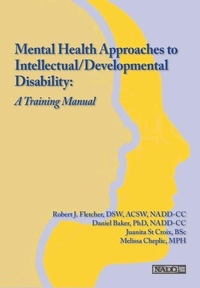
Mental Health Approaches to Intellectual / Developmental Disability
A Resource for Trainers
Published on 1. July 2016
Book
Paperback/Softback
464 pages
978-1-57256-142-7 (ISBN)
Description
Mental Health Approaches to Intellectual/Developmental Disability: A Resource for Trainers is a landmark contribution to the field of support for persons with Intellectual or Developmental Disabilities (IDD) and Mental Health concerns. This book can be used by a myriad of different professionals and care providers for a variety of different purposes. It may be used: (a) to train others for professional development (train-the-trainer model), (b) as a resource guide for individual study, or (c) as a reference guide. Proper support of mental wellness among persons with IDD requires a significant body of information and knowledge, and the authors of this book are happy to offer it as a means for educating professionals and care providers.
More details
Language
English
Product notice
Paperback (trade)
Unsewn / adhesive bound
Dimensions
Height: 251 mm
Width: 178 mm
Thickness: 25 mm
Weight
839 gr
ISBN-13
978-1-57256-142-7 (9781572561427)
Copyright in bibliographic data and cover images is held by Nielsen Book Services Limited or by the publishers or by their respective licensors: all rights reserved.
Schweitzer Classification
Persons
Dr. Dan Baker's focus at The Boggs Center is on positive behavior support, models of community and educational support, transition services, and mental health services for persons with disabilities. Melissa Cheplic is a Training and Consultation Specialist at The Boggs Center on Developmental Disabilities at the Rutgers Robert Wood Johnson Medical School in New Jersey. Dr. Robert Fletcher is the Founder and Chief Executive Officer of the NADD. Juanita St Croix graduated Western University with a BSc. when it was still the University of Western Ontario. She has 22 years of experience in human services, primarily in developmental services with organizations providing services to people with complex behavioral support needs and a dual diagnosis.