

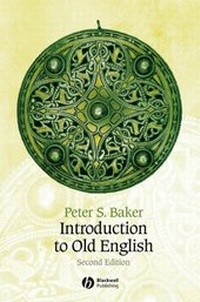
Introduction to Old English
2nd Edition
Published on 28. March 2007
Book
Paperback/Softback
416 pages
978-1-4051-5272-3 (ISBN)
Description
Introduction to Old English is the leading text available designed to help students engage with Old English literary and historical texts for the first time. This new edition builds on the success of the original and includes an expanded anthology and new, easy-to-use glossary.
The book's rich pedagogy includes basic grammar reviews at the beginning of each major chapter, covering the foundations of Old English. Other features include "minitexts" for practice in reading the language, and a detailed introduction to meter and style that eases the transition from prose to poetry. The original anthology of 14 readings has also been expanded to include four new texts: Ælfric's Sermon on the Book of Job; The Anglo-Saxon Chronicle entry (1087) on William the Conqueror; The Voyages of Ohthere and Wulfstan from the Old English Orosius; and The Battle of Maldon.
Introduction to Old English is an essential text for all students encountering the field for the first time.
The book's rich pedagogy includes basic grammar reviews at the beginning of each major chapter, covering the foundations of Old English. Other features include "minitexts" for practice in reading the language, and a detailed introduction to meter and style that eases the transition from prose to poetry. The original anthology of 14 readings has also been expanded to include four new texts: Ælfric's Sermon on the Book of Job; The Anglo-Saxon Chronicle entry (1087) on William the Conqueror; The Voyages of Ohthere and Wulfstan from the Old English Orosius; and The Battle of Maldon.
Introduction to Old English is an essential text for all students encountering the field for the first time.
Reviews / Votes
"Excellent introduction designed to provide reading knowledge ... He [Baker] constructs the book to encourage beginning students to start translating almost immediately" (The Medieval Review, June 2008) "In its references to web-sites and computer-links, An Introduction to Old English is very much a book of the twenty-first century; and many of its novel features - for example the chapter on the grammar of poetry, or the appendix on common spelling variants - will be extraordinarily helpful to teachers and students alike." (Michael Lapidge, University of Notre Dame) "Baker's Introduction is the kind of book that students of Old English - and their teachers - have been waiting for for a long time." (Hugh Magennis, Queen's University Belfast) "This is a truly outstanding textbook for today's student of Old English. Written in lucid and friendly prose, Baker brings the language to life in a manner that will inspire students." (Elaine Treharne, University of Leicester) "Peter Baker's Introduction to Old English offers an innovative combination of the traditional and the cutting edge. Beginning with the basics of the language, the chapters proceed through intelligently paced levels so that by the end the user is reading the most sophisticated literature in Old English." (Daniel G. Donoghue, Harvard University) "The fruit of years of sensitive, thoughtful and student-responsive teaching. [...] this work is a huge step forward in imaginative course design. It is accessible in manner and genuinely tries to address the needs of the modern student and teacher, taking them through a course step by step. [...] by far the best attempt yet to introduce Old English, and I enthusiastically recommend it to members." (TOEBI Newsletter) "Peter Baker's excellent new book, a combined grammar and reader, deserves to find a central place in the university teaching of Old English. It is unabashedly designed to be accessible to absolute beginners, but students who progress attentively through the whole book will in fact find themselves in command of a great deal of what makes Old English language and literature tick. [...] These chapters [on 'Metre', Poetic Style', 'The Grammar of Poetry', and 'Reading Old English Manuscripts'] constitute the real novelty of the book in their lucid summation of some essential truths that have rarely if ever been to clearly set out for beginners; the sections on poetry in particular deserve to be read by all students beginning the translation of Old English for the first time." (Notes and Queries) "The new edition is a solid tool that both an independent student and a classroom full of students will find useful. The book's approach is balanced. It includes just the right amount of explanatory text ... while also offering ... grammar tools and exercises. The selection of readings is varied and exemplary. Much thought was put into the choice, quantity, and order of the other texts in the anthology. I would certainly recommend this book for an introductory course in Old English ... .Baker's new edition is a pleasure to read and would be a pleasure to use in the classroom." (Comitatus)More details
Edition
2., Auflage
Language
English
Place of publication
Chicester
United Kingdom
Publishing group
John Wiley and Sons Ltd
Target group
Professional and scholarly
students of Old English
Edition type
Revised edition
Illustrations
Illustrations, maps
Dimensions
Height: 23 cm
Width: 15.3 cm
Thickness: 22 mm
Weight
589 gr
ISBN-13
978-1-4051-5272-3 (9781405152723)
Schweitzer Classification
Other editions
New editions
Previous edition

Peter Baker
An Introduction to Old English
Book
05/2003
Blackwell Publishers
€45.99
Article exhausted; check for reprint
Person
Peter S. Baker is Professor of Medieval Literature at the University of Virginia, Charlottesville. His previous publications include Byrhtferth's Enchiridion (co-edited with Michael Lapidge, 1995), Beowulf: Basic Readings (1995), The Anglo-Saxon Chronicle: A Collaborative Edition (F), and the website www.engl.virginia.edu/OE/
Content
Preface.
How to use this book.
1. The Anglo-Saxons and Their Language.
1.1 Who Were They?.
1.2 Where Did Their Language Come From?.
1.3 What Was Old English Like?.
1.4 Old English Dialects.
2. Pronunciation.
2.1 Quick Start.
2.2 More About Vowels.
2.3 More About c and g.
2.4 Syllable Length.
2.5 Accentuation.
2.6 On-line Pronunciation Practice.
2.7 Summary.
3. Basic Grammar: A Review.
3.1 Parts of Speech.
3.2 Phrases.
3.3 Clauses.
3.4 Elements of the Sentence or Clause.
4. Case.
4.1 What is Case?.
4.2 Uses of the Cases.
5. Pronouns.
5.1 Quick Start.
5.2 More about Personal and Demonstrative Pronouns.
5.3 Interrogative Pronouns.
5.4 Indefinite Pronouns.
5.5 Relative Pronouns.
5.6 Reflexive Pronouns.
5.7 Reciprocal Pronouns.
6. Nouns.
6.1 Quick Start.
6.2 More about Strong Nouns.
6.3 Minor Declensions.
7. Verbs.
7.1 Quick Start.
7.2 More about Endings.
7.3 More about Weak Verbs.
7.4 More about Strong Verbs.
7.5 Verbs with Weak Presents and Strong Pasts.
7.6 More about Preterite-Present Verbs.
7.7 Dôn, gân, willan.
7.8 Negation.
7.9 The Verbals.
7.10 The Subjunctive.
8. Adjectives.
8.1 Quick Start.
8.2 Strong Adjectives.
8.3 Weak Adjectives.
8.4 Comparison of Adjectives.
9. Numerals.
9.1 Quick Start.
9.2 Cardinal Numbers.
9.3 Ordinal Numbers.
10. Adverbs, Conjunctions and Prepositions.
10.1 Quick Start.
10.2 Adverbs.
10.3 Conjunctions.
10.4 Correlation.
10.5 Prepositions.
11. Concord.
11.1 Quick Start.
11.2 Subject and Verb.
11.3 Pronoun and Antecedent.
11.4 Noun and Modifiers.
11.5 Bad Grammar?.
12. Word-order.
12.1 Quick Start.
12.2 Subject-Verb.
12.3 Verb-Subject.
12.4 Subject. Verb.
12.5 Correlation.
12.6 Periphrastic Verbs.
13. Metre.
13.1 Alliteration.
13.2 Rhythm.
14. Poetic Style.
14.1 Vocabulary.
14.2 Variation.
14.3 Formulas.
15. The Grammar of Poetry.
15.1 Inflections.
15.2 Syntax.
16. Reading Old English Manuscripts.
16.1 Construction of the Manuscript.
16.2 The Old English Alphabet.
16.3 Abbreviations.
16.4 Punctuation and Capitalization.
16.5 Word- and Line-division.
16.6 Errors and Corrections.
Appendix A Common Spelling Variants.
A.1 Vowels of Accented Syllables.
A.2 Unaccented Syllables.
A.3 Consonants.
Appendix B Phonetic Symbols and Terms.
B.1 International Phonetic Alphabet symbols.
B.2 Phonetic Terms.
Appendix C Further Reading.
C.1 General Works.
C.2 Grammars.
C.3 Dictionaries and Concordances.
C.4 Bibliographies.
C.5 Old English Texts and Translations.
C.6 Literary Criticism; Sources and Analogues; Metre.
C.7 History and Culture.
C.8 Manuscripts, Art and Archaeology.
C.9 On-line Aids.
C.10 One-line Amusements.
Anthology.
1 The Fall of Adam and Eve.
2 The Life of St Æthelthryth.
3 Ælfric on the Book of Job.
4 Cynewulf and Cyneheard.
5 The Martyrdom of Ælfheah.
6 William the Conqueror.
7 Sermo Lupi ad Anglos.
8 Ohthere and Wulfstan.
9 The Story of Cædmon.
10 Boethius on Fame.
11 A Lyric for Advent.
12 The Battle of Maldon.
13 The Wanderer.
14 The Dream of the Rood.
15 Wulf and Eadwacer.
16 The Wife's Lament.
17 The Husband's Message.
18 Judith.
Textual Notes.
Glossary.
References.
Index
How to use this book.
1. The Anglo-Saxons and Their Language.
1.1 Who Were They?.
1.2 Where Did Their Language Come From?.
1.3 What Was Old English Like?.
1.4 Old English Dialects.
2. Pronunciation.
2.1 Quick Start.
2.2 More About Vowels.
2.3 More About c and g.
2.4 Syllable Length.
2.5 Accentuation.
2.6 On-line Pronunciation Practice.
2.7 Summary.
3. Basic Grammar: A Review.
3.1 Parts of Speech.
3.2 Phrases.
3.3 Clauses.
3.4 Elements of the Sentence or Clause.
4. Case.
4.1 What is Case?.
4.2 Uses of the Cases.
5. Pronouns.
5.1 Quick Start.
5.2 More about Personal and Demonstrative Pronouns.
5.3 Interrogative Pronouns.
5.4 Indefinite Pronouns.
5.5 Relative Pronouns.
5.6 Reflexive Pronouns.
5.7 Reciprocal Pronouns.
6. Nouns.
6.1 Quick Start.
6.2 More about Strong Nouns.
6.3 Minor Declensions.
7. Verbs.
7.1 Quick Start.
7.2 More about Endings.
7.3 More about Weak Verbs.
7.4 More about Strong Verbs.
7.5 Verbs with Weak Presents and Strong Pasts.
7.6 More about Preterite-Present Verbs.
7.7 Dôn, gân, willan.
7.8 Negation.
7.9 The Verbals.
7.10 The Subjunctive.
8. Adjectives.
8.1 Quick Start.
8.2 Strong Adjectives.
8.3 Weak Adjectives.
8.4 Comparison of Adjectives.
9. Numerals.
9.1 Quick Start.
9.2 Cardinal Numbers.
9.3 Ordinal Numbers.
10. Adverbs, Conjunctions and Prepositions.
10.1 Quick Start.
10.2 Adverbs.
10.3 Conjunctions.
10.4 Correlation.
10.5 Prepositions.
11. Concord.
11.1 Quick Start.
11.2 Subject and Verb.
11.3 Pronoun and Antecedent.
11.4 Noun and Modifiers.
11.5 Bad Grammar?.
12. Word-order.
12.1 Quick Start.
12.2 Subject-Verb.
12.3 Verb-Subject.
12.4 Subject. Verb.
12.5 Correlation.
12.6 Periphrastic Verbs.
13. Metre.
13.1 Alliteration.
13.2 Rhythm.
14. Poetic Style.
14.1 Vocabulary.
14.2 Variation.
14.3 Formulas.
15. The Grammar of Poetry.
15.1 Inflections.
15.2 Syntax.
16. Reading Old English Manuscripts.
16.1 Construction of the Manuscript.
16.2 The Old English Alphabet.
16.3 Abbreviations.
16.4 Punctuation and Capitalization.
16.5 Word- and Line-division.
16.6 Errors and Corrections.
Appendix A Common Spelling Variants.
A.1 Vowels of Accented Syllables.
A.2 Unaccented Syllables.
A.3 Consonants.
Appendix B Phonetic Symbols and Terms.
B.1 International Phonetic Alphabet symbols.
B.2 Phonetic Terms.
Appendix C Further Reading.
C.1 General Works.
C.2 Grammars.
C.3 Dictionaries and Concordances.
C.4 Bibliographies.
C.5 Old English Texts and Translations.
C.6 Literary Criticism; Sources and Analogues; Metre.
C.7 History and Culture.
C.8 Manuscripts, Art and Archaeology.
C.9 On-line Aids.
C.10 One-line Amusements.
Anthology.
1 The Fall of Adam and Eve.
2 The Life of St Æthelthryth.
3 Ælfric on the Book of Job.
4 Cynewulf and Cyneheard.
5 The Martyrdom of Ælfheah.
6 William the Conqueror.
7 Sermo Lupi ad Anglos.
8 Ohthere and Wulfstan.
9 The Story of Cædmon.
10 Boethius on Fame.
11 A Lyric for Advent.
12 The Battle of Maldon.
13 The Wanderer.
14 The Dream of the Rood.
15 Wulf and Eadwacer.
16 The Wife's Lament.
17 The Husband's Message.
18 Judith.
Textual Notes.
Glossary.
References.
Index