

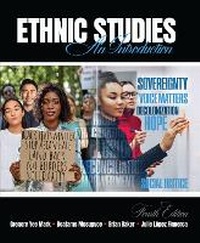
Ethnic Studies
An Introduction
4th Edition
Will be published approx. on 1. January 1753
Book
Paperback/Softback
380 pages
978-1-7924-5838-5 (ISBN)
Description
The new 4th Edition of Ethnic Studies: An Introduction reflects the interdisciplinary nature of Ethnic Studies - the readings are drawn from academic fields in the humanities and social sciences. A few first-person narratives are also included, so we can get a sense of how individuals experience their ethnic group status. Overall, the readings in this book are meant to provide students with a foundation in Ethnic Studies. The volume integrates framing and reflection questions throughout to foster critical and engaged readers. These questions initiate a personal and classroom dialogue.Respecting the unique realities confronting the communities discussed in this volume, the authors intentionally aimed to evoke a sense of empathy and solidarity so that when students read the words like Black Lives Matter, Stop Asian Hate, Land Back, and No Borders listed, and capped off with the word
Solidarity, these terms would reassert the humanity and dignity of someone else's lived experiences.
Solidarity, these terms would reassert the humanity and dignity of someone else's lived experiences.
More details
Edition
4th Revised edition
Language
English
Place of publication
Iowa
United States
Target group
College/higher education
Edition type
Revised edition
Weight
800 gr
ISBN-13
978-1-7924-5838-5 (9781792458385)
Copyright in bibliographic data and cover images is held by Nielsen Book Services Limited or by the publishers or by their respective licensors: all rights reserved.
Schweitzer Classification
Persons
Gregory Yee Mark is a professor of Ethnic Studies at California State University, Sacramento. In January 1969, as an undergraduate student at University of California, Berkeley, he was a part of the Third World Liberation Front that went on strike (the "Third World Strike") at the Berkeley campus to create the discipline of Ethnic Studies. During this transformative student strike, he was tear-gassed, shot at by the police, and most importantly, he learned the true meaning of creating a relevant education for all people. He is a pioneer in the field of Asian American studies.
Starting as a student, Dr. Mark was a community organizer and activist in Berkeley and Oakland. In 1969, in Oakland, he founded the East Bay Chinese Youth Council, which addressed the various challenges of Chinatown youth such as gangs. He continued this role as a community advocate and educator while a professor in San Jose, Honolulu, and Sacramento. He has fought for social justice, better education for the underserved, preventing youth violence in the Asian American community, and a broader and more correct interpretation of American history.
Dr. Mark is a pioneer in service learning, and in 2001, he founded the 65th Street Corridor Community Collaborative Project, which has served over 38,000 Sacramento residents. In 2021, this Project celebrates its 20th anniversary of service to the community.
This anthology, Ethnic Studies: An Introduction, examines American history, education, ethnic identity, and the continued struggle for social justice through the lens of people of color in the United States. Last, the chapters in this publication, begin to bring to the forefront topics that have been largely ignored, but are essential for students to learn so that they can service their own communities.
Born in South Africa Boatamo Ati Mosupyoe is a Professor of Ethnic Studies/Pan African Studies and Associate Dean at California State University, Sacramento. She obtained her Bachelor's degree at University of the North in South Africa and her Masters and PhD. at University of California, Berkeley. Her research is intersectional and includes Gender, Education, Religion, Social and Transitional Justice, and Immigration. She is the Vice President of Global Majority an organization that conducts training and education on implicit bias, conflict resolution and peace building. She was a member of the California State University Task Force on the Advancement of Ethnic Studies, and co-authored the final report. The recommendation of the report effectively served as a foundation for the AB 1460 Bill that culminated in a law mandating Ethnic Studies as a requirement. Dr. Mosupyoe has organized successful International Conferences on the prevention of Genocide and is a recipient of many awards.
Brian Baker is a Professor of Ethnic Studies and serves as the Director of Native American Studies at Sacramento State. With an emphasis on systemic discrimination, settler colonialism and decolonization, he been in researching and presenting on historical and contemporary imagery associated to Native Americans, and how images of "the Americana Indian" have framed the experiences Native peoples within American society. In addition to advising and mentoring students of color he is especially active in working with Native American students. He is committed to community service and engagement which is key to the Ethnic Studies discipline. A first-generation college student, Brian completed his B.S. degree in Sociology, Political Science and Native American Studies at Northland College, eventually completing a Ph.D. in Sociology at Stanford University. He is a citizen of the Bad River (Mashkiiziibii) Band of Lake Superior (Kitchi-gami) Chippewa (Anishinaabe).
Julie López Figueroa is a Professor of Ethnic Studies at Sacramento State University. With a focus on retention, her qualitative research focuses on access and success of first-generation students within higher education, specifically Latino males. She is nationally recognized as one of the earliest contributors informing and framing the body of knowledge examining the academic success of Latino males in higher education. In terms of making college accessible for underrepresented communities, Julie has served as the Faculty Fieldtrip Coordinator for the 65th Street Corridor Community Collaborative Project for the last 17 years. Julie completed her doctoral studies in Education from the University of California, Berkeley; a M.A. in Education from the University of California, Santa Cruz; and her B.A. in Sociology and Chicano Studies from the University of California, Davis. She's the proud daughter of Mexican migrant parents, Macedonio and Maria Figueroa.
Starting as a student, Dr. Mark was a community organizer and activist in Berkeley and Oakland. In 1969, in Oakland, he founded the East Bay Chinese Youth Council, which addressed the various challenges of Chinatown youth such as gangs. He continued this role as a community advocate and educator while a professor in San Jose, Honolulu, and Sacramento. He has fought for social justice, better education for the underserved, preventing youth violence in the Asian American community, and a broader and more correct interpretation of American history.
Dr. Mark is a pioneer in service learning, and in 2001, he founded the 65th Street Corridor Community Collaborative Project, which has served over 38,000 Sacramento residents. In 2021, this Project celebrates its 20th anniversary of service to the community.
This anthology, Ethnic Studies: An Introduction, examines American history, education, ethnic identity, and the continued struggle for social justice through the lens of people of color in the United States. Last, the chapters in this publication, begin to bring to the forefront topics that have been largely ignored, but are essential for students to learn so that they can service their own communities.
Born in South Africa Boatamo Ati Mosupyoe is a Professor of Ethnic Studies/Pan African Studies and Associate Dean at California State University, Sacramento. She obtained her Bachelor's degree at University of the North in South Africa and her Masters and PhD. at University of California, Berkeley. Her research is intersectional and includes Gender, Education, Religion, Social and Transitional Justice, and Immigration. She is the Vice President of Global Majority an organization that conducts training and education on implicit bias, conflict resolution and peace building. She was a member of the California State University Task Force on the Advancement of Ethnic Studies, and co-authored the final report. The recommendation of the report effectively served as a foundation for the AB 1460 Bill that culminated in a law mandating Ethnic Studies as a requirement. Dr. Mosupyoe has organized successful International Conferences on the prevention of Genocide and is a recipient of many awards.
Brian Baker is a Professor of Ethnic Studies and serves as the Director of Native American Studies at Sacramento State. With an emphasis on systemic discrimination, settler colonialism and decolonization, he been in researching and presenting on historical and contemporary imagery associated to Native Americans, and how images of "the Americana Indian" have framed the experiences Native peoples within American society. In addition to advising and mentoring students of color he is especially active in working with Native American students. He is committed to community service and engagement which is key to the Ethnic Studies discipline. A first-generation college student, Brian completed his B.S. degree in Sociology, Political Science and Native American Studies at Northland College, eventually completing a Ph.D. in Sociology at Stanford University. He is a citizen of the Bad River (Mashkiiziibii) Band of Lake Superior (Kitchi-gami) Chippewa (Anishinaabe).
Julie López Figueroa is a Professor of Ethnic Studies at Sacramento State University. With a focus on retention, her qualitative research focuses on access and success of first-generation students within higher education, specifically Latino males. She is nationally recognized as one of the earliest contributors informing and framing the body of knowledge examining the academic success of Latino males in higher education. In terms of making college accessible for underrepresented communities, Julie has served as the Faculty Fieldtrip Coordinator for the 65th Street Corridor Community Collaborative Project for the last 17 years. Julie completed her doctoral studies in Education from the University of California, Berkeley; a M.A. in Education from the University of California, Santa Cruz; and her B.A. in Sociology and Chicano Studies from the University of California, Davis. She's the proud daughter of Mexican migrant parents, Macedonio and Maria Figueroa.
Content
- Introduction / Perspectives - - Dedication
- Introduction to Ethnic Studies - Brian Baker and Julie López Figueroa
- "We're Going Out. Are You With Us?" The Origins of Asian American Studies - Gregory Yee Mark
- Why Ethnic Studies Was Meant for Me - Rosana Chavez, M.S. (Ethnic Studies Alumna)
- "Ethnic Studies Embodies Activism" - Andrea L. Moore
- Framing the Value and Purpose of Perspectives - Julie López Figueroa
- History - Introduction - Wayne Maeda (in memoriam) and Brian Baker
- "Returning Home Tolowa Dee-ni" - Annette L. Reed, Ph.D.
- The History of Asians in America - Timothy Fong
- Recent African Immigration - Boatamo Mosupyoe
- Native Americans and the United States, 1830-2000 Action and Response - Steven J. Crum
- Iu Mien-We the People - Fahm Saelee
- The Hmong in the United States - Bao Lo
- Race, Class and Gender - Introduction - Boatamo Mosupyoe
- The Intersection of Race, Class and Gender - Boatamo Mosupyoe
- What It Means to Be an Asian Indian Woman - Y. Lakshmi Malroutu
- Is the Glass Ceiling Cracked Yet? Women in Rwanda, South Africa and the United States, 1994-2010 183 - Boatamo Mosupyoe
- Tungtong: Share Your Stories - Marietess Masulit
- Fiji and Fijians in Sacramento - Mitieli Rokolacadamu Gonemaituba, Neha Chand, Darsha Naidu, Jenisha Lal, Jonathan Singh, Shayal Sharma, and Gregory Yee Mark
- Identity and Institutions - Introduction - Brian Baker
- Kill the Indian, Save the Child: Cultural Genocide and the Boarding School - Debra K. S. Barker
- My Father's Labor: An Unknown, but Valued History - Julie López Figueroa and Macedonio Figueroa
- "Imaginary Indians" Are Not Real - Brian Baker
- Implicit Bias: Individual and Systemic Racism -Rita Cameron Wedding
- "And it's time for them to come down": History, Memory, and Decentering Settler Colonialism - Rose Soza War Soldier
- Response and Responsibility - Introduction - Eric Vega and Julie López Figueroa
- Challenging the Dilemma of Brown v. Topeka Board of Education: And the Rush Toward Resegregation - Otis L. Scott
- A Voyage of Discovery: Sacramento and the Politics of Ordinary Black People - David Covin
- Arizona: Ground Zero for the War on Immigrants and Latinos(as) - Elvia Ramirez
- Asian American and Pacific Islanders Harmed by Trump COVID-19 Blame Campaign - Timothy P. Fong, PhD
- "We can't just stand aside now": Oakland's Fortune Cookie Factory Stands with Black Lives Matter - Annalise Harlow
- The 65th Street Corridor Community Collaborative Project: A Lesson in Community Service - Gregory Yee Mark, Julie López Figueroa, Christopher Shimizu, Jasmine Duong, and Jazmine Sanchez
- Introduction to Ethnic Studies - Brian Baker and Julie López Figueroa
- "We're Going Out. Are You With Us?" The Origins of Asian American Studies - Gregory Yee Mark
- Why Ethnic Studies Was Meant for Me - Rosana Chavez, M.S. (Ethnic Studies Alumna)
- "Ethnic Studies Embodies Activism" - Andrea L. Moore
- Framing the Value and Purpose of Perspectives - Julie López Figueroa
- History - Introduction - Wayne Maeda (in memoriam) and Brian Baker
- "Returning Home Tolowa Dee-ni" - Annette L. Reed, Ph.D.
- The History of Asians in America - Timothy Fong
- Recent African Immigration - Boatamo Mosupyoe
- Native Americans and the United States, 1830-2000 Action and Response - Steven J. Crum
- Iu Mien-We the People - Fahm Saelee
- The Hmong in the United States - Bao Lo
- Race, Class and Gender - Introduction - Boatamo Mosupyoe
- The Intersection of Race, Class and Gender - Boatamo Mosupyoe
- What It Means to Be an Asian Indian Woman - Y. Lakshmi Malroutu
- Is the Glass Ceiling Cracked Yet? Women in Rwanda, South Africa and the United States, 1994-2010 183 - Boatamo Mosupyoe
- Tungtong: Share Your Stories - Marietess Masulit
- Fiji and Fijians in Sacramento - Mitieli Rokolacadamu Gonemaituba, Neha Chand, Darsha Naidu, Jenisha Lal, Jonathan Singh, Shayal Sharma, and Gregory Yee Mark
- Identity and Institutions - Introduction - Brian Baker
- Kill the Indian, Save the Child: Cultural Genocide and the Boarding School - Debra K. S. Barker
- My Father's Labor: An Unknown, but Valued History - Julie López Figueroa and Macedonio Figueroa
- "Imaginary Indians" Are Not Real - Brian Baker
- Implicit Bias: Individual and Systemic Racism -Rita Cameron Wedding
- "And it's time for them to come down": History, Memory, and Decentering Settler Colonialism - Rose Soza War Soldier
- Response and Responsibility - Introduction - Eric Vega and Julie López Figueroa
- Challenging the Dilemma of Brown v. Topeka Board of Education: And the Rush Toward Resegregation - Otis L. Scott
- A Voyage of Discovery: Sacramento and the Politics of Ordinary Black People - David Covin
- Arizona: Ground Zero for the War on Immigrants and Latinos(as) - Elvia Ramirez
- Asian American and Pacific Islanders Harmed by Trump COVID-19 Blame Campaign - Timothy P. Fong, PhD
- "We can't just stand aside now": Oakland's Fortune Cookie Factory Stands with Black Lives Matter - Annalise Harlow
- The 65th Street Corridor Community Collaborative Project: A Lesson in Community Service - Gregory Yee Mark, Julie López Figueroa, Christopher Shimizu, Jasmine Duong, and Jazmine Sanchez