

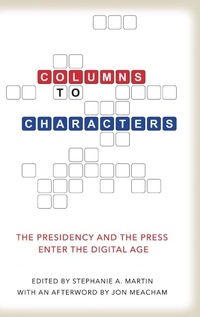
Columns to Characters
The Presidency and the Press Enter the Digital Age
Published on 30. November 2017
Book
Hardback
288 pages
978-1-62349-562-6 (ISBN)
Description
The relationship between the presidency and the press has transformed-seemingly overnight-from one where reports and columns were filed, edited, and deliberated for hours before publication into a brave new world where texts, tweets, and sound bites race from composition to release within a matter of seconds. This change, which has ultimately made political journalism both more open and more difficult, brings about many questions, but perhaps the two most important are these: Are the hard questions still being asked? Are they still being answered?
In Columns to Characters, Stephanie A. Martin and top scholars and journalists offer a fresh perspective on how the evolution of technology affects the way presidents interact with the public. From Bill Clinton's saxophone playing on the Arsenio Hall Show to Barack Obama's skillful use of YouTube, Twitter, and Reddit as the first "social media president," political communication appears to reflect the increasing fragmentation of the American public.
The accessible essays here explore these implications in a variety of real-world circumstances: the "narcotizing" numbness of information overload and voter apathy; the concerns over privacy, security, and civil liberties; new methods of running political campaigns and mobilizing support for programs; and a future "post-rhetorical presidency" in which the press is all but irrelevant. Each section of the book concludes with a "reality check," a short reflection by a working journalist (or, in one case, a former White House insider) on the presidential beat.
In Columns to Characters, Stephanie A. Martin and top scholars and journalists offer a fresh perspective on how the evolution of technology affects the way presidents interact with the public. From Bill Clinton's saxophone playing on the Arsenio Hall Show to Barack Obama's skillful use of YouTube, Twitter, and Reddit as the first "social media president," political communication appears to reflect the increasing fragmentation of the American public.
The accessible essays here explore these implications in a variety of real-world circumstances: the "narcotizing" numbness of information overload and voter apathy; the concerns over privacy, security, and civil liberties; new methods of running political campaigns and mobilizing support for programs; and a future "post-rhetorical presidency" in which the press is all but irrelevant. Each section of the book concludes with a "reality check," a short reflection by a working journalist (or, in one case, a former White House insider) on the presidential beat.
More details
Series
Language
English
Place of publication
College Station
United States
Target group
Professional and scholarly
Illustrations
5 tables, 6 graphs
Dimensions
Height: 240 mm
Width: 161 mm
Thickness: 21 mm
Weight
611 gr
ISBN-13
978-1-62349-562-6 (9781623495626)
Copyright in bibliographic data and cover images is held by Nielsen Book Services Limited or by the publishers or by their respective licensors: all rights reserved.
Schweitzer Classification
Persons
Stephanie A. Martin is an assistant professor in the department of communication and public affairs at Southern Methodist University.