

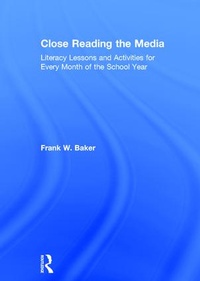
Close Reading the Media
Literacy Lessons and Activities for Every Month of the School Year
1st Edition
Published on 13. December 2017
Book
Hardback
162 pages
978-1-138-21600-6 (ISBN)
Description
Teach middle school students to become savvy consumers of the TV, print, and online media bombarding them every day. In this timely book copublished by Routledge and MiddleWeb, media literacy expert Frank W. Baker offers thematic lessons for every month of the school year, so you can engage students in learning by having them analyze the real world around them. Students will learn to think critically about photos, advertisements, and other media and consider the intended purposes and messages. Topics include:
Helping students detect fake news;
Unraveling the messages in TV advertising;
Looking at truth vs propaganda in political ads and debates;
Revealing how big media influences the news we read;
Understanding how pictures changed America during the Civil Rights Movement;
Exploring the language of film and the symbols of costume design;
Thinking about how media appeals to our emotions;
Examining branding, product placement, and the role of celebrity;
Reading and interpreting iconic news images;
And much, much more!
In addition, the book's lesson plans contain connections to key standards and step-by-step activities you can use immediately. With this practical book, you'll have all the tools and ideas you need to help today's students successfully navigate their media-filled world.
Helping students detect fake news;
Unraveling the messages in TV advertising;
Looking at truth vs propaganda in political ads and debates;
Revealing how big media influences the news we read;
Understanding how pictures changed America during the Civil Rights Movement;
Exploring the language of film and the symbols of costume design;
Thinking about how media appeals to our emotions;
Examining branding, product placement, and the role of celebrity;
Reading and interpreting iconic news images;
And much, much more!
In addition, the book's lesson plans contain connections to key standards and step-by-step activities you can use immediately. With this practical book, you'll have all the tools and ideas you need to help today's students successfully navigate their media-filled world.
Reviews / Votes
"Students will learn to think critically about photos, advertisements, and other media and consider the intended purposes and messages. ... The 'Close Reading the Media' featured lesson plans contain connections to key standards and step-by-step activities classroom teachers can use immediately...With this practical instructional guide, teachers will have all the tools and ideas they need to help today's students successfully navigate their media-filled world."--Midwest Book Review, September 2018"What student would not want to explore and deconstruct media messages from the latest TV season, Super Bowl ads, popular film, toy commercials, award shows, popular songs, news photographs, and MAD magazine cover parodies? Frank Baker makes essential media literacy concepts accessible, presents ideas to inspire creativity and offers practical strategies to hook young learners in critical thought. Interdisciplinary and jam-packed with resources, important question checklists and engaging, relevant, standards-aligned ideas for active learning, Close Reading the Media is a timely go-to volume for classroom teachers as well as teacher librarians." --Joyce Valenza, PhD, Assistant Teaching Professor, Rutgers University, SC&I
"Fans of the amazing Frank Baker will be thrilled with this collection of Frank's "greatest hits"! The lessons that Frank provides are so valuable and so needed by today's teachers who are trying to help their students navigate our current roller-coaster media world. This book is arriving just in time-thank you, Frank!" --William Kist, PhD, Professor, Kent State University
"A longtime proponent of media literacy, Baker combines timely lessons and pop culture resources. The material is divided by month, drawing students' attention to relevant topics. ... Verdict: An outstanding resource for librarians and teachers intending to teach media literacy."--from School Library Journal Review, May 2019
"Close Reading the Media by Frank W. Baker is an incredible resource for any middle or high school humanities teacher looking to teach students how to think critically about the media content they regularly consume. ... I am excited and empowered to teach many of these lessons throughout the next school year, thanks to the informative, fun, and thought-provoking ideas that Frank Baker provides in this book. As an English teacher, I am always looking for balance and variety in what and how students are reading, and this book is so helpful in incorporating media literacy into that balance. ... I highly recommend this resource to anyone who is intrigued by or already teaching media literacy skills!"--MiddleWeb Review by Stephanie Leary
More details
Language
English
Place of publication
London
United Kingdom
Publishing group
Taylor & Francis Ltd
Target group
Professional and scholarly
Professional and Professional Practice & Development
Illustrations
17 s/w Abbildungen
17 Illustrations, black and white
Dimensions
Height: 246 mm
Width: 174 mm
Weight
449 gr
ISBN-13
978-1-138-21600-6 (9781138216006)
Copyright in bibliographic data and cover images is held by Nielsen Book Services Limited or by the publishers or by their respective licensors: all rights reserved.
Schweitzer Classification
Other editions
Additional editions
Frank Baker
Close Reading the Media
Literacy Lessons and Activities for Every Month of the School Year
E-Book
12/2017
Routledge
€41.99
Available for download
Frank Baker
Close Reading the Media
Literacy Lessons and Activities for Every Month of the School Year
E-Book
12/2017
Routledge
€41.99
Available for download
Frank Baker
Close Reading the Media
Literacy Lessons and Activities for Every Month of the School Year
Book
12/2017
1st Edition
Routledge
€43.50
Shipment within 10-20 days
Person
Frank W. Baker is a renowned media literacy expert who holds workshops for teachers across the country. He is an educational consultant to the Writing Improvement Network and the News Literacy Project, as well as a blogger for MiddleWeb at https://www.middleweb.com/category/close-reading-the-media. He is also the author of Media Literacy in the K-12 Classroom (ISTE, 2016) and co-author of Mastering Media Literacy with Heidi Hayes Jacobs (Solution Tree, 2013). Visit his website, frankwbaker.com
Content
Contents
Meet the Authors
Introduction
1. August
Lesson 1: Exploring Media Literacy with Students
Lesson 2: Close Reading and What it Means for Media Literacy
Lesson 3: What's Missing from that Media Message?
2. September
Lesson 4: Unraveling the Messages in TV Advertising
Lesson 5: Examining the Political Announcement
Lesson 6: Truth vs Propaganda in Political Ads
3. October
Lesson 7: Media Literacy Week: A Time to Remember Why Media Literacy Is So Important
Lesson 8: Teach Students to Analyze Political Debates
Lesson 9: Students Need Help Detecting Fake News
4. November
Lesson 10: Examining Holiday Toy Ads
Lesson 11: Looking Beyond the Toy Ads to a World Saturated with Marketing Messages
5. December
Lesson 12: Engaging Students in the Study of Parody
Lesson 13: How Big Media Influences the News We Read
6. January
Lesson 14: Looking Deeper into Super Bowl Ads
Lesson 15: Being Savvy About Diet Ad Season
Lesson 16: Studying Black History Through the Vision of Gordon Parks
Lesson 17: Civil Rights: How Pictures Changed America
7. February
Lesson 18: Learning from the Academy Awards
Lesson 19: Exploring the Language of Film
Lesson 20: Reading the Symbols of Costume Design
8. March
Lesson 21: Comparing Hollywood vs. History: Who Gets the Story Right?
Lesson 22: Analyzing the Media Through Docudramas
Lesson 23: How Media Appeals to Our Emotions
9. April
Lesson 24: Examining Product Placement
Lesson 25: Noticing the Power of Branding
10. May
Lesson 26: Understanding Media Messages in Popular Magazines
Lesson 27: Reading and Interpreting Iconic News Images
Lesson 28: The Role of Celebrity in Raising Our Awareness
Conclusion
Glossary
Meet the Authors
Introduction
1. August
Lesson 1: Exploring Media Literacy with Students
Lesson 2: Close Reading and What it Means for Media Literacy
Lesson 3: What's Missing from that Media Message?
2. September
Lesson 4: Unraveling the Messages in TV Advertising
Lesson 5: Examining the Political Announcement
Lesson 6: Truth vs Propaganda in Political Ads
3. October
Lesson 7: Media Literacy Week: A Time to Remember Why Media Literacy Is So Important
Lesson 8: Teach Students to Analyze Political Debates
Lesson 9: Students Need Help Detecting Fake News
4. November
Lesson 10: Examining Holiday Toy Ads
Lesson 11: Looking Beyond the Toy Ads to a World Saturated with Marketing Messages
5. December
Lesson 12: Engaging Students in the Study of Parody
Lesson 13: How Big Media Influences the News We Read
6. January
Lesson 14: Looking Deeper into Super Bowl Ads
Lesson 15: Being Savvy About Diet Ad Season
Lesson 16: Studying Black History Through the Vision of Gordon Parks
Lesson 17: Civil Rights: How Pictures Changed America
7. February
Lesson 18: Learning from the Academy Awards
Lesson 19: Exploring the Language of Film
Lesson 20: Reading the Symbols of Costume Design
8. March
Lesson 21: Comparing Hollywood vs. History: Who Gets the Story Right?
Lesson 22: Analyzing the Media Through Docudramas
Lesson 23: How Media Appeals to Our Emotions
9. April
Lesson 24: Examining Product Placement
Lesson 25: Noticing the Power of Branding
10. May
Lesson 26: Understanding Media Messages in Popular Magazines
Lesson 27: Reading and Interpreting Iconic News Images
Lesson 28: The Role of Celebrity in Raising Our Awareness
Conclusion
Glossary