

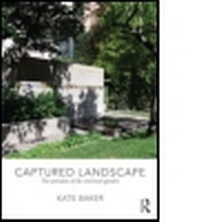
Captured Landscape
The Paradox of the Enclosed Garden
1st Edition
Published on 4. January 2012
Book
Paperback/Softback
224 pages
978-0-415-56229-4 (ISBN)
Description
The enclosed garden, or hortus conclusus, is a place where architecture, architectural elements, and landscape, come together. It has a long history, ranging from the paradise garden and cloister, the botanic garden and the giardini segreto, the kitchen garden and the stage for social display, to its many modern forms; the city retreat, the redemptive garden, and the deconstructed building. By its nature it is ambiguous. Is it an outdoor room, or captured landscape; is it garden or architecture?
Kate Baker discusses the continuing relevance of the typology of the enclosed garden to contemporary architects by exploring influential historical examples alongside some of the best of contemporary designs - brought to life with vivid photography and detailed drawings - taken mainly from Britain, the Mediterranean, Japan and South America. She argues that understanding the potential of the enclosed garden requires us to think of it as both a design and an experience.
As climate change becomes an increasingly important component of architectural planning, the enclosed garden, which can mediate so effectively between interior and exterior, provides opportunities for sustainable design and closer contact with the natural landscape. Study of the evolution of enclosed gardens, and the concepts they generate, is a highly effective means for students to learn about the design requirements of outdoor space proximal to the built environment.
Captured Landscape provides architectural design undergraduates, and practising architects, with a broad range of information and design possibilities. It will also appeal to landscape architects, horticulturalists and a wider audience of all those who are interested in garden design.
Kate Baker discusses the continuing relevance of the typology of the enclosed garden to contemporary architects by exploring influential historical examples alongside some of the best of contemporary designs - brought to life with vivid photography and detailed drawings - taken mainly from Britain, the Mediterranean, Japan and South America. She argues that understanding the potential of the enclosed garden requires us to think of it as both a design and an experience.
As climate change becomes an increasingly important component of architectural planning, the enclosed garden, which can mediate so effectively between interior and exterior, provides opportunities for sustainable design and closer contact with the natural landscape. Study of the evolution of enclosed gardens, and the concepts they generate, is a highly effective means for students to learn about the design requirements of outdoor space proximal to the built environment.
Captured Landscape provides architectural design undergraduates, and practising architects, with a broad range of information and design possibilities. It will also appeal to landscape architects, horticulturalists and a wider audience of all those who are interested in garden design.
Reviews / Votes
"Throughout, Baker supplements objective analysis of particular sites with `experiential' descriptions - observing such elements as acoustics, air-flow and light. While aimed at landscapists and architects, this book will be useful to anybody interested in designing space." - Garden Design Journal"Kate Baker is an architect and her real interest lies in seeing how places that are apparently cut off from the outside world in fact interact with it; how one can move in, through and out of them" - Historic Gardens Review
"British architect and educator Kate Baker reviews the relevance of the enclosed garden in modern architecture and landscape design. Walled gardens have been landscape features for centuries; she finds that their long history continues in contemporary landscapes. Using examples from Britain, the Mediterranean, Japan, and South America, the author sets forth her argument that the walled enclosure is an option that designers should consider as a design possibility. The author does an admirable job in this study of the enclosed garden and opportunities for sustainable design." - Marilyn K. Alaimo, Chicago Botanic Garden
"Baker leads readers to moments of discovery--hinting, nudging, and intuiting toward the realization that design is more than something attractive; it is something that comprises meaning at its core... Readers will gain a profound appreciation of the present as they allow built environments to inform through their own aesthetic... Highly recommended" - S. Hammer, CHOICE, September 2012
"One of the strengths of the book is the diversity of case studies that are included reinforcing the versatility of the enclosed garden as applied to different cultures, climates, landscapes and historic periods. This mix of old and new reinforces the importance of the enclosed garden throughout time and lays the foundation for a discussion about why the form remains relevant today as urban environments adapt to the challenges of climate change." - Massachusetts Horticultural Society
"...this book is a valuable addition to current work on emotional/sensuous geographies and it sits well alongside existing investigations of the experience of the domestic garden and restorative landscapes and gardens. Meanwhile, the architectural analysis, historical background and the sheer breadth of case studies contained within makes it an admirable source book for those who will play a part in shaping our built environment. Hopefully for them, it will prove what a positive, profound and life-giving element the enclosed garden can be." - Planning Perspectives
More details
Language
English
Place of publication
London
United Kingdom
Publishing group
Taylor & Francis Ltd
Target group
College/higher education
Professional and scholarly
Illustrations
211 Farbfotos bzw. farbige Rasterbilder, 38 s/w Zeichnungen
38 Line drawings, black and white; 211 Halftones, color
Dimensions
Height: 246 mm
Width: 174 mm
Weight
567 gr
ISBN-13
978-0-415-56229-4 (9780415562294)
Copyright in bibliographic data and cover images is held by Nielsen Book Services Limited or by the publishers or by their respective licensors: all rights reserved.
Schweitzer Classification
Other editions
New editions
Book
05/2018
2nd Edition
Routledge
€71.98
Shipment within 10-20 days
Additional editions
Book
01/2012
1st Edition
Routledge
€185.70
Article exhausted; check for reprint
Person
Kate Baker is an architect and has been a lecturer at the University of Portsmouth since 1992. Before that she was a principal in an architectural firm, with 15 years of experience in architectural practice, and taught part-time at the University of Cambridge. She is particularly interested in the relationship between architecture and landscape, and our sensory perception of space. Baker is an active researcher and has published a range of papers in these subject areas.
Content
1. Defining the Territory 2. From Patio to Park 3. Taming Nature 4. Ritual and Emptiness 5. Sensory Seclusion 6. Detachment