

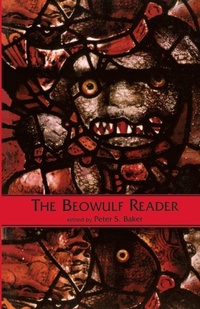
The Beowulf Reader
Basic Readings
Published on 27. April 2000
Book
Paperback/Softback
326 pages
978-0-8153-3666-2 (ISBN)
Description
Gathering some of the most important studies from the past 25 years of Beowulf scholarship, The Beowulf Reader offers essential insights both to scholars in the field and to readers coming to this Old English literary masterpiece for the first time. The carefully selected essays in this volume represent the various approaches that have dominated recent Beowulf studies and illustrate the evolution of Old English literary criticism, from New Critical formalism to recent trends in critical theory and a resurgent historicism.
More details
Series
Language
English
Place of publication
New York
United States
Publishing group
Taylor & Francis Inc
Target group
College/higher education
Professional and scholarly
Dimensions
Height: 216 mm
Width: 140 mm
Thickness: 18 mm
Weight
414 gr
ISBN-13
978-0-8153-3666-2 (9780815336662)
Copyright in bibliographic data and cover images is held by Nielsen Book Services Limited or by the publishers or by their respective licensors: all rights reserved.
Schweitzer Classification
Other editions
Additional editions
Book
03/2016
1st Edition
Routledge
€213.00
Shipment within 10-20 days
Person
Peter Baker is Associate Professor of Comparative Literature at the University of Virginia. He is the author of the award-winning Deconstruction and theEthical Turn (1995).
Content
Introduction; Beowulf; The Pagan Coloring of Beowulf; Beowulf and the Margins of Literacy; Elements of the Marvellous in the Characterization of Beowulf: A Reconsideration of the Textual Evidence; The Authenticating Voice in Beowulf; The Great Feud: Scriptural History and Strife in Beowulf III; The Germanic Context of the Unferp Episode; Skaldic Verse and the Date of Beowulf; Beowulf, Bede, and St. Oswine: The Hero's Pride in Old English Hagiography ; The Legacy of Wiglaf: Saving a Wounded Beowulf; The Women of Beowulf: A Context for Interpretation; Kuhn's Laws, Old English Poetry, and the New Philology; On the Dating of Beowulf