


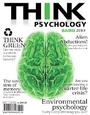
THINK Psychology
2nd Edition
Published on 18. November 2010
Book
Paperback/Softback
360 pages
978-0-13-212840-7 (ISBN)
Description
THINK Psychology covers the essentials every introductory psychology student should know. The chapters are briefer than a standard introductory text-allowing for a lower cost to students and using less printed paper. Unlike other brief texts, THINK Psychology includes 18 chapters of content-giving you the flexibility to choose what you want to study without the worry that skipping several chapters will mean leaving out hundreds of pages of content.
THINK Psychology provides currency and relevance through design, current examples and high-interest readings. The readings have been chosen from a range of well respected journals and popular press publications.
THINK Psychology provides currency and relevance through design, current examples and high-interest readings. The readings have been chosen from a range of well respected journals and popular press publications.
More details
Other editions
Previous edition
Person
Abigail A. Baird is a Professor of Psychology at Vassar College. She earned her undergraduate degree from Vassar College and both a M.A. and Ph.D. from Harvard University. Following completion of her Ph.D. She was awarded a Post-Doctoral Fellowship at the Center for Cognitive Neuroscience, at Dartmouth College. Her numerous articles and presentations have covered topics such as adolescent brain development, cognitive regulation of emotion, juvenile justice, and manifestations of racial bias in mind brain and behavior.
Abigail's research has received awards from Harvard University, the Society for Research on Psychopathology, and in 2008 the Association for Psychological Science named Abigail a "Rising Star in Psychological Science". Her research has also led her to be elected to several scientific societies including the International Society for Behavioral Neuroscience and the Gruter Institute for Law and Behavioral Research. Abigail has been repeatedly recognized for her excellence in teaching. In 2000 she received Harvard's George Goethals Teaching Prize, and in 2004 was awarded the Class of 1962 Excellence in Teaching Fellowship by Dartmouth College. Her professional accomplishments also include serving as secretary of the Association for Psychological Science, Honorary Faculty Member for the Order of Omega National Honor Society, Invited Faculty to the New York State Judicial Institute and Advisory Board member on the Campaign for Youth Justice.
Abigail's research has received awards from Harvard University, the Society for Research on Psychopathology, and in 2008 the Association for Psychological Science named Abigail a "Rising Star in Psychological Science". Her research has also led her to be elected to several scientific societies including the International Society for Behavioral Neuroscience and the Gruter Institute for Law and Behavioral Research. Abigail has been repeatedly recognized for her excellence in teaching. In 2000 she received Harvard's George Goethals Teaching Prize, and in 2004 was awarded the Class of 1962 Excellence in Teaching Fellowship by Dartmouth College. Her professional accomplishments also include serving as secretary of the Association for Psychological Science, Honorary Faculty Member for the Order of Omega National Honor Society, Invited Faculty to the New York State Judicial Institute and Advisory Board member on the Campaign for Youth Justice.
Content
Brief Contents
Chapter 01: Introduction
Chapter 02: Research Methods
Chapter 03: The Human Brain
Chapter 04: Genetics and Evolution
Chapter 05: Sensation and Perception
Chapter 06: Consciousness
Chapter 07: Learning
Chapter 08: Memory
Chapter 09: Cognition and Intelligence
Chapter 10: Human Development I: Physical, Cognitive, and Language Development
Chapter 11: Sex and Gender
Chapter 12: Human Development II: Social Development
Chapter 13: Emotion and Motivation
Chapter 14: Social Psychology
Chapter 15: Health and Stress
Chapter 16: Personality and Individual Differences
Chapter 17: Psychological Disorders
Chapter 18: Psychological Therapies
Chapter 01: Introduction
Chapter 02: Research Methods
Chapter 03: The Human Brain
Chapter 04: Genetics and Evolution
Chapter 05: Sensation and Perception
Chapter 06: Consciousness
Chapter 07: Learning
Chapter 08: Memory
Chapter 09: Cognition and Intelligence
Chapter 10: Human Development I: Physical, Cognitive, and Language Development
Chapter 11: Sex and Gender
Chapter 12: Human Development II: Social Development
Chapter 13: Emotion and Motivation
Chapter 14: Social Psychology
Chapter 15: Health and Stress
Chapter 16: Personality and Individual Differences
Chapter 17: Psychological Disorders
Chapter 18: Psychological Therapies