

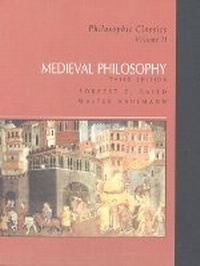
Philosophic Classics, Volume II
Medieval Philosophy
3rd Edition
Published on 2. September 1999
Book
Paperback/Softback
526 pages
978-0-13-021315-0 (ISBN)
Description
For courses in Medieval Philosophy.
Designed to be accessible to today's students, this anthology of readings in Western Medieval philosophy represents the towering medieval thinkers- Augustine, Thomas Aquinas, and William of Ockham-as well as other medieval figures. The readings consider ethics and politics, but the focus is on metaphysics and epistemology-questions on the nature of universals, the nature and essence of God, the relationship of God to time and creation, and the ability of humans to know God and creation. The text features the best available translations of texts-complete works or complete selections of works-which are both central to each philosopher's thought and are widely accepted as part of the "canon." The selections are readable and accessible, while still being faithful to the original. Introductions to each philosopher, an abundance of drawings, diagrams, photographs, and a timeline keep students focused throughout.
Designed to be accessible to today's students, this anthology of readings in Western Medieval philosophy represents the towering medieval thinkers- Augustine, Thomas Aquinas, and William of Ockham-as well as other medieval figures. The readings consider ethics and politics, but the focus is on metaphysics and epistemology-questions on the nature of universals, the nature and essence of God, the relationship of God to time and creation, and the ability of humans to know God and creation. The text features the best available translations of texts-complete works or complete selections of works-which are both central to each philosopher's thought and are widely accepted as part of the "canon." The selections are readable and accessible, while still being faithful to the original. Introductions to each philosopher, an abundance of drawings, diagrams, photographs, and a timeline keep students focused throughout.
More details
Edition
3rd edition
Language
English
Place of publication
New York
United States
Publishing group
Taylor & Francis Inc
Target group
Professional and scholarly
Edition type
Revised edition
Dimensions
Height: 164 mm
Width: 234 mm
Thickness: 19 mm
Weight
710 gr
ISBN-13
978-0-13-021315-0 (9780130213150)
Copyright in bibliographic data and cover images is held by Nielsen Book Services Limited or by the publishers or by their respective licensors: all rights reserved.
Schweitzer Classification
Other editions
New editions
Book
09/2002
4th Edition
Routledge
€34.72
Article exhausted; check for reprint
Content
PROLOGUE I: EARLY CHRISTIAN DOCUMENTS.
Jesus.
New Testament: Gospels (in part).
Paul and the Early Church.
New Testament: Acts, Pauline Letters, and Revelation (in part).
The Church Fathers.
Justin Martyr. Clement of Alexandria. Tertullian. Origen.
PROLOGUE II: OTHER FOUNDATIONAL DOCUMENTS.
Philo of Alexandria.
On the Account of the World's Creation Given by Moses (2-6, 44-46).
Plotinus.
Enneads (Ennead I, Tractate 6).
Pseudo-Dionysius Areopagite.
The Divine Names (Chapter 4, Sections 18-21, 30; 7, 3).
AUGUSTINE.
On the Free Choice of the Will (Book II). Confessions (Book VIII 5, 8-12 and XI, 14-28). City of God (Book VIII, Chapters 1-12; XII, 1-9; XIX, 11-17).
EARLY MEDIEVAL PHILOSOPHY.
Boethius.
The Second Edition of the Commentaries on the Isagoge of Porphyry (Book I, Chapters 10-11). The Consolation of Philosophy (Book V, Chapters 2, 3, 6).
John Scotus Eriugena.
Periphyseon: On the Division of Nature (Book I, Chapters 1-7, 11-12, 13-14).
Anselm (and Guanilo).
Proslogion (Chapters 2-4). Gaunilo and Anselm:Debate.
Peter Abelard.
On Universals (selections). Ethics (Prologue, Chapters 1-3, 10-12).
Hildegard of Bingen.
Scivias (Book I, Vision 4, Chapters 16-29).
John of Salisbury.
Metalogicon (Book II, Chapter 17). Statesman (Politcratus) (Chapter 1-3).
ISLAMIC AND JEWISH PHILOSOPHY IN THE MIDDLE AGES.
Avicenna.
Essay on the Secret of Destiny. Concerning the Soul (Chapters 1-2, 4, 6, 12-13).
Al-Ghazali.
The Incoherence of the Philosophers (Selections from the Introduction).
Averroes.
The Decisive Treatise.
Moses Maimonides.
The Guide for the Perplexed (Part I, Chapters 51-53, 58-60; 11, Introduction, 13, 17; 111, 12).
THIRTEENTH-CENTURY PHILOSOPHY.
Robert Grosseteste.
On Light.
Roger Bacon.
The Opus Majus (Part IV, 1, 3; VI, 1-2).
Bonaventure.
The Mind's Road to God (Prologue, Chapters 1-3). On the Eternity of the World (selections).
THOMAS AQUINAS.
Summa Theologica (selections). The Principles of Nature. On Being and Essence.
LATE MEDIEVAL PHILOSOPHY.
John Duns Scotus.
A Treatise on God as First Principle (Chapter 3). Reportata Parisiensia (selections). Prologue to the Ordinatio.
William of Ockham.
On Universals (selections). On Being (selections). On Knowledge (selections). On God (selections). On Politics (selections).
Meister Eckhart.
Sermon #1.
Catherine of Siena.
Letter #58. Dialogues (1-3, 4, 7, 23, 79).
Nicholas Cusanas.
On Learned Ignorance (Chapters 1-4, 26).
EPILOGUE: GIOVANNI PICO DELLA MIRANDOLA.
Oration on the Dignity of Man (1-7).
Jesus.
New Testament: Gospels (in part).
Paul and the Early Church.
New Testament: Acts, Pauline Letters, and Revelation (in part).
The Church Fathers.
Justin Martyr. Clement of Alexandria. Tertullian. Origen.
PROLOGUE II: OTHER FOUNDATIONAL DOCUMENTS.
Philo of Alexandria.
On the Account of the World's Creation Given by Moses (2-6, 44-46).
Plotinus.
Enneads (Ennead I, Tractate 6).
Pseudo-Dionysius Areopagite.
The Divine Names (Chapter 4, Sections 18-21, 30; 7, 3).
AUGUSTINE.
On the Free Choice of the Will (Book II). Confessions (Book VIII 5, 8-12 and XI, 14-28). City of God (Book VIII, Chapters 1-12; XII, 1-9; XIX, 11-17).
EARLY MEDIEVAL PHILOSOPHY.
Boethius.
The Second Edition of the Commentaries on the Isagoge of Porphyry (Book I, Chapters 10-11). The Consolation of Philosophy (Book V, Chapters 2, 3, 6).
John Scotus Eriugena.
Periphyseon: On the Division of Nature (Book I, Chapters 1-7, 11-12, 13-14).
Anselm (and Guanilo).
Proslogion (Chapters 2-4). Gaunilo and Anselm:Debate.
Peter Abelard.
On Universals (selections). Ethics (Prologue, Chapters 1-3, 10-12).
Hildegard of Bingen.
Scivias (Book I, Vision 4, Chapters 16-29).
John of Salisbury.
Metalogicon (Book II, Chapter 17). Statesman (Politcratus) (Chapter 1-3).
ISLAMIC AND JEWISH PHILOSOPHY IN THE MIDDLE AGES.
Avicenna.
Essay on the Secret of Destiny. Concerning the Soul (Chapters 1-2, 4, 6, 12-13).
Al-Ghazali.
The Incoherence of the Philosophers (Selections from the Introduction).
Averroes.
The Decisive Treatise.
Moses Maimonides.
The Guide for the Perplexed (Part I, Chapters 51-53, 58-60; 11, Introduction, 13, 17; 111, 12).
THIRTEENTH-CENTURY PHILOSOPHY.
Robert Grosseteste.
On Light.
Roger Bacon.
The Opus Majus (Part IV, 1, 3; VI, 1-2).
Bonaventure.
The Mind's Road to God (Prologue, Chapters 1-3). On the Eternity of the World (selections).
THOMAS AQUINAS.
Summa Theologica (selections). The Principles of Nature. On Being and Essence.
LATE MEDIEVAL PHILOSOPHY.
John Duns Scotus.
A Treatise on God as First Principle (Chapter 3). Reportata Parisiensia (selections). Prologue to the Ordinatio.
William of Ockham.
On Universals (selections). On Being (selections). On Knowledge (selections). On God (selections). On Politics (selections).
Meister Eckhart.
Sermon #1.
Catherine of Siena.
Letter #58. Dialogues (1-3, 4, 7, 23, 79).
Nicholas Cusanas.
On Learned Ignorance (Chapters 1-4, 26).
EPILOGUE: GIOVANNI PICO DELLA MIRANDOLA.
Oration on the Dignity of Man (1-7).