

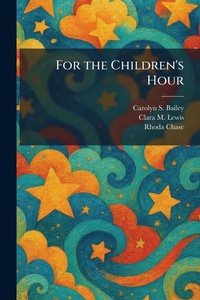
For the Children's Hour
Description
"For the Children's Hour" is a comprehensive and enchanting anthology of stories designed to captivate the imaginations of young listeners and readers alike. This classic collection brings together a diverse array of narratives, including myths, fables, folk tales, and nature stories, all carefully selected for their literary quality and educational value. Organized by theme, the work covers a wide spectrum of childhood interests, from seasonal celebrations and the wonders of the natural world to timeless moral lessons and heroic adventures.
The stories within "For the Children's Hour" are crafted with a rhythmic and engaging prose that makes them ideal for reading aloud in both the classroom and the home. By drawing from sources as varied as the Brothers Grimm, Hans Christian Andersen, and traditional legends, this volume serves as a bridge between generations, preserving the rich oral tradition of storytelling. It remains a significant contribution to early 20th-century children's literature, offering a window into the values and educational philosophies of the era while continuing to provide delight and inspiration through its enduring tales.
This work has been selected by scholars as being culturally important, and is part of the knowledge base of civilization as we know it. This work was reproduced from the original artifact, and remains as true to the original work as possible. Therefore, you may see the original copyright references, library stamps (as most of these works have been housed in our most important libraries around the world), and other notations in the work.
This work is in the public domain in the United States of America, and possibly other nations. Within the United States, you may freely copy and distribute this work, as no entity (individual or corporate) has a copyright on the body of the work.
As a reproduction of a historical artifact, this work may contain missing or blurred pages, poor pictures, errant marks, etc. Scholars believe, and we concur, that this work is important enough to be preserved, reproduced, and made generally available to the public. We appreciate your support of the preservation process, and thank you for being an important part of keeping this knowledge alive and relevant.