


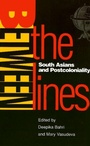
Between the Lines
Published on 4. October 1996
Book
Hardback
301 pages
978-1-56639-467-3 (ISBN)
Description
This ground-breaking collection of new interviews, critical essays, and commentary explores South Asian identity and culture. Sensitive to the false homogeneity implied by "South Asian," "diaspora," "postcolonial," and "Asian American," the contributors attempt to unpack these terms. By examining the social, economic, and historical particularities of people who live "between the lines"-on and between borders-they reinstate questions of power and privilege, agency and resistance. As South Asians living in the United States and Canada, each to some degree must reflect on the interaction of the personal "I," the collective "we," and the world beyond. The South Asian scholars gathered together in this volume speak from a variety of theoretical perspectives; in the essays and interviews that cross the boundaries of conventional academic disciplines, they engage in intense, sometimes contentious, debate. Contributors: Meena Alexander, Gauri Viswanathan, Gayatri Chakravorty Spivak, Amritjit Singh, M. G.
Vassanji, Sohail Inayatullah, Ranita Chatterjee, Benita Mehta, Sanjoy Majumder, Mahasveta Barua, Sukeshi Kamra, Samir Dayal, Pushpa Naidu Parekh, Indrani Mitra, Huma Ibrahim, Amitava Kumar, Shantanu DuttaAhmed, Uma Parameswaran. In the series Asian American History and Culture, edited by Sucheng Chan, David Palumbo-Liu, Michael Omi, K. Scott Wong, and Linda Trinh Vo.
Vassanji, Sohail Inayatullah, Ranita Chatterjee, Benita Mehta, Sanjoy Majumder, Mahasveta Barua, Sukeshi Kamra, Samir Dayal, Pushpa Naidu Parekh, Indrani Mitra, Huma Ibrahim, Amitava Kumar, Shantanu DuttaAhmed, Uma Parameswaran. In the series Asian American History and Culture, edited by Sucheng Chan, David Palumbo-Liu, Michael Omi, K. Scott Wong, and Linda Trinh Vo.
Reviews / Votes
"an important and valuable study as it engages in a discourse which pushes beyond simplistic meanings and complacent acceptance of complex terms like 'postcolonial' and 'South Asian.'" -MELUSMore details
Language
English
Place of publication
Philadelphia PA
United States
Target group
Professional and scholarly
Dimensions
Height: 250 mm
Width: 150 mm
Thickness: 15 mm
Weight
666 gr
ISBN-13
978-1-56639-467-3 (9781566394673)
Copyright in bibliographic data is held by Nielsen Book Services Limited or its licensors: all rights reserved.
Schweitzer Classification
Other editions
New editions
Book
10/1996
Temple University Press,U.S.
€39.50
Shipment within 3-4 weeks
Person
Deepika Bahri is Assistant Professor of Postcolonial Literature and Theory at Emory University. Mary Vasudeva is on the Board of Directors for the Academic Excellence Foundation at Bowling Green State University.
Content
Acknowledgments 1. Introduction - Deepika Bahri and Mary Vasudeva Part I: Interviews 2. Observing Ourselves among Others, Interview with Meena Alexander - Deepika Bahri and Mary Vasudeva 3. Pedagogical Alternatives: Issues in Postcolonial Studies, Interview with Gauri Viswanathan - Deepika Bahri and Mary Vasudeva 4. Transnationality and Multiculturalist Ideology, Interview with Gayatri Chakravorty Spivak - Deepika Bahri and Mary Vasudeva Part II: Commentaries 5. African-Americans and the New Immigrants - Amritjit Singh 6. Life at the Margins: In the Thick of Multiplicity - M.G. Vassanji 7. Mullahs, Sex, and Bureaucrats: Pakistan's Confrontations with the Modern World - Sohail Inayatullah 8. Coming to Terms with the "Postcolonial" - Deepika Bahri Part III: Studies in the Media and Popular Culture 9. An Explosion of Difference: The Margins of Perception in Sammy and Rosie Get Laid - Ranita Chatterjee 10. Emigrants Twice Displaced: Race, Color, and Identity in Mira Nair's Mississippi Masala - Binita Mehta 11. From Ritual Drama to National Prime Time: Mahabharata, India's Televisual Obsession - Sanjoy Majumder 12. Television, Politics, and the Epic Heroine: Case Study, Sita - Mahasveta Barua Part IV: Literary Criticism 13. Replacing the Colonial Gaze: Gender as Strategy in Salman Rushdie's Fiction - Sukeshi Kamra 14. Style Is (Not) the Woman: Sara Suleri's Meatless Days - Samir Dayal 15. Redefining the Postcolonial Female Self: Women in Anita Desai's Clear Light of Day - Pushpa Naidu Parekh 16. "Luminous Brahmin Children Must Be Saved": Imperialist Ideologies, "Postcolonial" Histories in Bharati Mukherjee's The Tiger's Daughter - Indrani Mitra 17. The Troubled Past: Literature of Severing the Viewer/Viewed Dialectic - Huma Ibrahim Part V: Experimental Critiques 18. Jane Austin in Meerut, India - Amitava Kumar 19. Border Crossings: Retrieval and Erasure of the Self as Other - Shantanu DuttaAhmed 20. I see the Glass as Half Full - Uma Parameswaran About the Contributors