

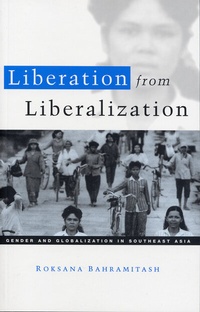
Liberation from Liberalization
Gender and Globalization in South East Asia
Published on 20. September 2005
Book
Hardback
224 pages
978-1-84277-438-0 (ISBN)
Description
revealing explanation of how the free market economy has increased poverty for women
- Case studies on women in Taiwan, Indonesia and The Philippines combined with rigorous analysis
- Aimed at academics, development practitioners, policy makers and the informed general reader
In Southeast Asia, the expansion of free markets has led to high GNP per capita growth over the past few decades. But has this really brought prosperity, particularly for women? This book examines three countries
-Taiwan, Indonesia and the Philippines - where the economic outcome of globalization for women has been very different. In Indonesia and the Philippines, World Bank and IMF strictures have had a negative impact on women. In Taiwan, however, the State has kept control of the economy and the impact of low pay has been far less harsh for women. Drawing upon state-centred theories, the author argues that limiting the role of the state, particularly with welfare state reduction, has been responsible for growing poverty, especially among women. To reverse the trend, the state has to be brought back into the economy as a major player and become responsible for providing welfare for its citizens.
WHAT READERS SAY
'This study by Roksana Bahramitash is an excellent introduction for those wishing to learn more about the significance of gender issues in Southeast Asian economic restructuring. The author has first-hand knowledge of the key aspects of liberalization which place stresses on women, children and men under the guise of 'globalization' in Southeast Asia. I recommend this book to academics, activists and policy-makers as a thoroughly researched and fluent analysis relevant across various fields from anthropology, economics, politics and policy studies. ' - Chris Corrin, Professor of Feminist Politics, University of Glasgow
CONTENTS
1. Market Fundamentalism
The Post World War II Development Effort
The Rise of Neo-liberalism
Alternatives to Market Fundamentalism
2. Who pays for market fundamentalism?
Background to Theories of Gender & Development
Women's Work as Defined by the Market:
Neo-liberalism and Increasing Women's Employment
Women's Invisible Contributions
Labour of Love: the Care Economy and Declining Social Services
The Interventionist State versus Market Fundamentalism
3. Taiwan: Neo-Liberalism or Developmentalist State?
Colonial History
The Making of Modern Taiwan
Women's Role in Taiwan's Economic Success
Invisible Economic Contributions
Community and Volunteer Work: State-initiated Organizations
Gender Politics, Civil Society and Taiwan's Future
4. Indonesia: Paper Tiger and the Asian Crisis
Colonial History
Modern Indonesia: State Structure and Political Economy
Women's Role in the Economy
5. The Philippines: Exporting Women Is Good For Growth
Colonial History
Modern Filipino State Structure and Development Strategy
Women's Role in the Economy
Conclusion: Liberalization in Crisis
Challenging Neo-Liberalist Assumptions
APEC and the Unholy Marriage of Neo-Liberalism and Neo-Conservatism
Neo-Liberalism in Crisis: Looking Into the Future
Bibliography
Index
- Case studies on women in Taiwan, Indonesia and The Philippines combined with rigorous analysis
- Aimed at academics, development practitioners, policy makers and the informed general reader
In Southeast Asia, the expansion of free markets has led to high GNP per capita growth over the past few decades. But has this really brought prosperity, particularly for women? This book examines three countries
-Taiwan, Indonesia and the Philippines - where the economic outcome of globalization for women has been very different. In Indonesia and the Philippines, World Bank and IMF strictures have had a negative impact on women. In Taiwan, however, the State has kept control of the economy and the impact of low pay has been far less harsh for women. Drawing upon state-centred theories, the author argues that limiting the role of the state, particularly with welfare state reduction, has been responsible for growing poverty, especially among women. To reverse the trend, the state has to be brought back into the economy as a major player and become responsible for providing welfare for its citizens.
WHAT READERS SAY
'This study by Roksana Bahramitash is an excellent introduction for those wishing to learn more about the significance of gender issues in Southeast Asian economic restructuring. The author has first-hand knowledge of the key aspects of liberalization which place stresses on women, children and men under the guise of 'globalization' in Southeast Asia. I recommend this book to academics, activists and policy-makers as a thoroughly researched and fluent analysis relevant across various fields from anthropology, economics, politics and policy studies. ' - Chris Corrin, Professor of Feminist Politics, University of Glasgow
CONTENTS
1. Market Fundamentalism
The Post World War II Development Effort
The Rise of Neo-liberalism
Alternatives to Market Fundamentalism
2. Who pays for market fundamentalism?
Background to Theories of Gender & Development
Women's Work as Defined by the Market:
Neo-liberalism and Increasing Women's Employment
Women's Invisible Contributions
Labour of Love: the Care Economy and Declining Social Services
The Interventionist State versus Market Fundamentalism
3. Taiwan: Neo-Liberalism or Developmentalist State?
Colonial History
The Making of Modern Taiwan
Women's Role in Taiwan's Economic Success
Invisible Economic Contributions
Community and Volunteer Work: State-initiated Organizations
Gender Politics, Civil Society and Taiwan's Future
4. Indonesia: Paper Tiger and the Asian Crisis
Colonial History
Modern Indonesia: State Structure and Political Economy
Women's Role in the Economy
5. The Philippines: Exporting Women Is Good For Growth
Colonial History
Modern Filipino State Structure and Development Strategy
Women's Role in the Economy
Conclusion: Liberalization in Crisis
Challenging Neo-Liberalist Assumptions
APEC and the Unholy Marriage of Neo-Liberalism and Neo-Conservatism
Neo-Liberalism in Crisis: Looking Into the Future
Bibliography
Index
More details
Language
English
Place of publication
United Kingdom
Target group
Professional and scholarly
Illustrations
index, Bibliography, tab., fig., graph., notes
ISBN-13
978-1-84277-438-0 (9781842774380)
Copyright in bibliographic data and cover images is held by Nielsen Book Services Limited or by the publishers or by their respective licensors: all rights reserved.
Schweitzer Classification
Person
Roksana Bahramitash lectures on gender and environment at Concordia University, Montreal. She has considerable experience of counselling and advocacy work with women in Iran, which she left as a refugee in 1991 to finish her PhD in Canada.