

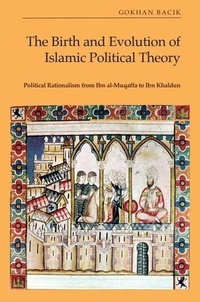
The Birth and Evolution of Islamic Political Theory
Political Rationalism from Ibn al-Muqaffa to Ibn Khaldun
Published on 31. May 2026
Book
Paperback/Softback
328 pages
978-1-3995-2202-1 (ISBN)
Description
The literature on Islamic political thought utilises a methodology whose typical characteristic is the arbitrary use of religious, philosophical and political perspectives, as if the differences among them have no effect. This amounts to the theologizing or philosophizing of works of Islamic political theory - written as responses to social, economic and political dynamics - as if they were written as general theoretical formulations of religion or political philosophy.
To overcome this problem, The Birth and Evolution of Islamic Political Theory first categorizes Islamic political thought as three distinct group categories: the religious view of politics, Islamic political philosophy, and Islamic political theory. In turn, Islamic political theory is defined as the intention to explain and justify politics by invoking social, economic, and political dynamics completely or partially independently of religious and philosophical norms. These dynamics are illustrated by the study of five political rationalists: Ibn al-Muqaffa, al-Mawardi, Nizam al-Mulk, Ibn Tufayl and Ibn Khaldun.
To overcome this problem, The Birth and Evolution of Islamic Political Theory first categorizes Islamic political thought as three distinct group categories: the religious view of politics, Islamic political philosophy, and Islamic political theory. In turn, Islamic political theory is defined as the intention to explain and justify politics by invoking social, economic, and political dynamics completely or partially independently of religious and philosophical norms. These dynamics are illustrated by the study of five political rationalists: Ibn al-Muqaffa, al-Mawardi, Nizam al-Mulk, Ibn Tufayl and Ibn Khaldun.
Reviews / Votes
Bacik's convincing analysis provides uncommonly insightful guidance for navigating the highly contested and deeply misunderstood terrain of Islamic political theory. This book is essential reading on both the history and the future of the relationship between Islam, politics and the state. -- Philip Dorroll, Wofford CollegeMore details
Language
English
Place of publication
Edinburgh
United Kingdom
Target group
College/higher education
Illustrations
10 black and white illustrations
Dimensions
Height: 154 mm
Width: 233 mm
Thickness: 25 mm
Weight
492 gr
ISBN-13
978-1-3995-2202-1 (9781399522021)
Copyright in bibliographic data and cover images is held by Nielsen Book Services Limited or by the publishers or by their respective licensors: all rights reserved.
Schweitzer Classification
Person
Gokhan Bacik teaches in the Department of Politics and European Studies at Palacky University, Czech Republic. His research interests the Middle East, Islam and politics. He is the author of Contemporary Rationalist Islam in Turkey (I.B. Tauris, 2021), Islam and Muslim Resistance to Modernity in Turkey (Palgrave, 2019) and Hybrid Sovereignty in the Arab Middle East (Palgrave, 2009). Bacik also published in leading scholarly journals such as the Middle East Policy, Middle Eastern Studies, the Muslim World, Studies in Conflict and Terrorism, Terrorism and Political Violence, Journal of Balkan and Near Eastern Studies, Journal of Muslim Minority Affairs, Turkish Studies, Arab Studies Quarterly and Peace Review.
Gokhan Bacik teaches in the Department of Politics and European Studies at Palacky University, Czech Republic. His research interests the Middle East, Islam and politics. He is the author of Contemporary Rationalist Islam in Turkey (I.B. Tauris, 2021), Islam and Muslim Resistance to Modernity in Turkey (Palgrave, 2019) and Hybrid Sovereignty in the Arab Middle East (Palgrave, 2009). Bacik also published in leading scholarly journals such as the Middle East Policy, Middle Eastern Studies, the Muslim World, Studies in Conflict and Terrorism, Terrorism and Political Violence, Journal of Balkan and Near Eastern Studies, Journal of Muslim Minority Affairs, Turkish Studies, Arab Studies Quarterly and Peace Review.
Gokhan Bacik teaches in the Department of Politics and European Studies at Palacky University, Czech Republic. His research interests the Middle East, Islam and politics. He is the author of Contemporary Rationalist Islam in Turkey (I.B. Tauris, 2021), Islam and Muslim Resistance to Modernity in Turkey (Palgrave, 2019) and Hybrid Sovereignty in the Arab Middle East (Palgrave, 2009). Bacik also published in leading scholarly journals such as the Middle East Policy, Middle Eastern Studies, the Muslim World, Studies in Conflict and Terrorism, Terrorism and Political Violence, Journal of Balkan and Near Eastern Studies, Journal of Muslim Minority Affairs, Turkish Studies, Arab Studies Quarterly and Peace Review.
Content
List of Figures and Maps
Acknowledgements
Introduction: What is Islamic Political Theory?
1. Ibn al-Muqaffa: The Birth of Islamic Political Theory
2. Al-Mawardi: Islamic Political Theory in the Provincial Order
3. Nizam al-Mulk: Islamic Political Theory in the Age of States
4. Ibn Tufayl: Political Rationalism in an Elitist Order
5. Ibn Khaldun: A Proto-modern Islamic Political Theory
Conclusion: Political Rationalism from Past to Present
Bibliography
Index
Acknowledgements
Introduction: What is Islamic Political Theory?
1. Ibn al-Muqaffa: The Birth of Islamic Political Theory
2. Al-Mawardi: Islamic Political Theory in the Provincial Order
3. Nizam al-Mulk: Islamic Political Theory in the Age of States
4. Ibn Tufayl: Political Rationalism in an Elitist Order
5. Ibn Khaldun: A Proto-modern Islamic Political Theory
Conclusion: Political Rationalism from Past to Present
Bibliography
Index