

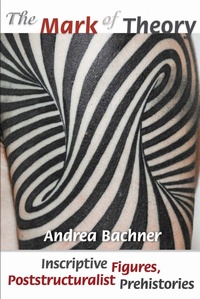
The Mark of Theory
Inscriptive Figures, Poststructuralist Prehistories
Published on 28. November 2017
Book
Hardback
272 pages
978-0-8232-7747-6 (ISBN)
Description
What imaginaries, tropes, and media have shaped how we theorize? The Mark of Theory argues that inscription constitutes one of the master metaphors of contemporary theory.
As a trope that draws on a wide array of practices of marking, from tattooing to circumcision, from photographic imprints and phonographic grooves to marks on a page, inscription provides an imaginary that orients and irritates theoretical thought. Tracing inscriptive imaginaries from the late nineteenth century to today, The Mark of Theory offers a wide-ranging conceptual genealogy of contemporary thought. Navigating poststructuralism's attention to figurative language as well as media theory's attention to objects, phenomena, and practices of mediation, the book works through core questions for how we theorize. Across a range of disciplines and scholarly conversations-from literature and media to anthropology, race and gender, art, psychoanalysis, sound, and ultimately ethics-sites of inscription come to constitute the past legacy of a thought to come, a prehistory of our current moment.
In focusing on materiality and mediation The Mark of Theory shows how inscriptive practices shape conceptual thought, as well as political and ethical choices. By contextualizing the fraught relationship between materiality and signification, The Mark of Theory lays the ground for a politics of theory that begins there where theory and politics are no longer conflated.
As a trope that draws on a wide array of practices of marking, from tattooing to circumcision, from photographic imprints and phonographic grooves to marks on a page, inscription provides an imaginary that orients and irritates theoretical thought. Tracing inscriptive imaginaries from the late nineteenth century to today, The Mark of Theory offers a wide-ranging conceptual genealogy of contemporary thought. Navigating poststructuralism's attention to figurative language as well as media theory's attention to objects, phenomena, and practices of mediation, the book works through core questions for how we theorize. Across a range of disciplines and scholarly conversations-from literature and media to anthropology, race and gender, art, psychoanalysis, sound, and ultimately ethics-sites of inscription come to constitute the past legacy of a thought to come, a prehistory of our current moment.
In focusing on materiality and mediation The Mark of Theory shows how inscriptive practices shape conceptual thought, as well as political and ethical choices. By contextualizing the fraught relationship between materiality and signification, The Mark of Theory lays the ground for a politics of theory that begins there where theory and politics are no longer conflated.
Reviews / Votes
"By the sheer force of its sophistication and range, this book demands that we engage anew with poststructuralist theory's evolving potentialities-in particular, with its intimate ties to the politics and ethics of wounding."-Rey Chow, Duke University -- -Rey Chow Anne Firor Scott Professor of Literature, Duke UniversityMore details
Language
English
Place of publication
New York
United States
Target group
Professional and scholarly
Product notice
Cloth
Dimensions
Height: 231 mm
Width: 157 mm
Thickness: 20 mm
Weight
499 gr
ISBN-13
978-0-8232-7747-6 (9780823277476)
Copyright in bibliographic data and cover images is held by Nielsen Book Services Limited or by the publishers or by their respective licensors: all rights reserved.
Schweitzer Classification
Other editions
Additional editions
E-Book
11/2017
1st Edition
Fordham University Press
€27.99
Available for download
Person
Andrea Bachner is Associate Professor of Comparative Literature at Cornell University. She is the author of Beyond Sinology: Chinese Writing and the Scripts of Culture and the co-editor (with Carlos Rojas) of The Oxford Handbook of Modern Chinese Literatures.
Content
Acknowledgements Introduction: At the Scene of Inscription 1. Savage Marks: Subjection and the Specters of Anthropology 2. Impact Erasure: Psychoanalysis and the Multiplication of Trauma 3. Stings of Visibility: Picture Theories and Visual Contact 4. Out of the Groove: Aural Traces and the Mediation of Sound Conclusion: Against Inscription? Notes Works Cited Index