

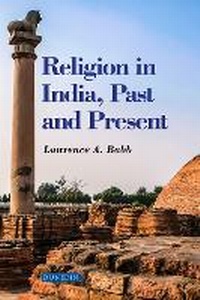
Religion in India
Past and Present
1st Edition
Published on 23. January 2020
Book
Paperback/Softback
250 pages
978-1-78046-074-1 (ISBN)
Description
The religious map of India is notoriously complex; not only are there indigenous traditions in great variety, but imported faiths such as Islam and Christianity have been added to the mix.
Lawrence A. Babb helps the non-specialist navigate this variety. He provides an account of the subcontinent's principal religions, focusing on how they began, what they teach, what they have become, and how religion fits in modern India's national life. The book assumes no previous knowledge of Indian institutions or history, and is designed to give readers a big picture, leaving the fine points to the more specialized books. The perspective of the book is historical, tracing India's religious evolution from the Indus-Valley period (c. 2600-1900 BCE) to the present. With the Indus Valley civilization as its starting point, the author covers the development of Vedic religion, the emergence of dissenting traditions, Buddhism and Jainism, the development of Hinduism and the coming of Islam to the subcontinent.
The book's concluding chapters deal with the impact of colonialism on Indian religions, the role of religion in the independence struggle, and the riddle of religion's place in the Republic of India's national identity.
This textbook is designed to be used in university-level courses dealing with India and South Asian studies. It will also appeal to a general readership interested in South Asia and to travellers visiting the region.
Lawrence A. Babb helps the non-specialist navigate this variety. He provides an account of the subcontinent's principal religions, focusing on how they began, what they teach, what they have become, and how religion fits in modern India's national life. The book assumes no previous knowledge of Indian institutions or history, and is designed to give readers a big picture, leaving the fine points to the more specialized books. The perspective of the book is historical, tracing India's religious evolution from the Indus-Valley period (c. 2600-1900 BCE) to the present. With the Indus Valley civilization as its starting point, the author covers the development of Vedic religion, the emergence of dissenting traditions, Buddhism and Jainism, the development of Hinduism and the coming of Islam to the subcontinent.
The book's concluding chapters deal with the impact of colonialism on Indian religions, the role of religion in the independence struggle, and the riddle of religion's place in the Republic of India's national identity.
This textbook is designed to be used in university-level courses dealing with India and South Asian studies. It will also appeal to a general readership interested in South Asia and to travellers visiting the region.
More details
Language
English
Place of publication
Liverpool
United Kingdom
Target group
College/higher education
Illustrations
8 b&w illustrations and maps
Dimensions
Height: 234 mm
Width: 156 mm
Weight
460 gr
ISBN-13
978-1-78046-074-1 (9781780460741)
Copyright in bibliographic data and cover images is held by Nielsen Book Services Limited or by the publishers or by their respective licensors: all rights reserved.
Schweitzer Classification
Other editions
Additional editions
E-Book
02/2020
Dunedin Academic Press
€30.49
Available for download
E-Book
02/2020
Dunedin Academic Press
€33.99
Available for download
Person
Lawrence A. Babb is Professor Emeritus of Anthropology and Asian Studies at Amherst College, Massachusetts. His other books include Understanding Jainism, also published by Dunedin.
Content
Introduction. 1: The Vedic Age and Its Legacies; 2: Dissenters; 3: Hinduism; 4: Islam and After; 5: Religion and the Raj; 6: A Secular State; 7: Religion and National Identity. References. Index.