

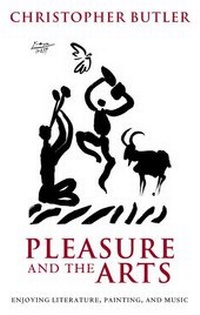
Pleasure and the Arts
Enjoying Literature, Painting, and Music
Published on 27. October 2005
Book
Paperback/Softback
256 pages
978-0-19-928872-4 (ISBN)
Description
How do the arts give us pleasure? Covering a very wide range of artistic works, from Auden to David Lynch, Rembrandt to Edward Weston, and Richard Strauss to Keith Jarrett, 'Pleasure and the Arts' offers us an explanation of our enjoyable emotional engagements with literature, music, and painting. The arts direct us to intimate and particularised relationships, with the people represented in the works, or with those we imagine produced them. When we listen to music, look at a purely abstract painting, or drink a glass of wine, can we enjoy the experience without verbalising our response? Do our interpretative assumptions, our awareness of technique, and our attitudes to fantasy, get in the way of our appreciation of art, or enhance it? Examining these questions and more, we discover how curiosity drives us to enjoy narratives, ordinary jokes, metaphors, and modernist epiphanies, and how narrative in all the arts can order and provoke intense enjoyment. Pleasurable in its own right, 'Pleasure and the Arts' presents a sparkling explanation of the enduring interest of artistic expression.
More details
Language
English
Place of publication
Oxford
United Kingdom
Target group
Professional and scholarly
The general reader interested in the arts, scholars and students of literature, painting, and music.
Illustrations
8pp colour plates; numerous halftones
Dimensions
Height: 233 mm
Width: 156 mm
Thickness: 14 mm
Weight
418 gr
ISBN-13
978-0-19-928872-4 (9780199288724)
Copyright in bibliographic data and cover images is held by Nielsen Book Services Limited or by the publishers or by their respective licensors: all rights reserved.
Schweitzer Classification
Person
Christopher Butler is Professor of English Language and Literature at the University of Oxford and Student of Christ Church.
Content
Introduction ; 1. Jokes, Poems, Understanding ; 2. Emotions and Narrative ; 3. Beyond Words: Sensation, Abstraction, and Form ; 4. Specificity, Fantasy, and Critique