


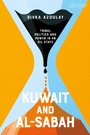
Kuwait and Al-Sabah
Tribal Politics and Power in an Oil State
Published on 20. August 2020
Book
Hardback
280 pages
978-1-83860-505-6 (ISBN)
Description
The Emirate of Kuwait hardly resembles the city-State it was at the start of the 20th century. The discovery of oil in 1938 rapidly transformed the tiny tribal sheikhdom of the Al-Sabah into a modern oil-producing state where, by the early 1980s, citizens were enjoying one of the highest standards of living in the world. While much has been written on the reasons why and how the Al-Sabah became a ruling dynasty, little is known about the nature of their authority and its relationship to Kuwait's social structure. Rivka Azoulay shows how despite the rapidity of change in the oil-rich, family-run emirate, it is the pre-oil dynamics of social and political life that dictate how society operates. The author shows that Kuwait's ambitious diversification plans to reduce oil-dependence by 2035 require a renegotiation of the regime's pact with society, which threatens the pre-oil alliances upon which the Al-Sabah's regime has been built.
Reviews / Votes
This is the definitive political history of Kuwait. Rivka Azoulay examines its experiences within the context of political change in traditional societies and centre periphery relations. It is an excellent work and essential reading for those interested in the history of Arabia and the Gulf. -- Rodney Wilson, Emeritus Professor, Durham University, U.K A magnificent volume that connects past and present to provide one of the most comprehensive books on Kuwaiti politics to date. -- Christopher Davidson, Associate Fellow, Royal United Services Institute (RUSI), U.K Rivka Azoulay's book combines ethnographic finesse with a deep grasp of Gulf historical sociology. It is, by some margin, the best piece of work on the political sociology of GCC elites. Its historical range is impressive and theoretical insights about how the Kuwaiti rentier state allies with and reshapes social groups are unique, adding a dimension of identity politics to Gulf political economy that has long been missing. -- Steffen Hertog Associate Professor in Comparative Politics, London School of Economics and Political Science, UK In this excellent political history, Rivka Azoulay provides a compelling explanation of the complex political dynamics between the various constituent elements of Kuwaiti society, as well as how and why the country has survived until today. What emerges is a nuanced analysis of the relationships between the Al Sabah dynasty, the tribes, the Shia and the families of urban notables. There is no better or more up-to-date study on Kuwait's history and politics. -- Bernard Haykel, Professor of Near Eastern Studies Director, Institute for Transregional Study of the Contemporary Middle East, Princeton University, U.S The book presents a compelling argument for the importance of center-periphery relations in understanding Kuwait's political dynamics. The icing on the cake is Azoulay's nuanced and timely examination of Kuwait's cycles of political paralysis from the 2000s, which provides valuable context for the country's current challenges. * Bustan: The Middle East Book Review *More details
Language
English
Place of publication
United Kingdom
Publishing group
Bloomsbury Publishing PLC
Target group
College/higher education
Dimensions
Height: 234 mm
Width: 156 mm
Weight
567 gr
ISBN-13
978-1-83860-505-6 (9781838605056)
Copyright in bibliographic data and cover images is held by Nielsen Book Services Limited or by the publishers or by their respective licensors: all rights reserved.
Schweitzer Classification
Other editions
Additional editions
E-Book
07/2020
1st Edition
I.B. Tauris
€32.99
Available for download
Person
Rivka Azoulay is a postdoctoral fellow at Sciences Po Paris, France, where she is working on a project to reform the social safety net system in Kuwait.
Content
Acknowledgments
Introduction: Authoritarian regimes and the crucial role of the periphery
Part I: When the past holds a mirror to the present: traditional politics and the pre-oil authority system of the Al-Sabah (1716-1938)
I: Deconstructing the dominant Sunna hadar narrative
II: Communal segregation and stratification in pre-oil Kuwait: hadar, Shi'a and the early-settled tribes
III. Changes in the authority system: Mubarak Al-Sabah, colonialism and alliances with non-core elites
IV. The crystallization of alliances with non-core elites: the 1938 Majlis movement
Part II. Oil and the consolidation of a tribal authoritarian shaykhdom: Ruler-ruled relations 1961-1990
I: External threat consolidates inter-elite power-sharing (musharaka)
II: External threat consolidates inter-elite power-sharing (musharaka)
III: The rise of new middle-class elites and the decline of the hadar elites
IV: Socio-political change within Kuwait's Shi'a population
V. Competitive authoritarians: parliamentary life (1961-1990)
Part III. New forces of globalization and the rise of the tribal periphery in Kuwait (1990-2014)
I: The birth of a tribal opposition
II. Beyond tribalism: social dimensions of a broader middle-class struggle
III. Splits in the regime's 'asabiyya: royal infighting and succession
IV. Limits of political patronage vis-a-vis non-core elites (2011-2014)
Conclusion
Bibliography
Introduction: Authoritarian regimes and the crucial role of the periphery
Part I: When the past holds a mirror to the present: traditional politics and the pre-oil authority system of the Al-Sabah (1716-1938)
I: Deconstructing the dominant Sunna hadar narrative
II: Communal segregation and stratification in pre-oil Kuwait: hadar, Shi'a and the early-settled tribes
III. Changes in the authority system: Mubarak Al-Sabah, colonialism and alliances with non-core elites
IV. The crystallization of alliances with non-core elites: the 1938 Majlis movement
Part II. Oil and the consolidation of a tribal authoritarian shaykhdom: Ruler-ruled relations 1961-1990
I: External threat consolidates inter-elite power-sharing (musharaka)
II: External threat consolidates inter-elite power-sharing (musharaka)
III: The rise of new middle-class elites and the decline of the hadar elites
IV: Socio-political change within Kuwait's Shi'a population
V. Competitive authoritarians: parliamentary life (1961-1990)
Part III. New forces of globalization and the rise of the tribal periphery in Kuwait (1990-2014)
I: The birth of a tribal opposition
II. Beyond tribalism: social dimensions of a broader middle-class struggle
III. Splits in the regime's 'asabiyya: royal infighting and succession
IV. Limits of political patronage vis-a-vis non-core elites (2011-2014)
Conclusion
Bibliography