

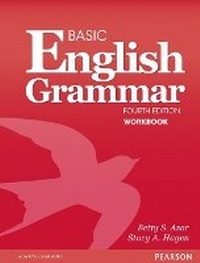
Basic English Grammar Workbook
4th Edition
Will be published approx. on 14. April 2014
Book
Paperback/Softback
336 pages
978-0-13-294227-0 (ISBN)
Description
Basic English Grammar is a classic developmental skills text for beginning students of English as a second or foreign language. It uses a grammar-based approach integrated with communicative methodologies to prmote the development of all language skills.
While keeping the same basic approach and materials as in earlier edtions, the fourth edition continues to build on the foundation of understanding form and meaning by engaging students in meaningful communication about real actions, real things, and their own lives in classroom context.
Several of the new features are:
Information in the grammar charts highlighting differences between spoken and written English
Step-by-step writing activities with models for students to follow
Innovative warm-up exercises that precede the grammar charts and introduce points to be taught
Newly created exercises to give students more incremental grammar practice
Structure-based listening exercises that introduce students to relaxed, reduced speech
While keeping the same basic approach and materials as in earlier edtions, the fourth edition continues to build on the foundation of understanding form and meaning by engaging students in meaningful communication about real actions, real things, and their own lives in classroom context.
Several of the new features are:
Information in the grammar charts highlighting differences between spoken and written English
Step-by-step writing activities with models for students to follow
Innovative warm-up exercises that precede the grammar charts and introduce points to be taught
Newly created exercises to give students more incremental grammar practice
Structure-based listening exercises that introduce students to relaxed, reduced speech
More details
Content
Preface to the Fourth Edition
NOTE: The titles listed below, for example, Singular pronouns + be, refer to section names, not practice titles. In general, one section has multiple exercises.
The chart numbers refer to the grammar explanations in the Basic English Grammar Student Book.
Chapter 1 USING BE
Singular pronouns + be (Chart 1-1)
Plural pronouns + be (Chart 1-2)
Singular nouns: a/an (Chart 1-3)
Plural nouns + be (Chart 1-4)
Contractions with be (Chart 1-5)
Negative with be (Chart 1-6)
Be + adjective (Chart 1-7)
Be + a place (Chart 1-8)
Summary: Basic sentence patterns with be (Chart 1-9)
Chapter 2 USING BE AND HAVE
Yes/no questions with be (Chart 2-1)
Short answers to yes/no questions (Chart 2-2)
Questions with be: using where (Chart 2-3)
Have and has (Chart 2-4)
Possessive adjectives: my, your, her, his, our, their (Chart 2-5)
This or that (Chart 2-6)
These or those (Chart 2-7)
Questions with what/who + be (Chart 2-8)
Review
Chapter 3 USING THE SIMPLE PRESENT
Form of the simple present tense (Chart 3-1)
Frequency adverbs (Chart 3-2)
Position of frequency adverbs (Chart 3-3)
Final s/-es (Chart 3-4)
Spelling of verbs ending in -y (Chart 3-5)
Irregular singular verbs: has, does, goes (Chart 3-6)
Want to, need to, like to (Chart 3-7)
Simple present tense: negative (Chart 3-8)
Yes/no questions (Chart 3-9)
Questions with where and what (Chart 3-10)
Questions with when and what time (Chart 3-11)
Review
Chapter 4 USING THE PRESENT PROGRESSIVE
Be + -ing: the present progressive (Chart 4-1)
Spelling of -ing (Chart 4-2)
Present progressive: negatives (Chart 4-3)
Present progressive: questions (Chart 4-4)
Simple present vs. the present progressive (Chart 4-5)
Non-action verbs not used in the present progressive (Chart 4-6)
See, look at, watch, hear, and listen to (Chart 4-7)
Think about and think that (Chart 4-8)
Review
Chapter 5 TALKING ABOUT THE PRESENT
Using it to talk about time and dates (Chart 5-1)
Prepositions of time (Chart 5-2)
Talking about the weather (Chart 5-3)
There + be (Chart 5-4)
There + be: yes/no questions (Chart 5-5)
There + be: questions with how many (Chart 5-6)
Prepositions of place (Chart 5-7)
More prepositions of place: a list (Chart 5-8)
Would like (Chart 5-9)
Would like vs. like (Chart 5-10)
Review
Chapter 6 NOUNS AND PRONOUNS
Identifying nouns: subjects, and objects (Chart 6-1)
Nouns as objects of prepositions (Chart 6-2)
Adjectives with nouns (Chart 6-3)
Subject and object pronouns (Chart 6-4)
Singular and plural nouns (Chart 6-5)
Irregular singular and plural nouns (Chart 6-6)
Possessive pronouns and adjectives (Chart 6-7)
Possessive nouns (Chart 6-8)
Whose and who's (Chart 6-9)
Regular and irregular possessive nouns (Chart 6-10)
Review
Chapter 7 COUNT AND NONCOUNT NOUNS
Nouns: singular/plural; count/noncount (Chart 7-1)
A vs. an (Chart 7-2)
A/an vs. some (Chart 7-3)
Units of measure with noncount nouns (Chart 7-4)
Many, much, a few, a little (Chart 7-5)
The: first mention vs. second mention (Chart 7-6)
Using O (no article) to make generalizations (Chart 7-7)
Some and any (Chart 7-8)
Review
Chapter 8 EXPRESSING PAST TIME, PART 1
Be: past forms (Chart 8-1)
Simple past tense of be: negative (Chart 8-2)
Past of be: questions (Chart 8-3)
Simple past tense: -ed (Chart 8-4)
Spelling Rules: -ed verbs
Yesterday, last, and ago (Chart 8-5)
Irregular verbs: Group 1 (Chart 8-6)
Simple past tense: negative (Chart 8-7)
Simple past tense: yes/no questions (Chart 8-8)
Irregular verbs: Group 2 (Chart 8-9)
Irregular verbs: Group 3 (Chart 8-10)
Irregular verbs: Group 4 (Chart 8-11)
Review
Chapter 9 EXPRESSING PAST TIME, PART 2
Simple past tense: where, why, when, and what time (Chart 9-1)
Questions with what (Chart 9-2)
Questions with who (Chart 9-3)
Irregular verbs: Group 5 (Chart 9-4)
Irregular verbs: Group 6 (Chart 9-5)
Irregular verbs: Group 7 (Chart 9-6)
Before and after in time clauses (Chart 9-7)
When in questions and time clauses (Chart 9-8)
Past and present progressive forms (Chart 9-9)
While with past progressive (Chart 9-10)
Simple past tense vs. past progressive: when/while (Chart 9-11)
Review
Chapter 10 EXPRESSING FUTURE TIME, PART 1
Be going to (Chart 10-1)
Using present progressive for future time (Chart 10-2)
Yesterday, last, tomorrow, next, in, ago (Chart 10-3)
A couple of or a few with ago (past) and in (future) (Chart 10-4)
Today, tonight, and this + morning, afternoon, evening, week, month, year (Chart 10-5)
Will (Chart 10-6)
Questions with will (Chart 10-7)
Verb review: present, past, and future (Chart 10-8)
Verb review: forms of be (Chart 10-9)
Review (Charts 10-8 and 10-9)
Chapter 11 EXPRESSING FUTURE TIME, PART 2
May, might, or will (Chart 11-1)
Maybe vs. may be (Chart 11-2)
Future time clauses with before, after, and when (Chart 11-3)
Clauses with if (Chart 11-4)
Habitual present (Chart 11-5)
What + do (Chart 11-6)
Review
Chapter 12 MODALS, PART 1: EXPRESSING ABILITY
Can/can't (Chart 12-1)
Can: questions (Chart 12-3)
Know how to (Chart 12-4)
Could: past of can (Chart 12-5)
Be able to (Chart 12-6)
Very or too (Chart 12-7)
Review
Chapter 13 MODALS, PART 2: ADVICE, NECESSITY, REQUESTS, SUGGESTIONS
Should (Chart 13-1)
Forms of have to (Chart 13-2)
Must, must not, and should (Chart 13-3)
Polite questions: May I, Could I, and Can I (Chart 13-4)
Polite questions: Could you and Would you (Chart 13-5)
Imperative sentences (Chart 13-6)
Modal auxiliaries (Chart 13-7)
Modal review (Chart 13-8)
Using Let's (Chart 13-9)
Review
Chapter 14 NOUNS AND MODIFIERS
Nouns and adjectives (Chart 14-1)
Word order of adjectives (Chart 14-2)
Linking verbs + adjectives (Chart 14-3)
Adverbs (Chart 14-4)
All of, most of, some of, almost all of (Chart 14-5)
Subject-verb agreement with expression of quantity (Chart 14-6)
Subject-verb agreement with every and all (Chart 14-7)
Indefinite pronouns: something, someone, somebody, anything, anyone, anybody (Chart 14-8)
Chapter 15 MAKING COMPARISONS
Comparatives: -er and more (Chart 15-1)
Superlatives: -est and most (Chart 15-2)
One of + superlative + plural noun (Chart 15-3)
Comparisons with adverbs (Chart 15-4)
The same (as ), similar (to ), and different (from ) (Chart 15-5)
Like and alike (Chart 15-6)
Using but (Chart 15-7)
Verbs after but (Chart 15-8)
Review
Appendix 1 Irregular Verbs
Appendix 2 English Handwriting
Appendix 3 Numbers
Appendix 4 Days/Months/Seasons
Appendix 5 Two-Syllable Verbs: Spelling of -ed and -ing
Index
Answer Key
NOTE: The titles listed below, for example, Singular pronouns + be, refer to section names, not practice titles. In general, one section has multiple exercises.
The chart numbers refer to the grammar explanations in the Basic English Grammar Student Book.
Chapter 1 USING BE
Singular pronouns + be (Chart 1-1)
Plural pronouns + be (Chart 1-2)
Singular nouns: a/an (Chart 1-3)
Plural nouns + be (Chart 1-4)
Contractions with be (Chart 1-5)
Negative with be (Chart 1-6)
Be + adjective (Chart 1-7)
Be + a place (Chart 1-8)
Summary: Basic sentence patterns with be (Chart 1-9)
Chapter 2 USING BE AND HAVE
Yes/no questions with be (Chart 2-1)
Short answers to yes/no questions (Chart 2-2)
Questions with be: using where (Chart 2-3)
Have and has (Chart 2-4)
Possessive adjectives: my, your, her, his, our, their (Chart 2-5)
This or that (Chart 2-6)
These or those (Chart 2-7)
Questions with what/who + be (Chart 2-8)
Review
Chapter 3 USING THE SIMPLE PRESENT
Form of the simple present tense (Chart 3-1)
Frequency adverbs (Chart 3-2)
Position of frequency adverbs (Chart 3-3)
Final s/-es (Chart 3-4)
Spelling of verbs ending in -y (Chart 3-5)
Irregular singular verbs: has, does, goes (Chart 3-6)
Want to, need to, like to (Chart 3-7)
Simple present tense: negative (Chart 3-8)
Yes/no questions (Chart 3-9)
Questions with where and what (Chart 3-10)
Questions with when and what time (Chart 3-11)
Review
Chapter 4 USING THE PRESENT PROGRESSIVE
Be + -ing: the present progressive (Chart 4-1)
Spelling of -ing (Chart 4-2)
Present progressive: negatives (Chart 4-3)
Present progressive: questions (Chart 4-4)
Simple present vs. the present progressive (Chart 4-5)
Non-action verbs not used in the present progressive (Chart 4-6)
See, look at, watch, hear, and listen to (Chart 4-7)
Think about and think that (Chart 4-8)
Review
Chapter 5 TALKING ABOUT THE PRESENT
Using it to talk about time and dates (Chart 5-1)
Prepositions of time (Chart 5-2)
Talking about the weather (Chart 5-3)
There + be (Chart 5-4)
There + be: yes/no questions (Chart 5-5)
There + be: questions with how many (Chart 5-6)
Prepositions of place (Chart 5-7)
More prepositions of place: a list (Chart 5-8)
Would like (Chart 5-9)
Would like vs. like (Chart 5-10)
Review
Chapter 6 NOUNS AND PRONOUNS
Identifying nouns: subjects, and objects (Chart 6-1)
Nouns as objects of prepositions (Chart 6-2)
Adjectives with nouns (Chart 6-3)
Subject and object pronouns (Chart 6-4)
Singular and plural nouns (Chart 6-5)
Irregular singular and plural nouns (Chart 6-6)
Possessive pronouns and adjectives (Chart 6-7)
Possessive nouns (Chart 6-8)
Whose and who's (Chart 6-9)
Regular and irregular possessive nouns (Chart 6-10)
Review
Chapter 7 COUNT AND NONCOUNT NOUNS
Nouns: singular/plural; count/noncount (Chart 7-1)
A vs. an (Chart 7-2)
A/an vs. some (Chart 7-3)
Units of measure with noncount nouns (Chart 7-4)
Many, much, a few, a little (Chart 7-5)
The: first mention vs. second mention (Chart 7-6)
Using O (no article) to make generalizations (Chart 7-7)
Some and any (Chart 7-8)
Review
Chapter 8 EXPRESSING PAST TIME, PART 1
Be: past forms (Chart 8-1)
Simple past tense of be: negative (Chart 8-2)
Past of be: questions (Chart 8-3)
Simple past tense: -ed (Chart 8-4)
Spelling Rules: -ed verbs
Yesterday, last, and ago (Chart 8-5)
Irregular verbs: Group 1 (Chart 8-6)
Simple past tense: negative (Chart 8-7)
Simple past tense: yes/no questions (Chart 8-8)
Irregular verbs: Group 2 (Chart 8-9)
Irregular verbs: Group 3 (Chart 8-10)
Irregular verbs: Group 4 (Chart 8-11)
Review
Chapter 9 EXPRESSING PAST TIME, PART 2
Simple past tense: where, why, when, and what time (Chart 9-1)
Questions with what (Chart 9-2)
Questions with who (Chart 9-3)
Irregular verbs: Group 5 (Chart 9-4)
Irregular verbs: Group 6 (Chart 9-5)
Irregular verbs: Group 7 (Chart 9-6)
Before and after in time clauses (Chart 9-7)
When in questions and time clauses (Chart 9-8)
Past and present progressive forms (Chart 9-9)
While with past progressive (Chart 9-10)
Simple past tense vs. past progressive: when/while (Chart 9-11)
Review
Chapter 10 EXPRESSING FUTURE TIME, PART 1
Be going to (Chart 10-1)
Using present progressive for future time (Chart 10-2)
Yesterday, last, tomorrow, next, in, ago (Chart 10-3)
A couple of or a few with ago (past) and in (future) (Chart 10-4)
Today, tonight, and this + morning, afternoon, evening, week, month, year (Chart 10-5)
Will (Chart 10-6)
Questions with will (Chart 10-7)
Verb review: present, past, and future (Chart 10-8)
Verb review: forms of be (Chart 10-9)
Review (Charts 10-8 and 10-9)
Chapter 11 EXPRESSING FUTURE TIME, PART 2
May, might, or will (Chart 11-1)
Maybe vs. may be (Chart 11-2)
Future time clauses with before, after, and when (Chart 11-3)
Clauses with if (Chart 11-4)
Habitual present (Chart 11-5)
What + do (Chart 11-6)
Review
Chapter 12 MODALS, PART 1: EXPRESSING ABILITY
Can/can't (Chart 12-1)
Can: questions (Chart 12-3)
Know how to (Chart 12-4)
Could: past of can (Chart 12-5)
Be able to (Chart 12-6)
Very or too (Chart 12-7)
Review
Chapter 13 MODALS, PART 2: ADVICE, NECESSITY, REQUESTS, SUGGESTIONS
Should (Chart 13-1)
Forms of have to (Chart 13-2)
Must, must not, and should (Chart 13-3)
Polite questions: May I, Could I, and Can I (Chart 13-4)
Polite questions: Could you and Would you (Chart 13-5)
Imperative sentences (Chart 13-6)
Modal auxiliaries (Chart 13-7)
Modal review (Chart 13-8)
Using Let's (Chart 13-9)
Review
Chapter 14 NOUNS AND MODIFIERS
Nouns and adjectives (Chart 14-1)
Word order of adjectives (Chart 14-2)
Linking verbs + adjectives (Chart 14-3)
Adverbs (Chart 14-4)
All of, most of, some of, almost all of (Chart 14-5)
Subject-verb agreement with expression of quantity (Chart 14-6)
Subject-verb agreement with every and all (Chart 14-7)
Indefinite pronouns: something, someone, somebody, anything, anyone, anybody (Chart 14-8)
Chapter 15 MAKING COMPARISONS
Comparatives: -er and more (Chart 15-1)
Superlatives: -est and most (Chart 15-2)
One of + superlative + plural noun (Chart 15-3)
Comparisons with adverbs (Chart 15-4)
The same (as ), similar (to ), and different (from ) (Chart 15-5)
Like and alike (Chart 15-6)
Using but (Chart 15-7)
Verbs after but (Chart 15-8)
Review
Appendix 1 Irregular Verbs
Appendix 2 English Handwriting
Appendix 3 Numbers
Appendix 4 Days/Months/Seasons
Appendix 5 Two-Syllable Verbs: Spelling of -ed and -ing
Index
Answer Key