


The Good Shepherd
Image, Meaning, and Power
Published on 30. September 2021
Book
Hardback
206 pages
978-1-4813-1537-1 (ISBN)
Description
A statuette of Egyptian King Pepi formidably wielding a shepherd's crook stands in stark contrast to a fresco of an unassuming Orpheus-like youth gently hoisting a sheep around his shoulders. Both images, however, occupy an extensive tradition of shepherding motifs. In the transition from ancient Near Eastern depictions of the keeper of flocks as one holding great power to the more "pastoral" scenes of early Christian art, it might appear that connotations of rulership were divested from the image of the shepherd. The reality, however, presents a much more complex tapestry.
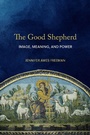
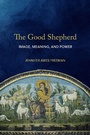
The Good Shepherd: Image, Meaning, and Power traces the visual and textual depictions of the Good Shepherd motif from its early iterations as a potent symbol of kingship, through its reimagining in biblical figures, such as the shepherd-king David, and onward to the shepherds of Greco-Roman literature. Jennifer Awes Freeman reveals that the figure of the Good Shepherd never became humble or docile but always carried connotations of empire, divinity, and defensive violence even within varied sociopolitical contexts. The early Christian invocation of the Good Shepherd was not simply anti-imperial but relied on a complex set of associations that included king, priest, pastor, and sacrificial victim-even as it subverted those meanings in the figure of Jesus, both shepherd and sacrificial lamb. The concept of the Good Shepherd continued to prove useful for early medieval rulers, such as Charlemagne, but its imperial references waned in the later Middle Ages as it became more exclusively applied to church leaders.
Drawing on a range of sources including literature, theological treatises, and political texts, as well as sculpture, mosaics, and manuscript illuminations, The Good Shepherd offers a significant contribution as the first comprehensive study of the long history of the Good Shepherd motif. It also engages the flexible and multivalent abilities of visual and textual symbols to convey multiple meanings in religious and political contexts.
The Good Shepherd: Image, Meaning, and Power traces the visual and textual depictions of the Good Shepherd motif from its early iterations as a potent symbol of kingship, through its reimagining in biblical figures, such as the shepherd-king David, and onward to the shepherds of Greco-Roman literature. Jennifer Awes Freeman reveals that the figure of the Good Shepherd never became humble or docile but always carried connotations of empire, divinity, and defensive violence even within varied sociopolitical contexts. The early Christian invocation of the Good Shepherd was not simply anti-imperial but relied on a complex set of associations that included king, priest, pastor, and sacrificial victim-even as it subverted those meanings in the figure of Jesus, both shepherd and sacrificial lamb. The concept of the Good Shepherd continued to prove useful for early medieval rulers, such as Charlemagne, but its imperial references waned in the later Middle Ages as it became more exclusively applied to church leaders.
Drawing on a range of sources including literature, theological treatises, and political texts, as well as sculpture, mosaics, and manuscript illuminations, The Good Shepherd offers a significant contribution as the first comprehensive study of the long history of the Good Shepherd motif. It also engages the flexible and multivalent abilities of visual and textual symbols to convey multiple meanings in religious and political contexts.
More details
Language
English
Place of publication
Waco
United States
Target group
Professional and scholarly
Illustrations
25 b&w photos, 6 b&w illustrations, 8 colour plates
Dimensions
Height: 229 mm
Width: 152 mm
Thickness: 22 mm
Weight
486 gr
ISBN-13
978-1-4813-1537-1 (9781481315371)
Copyright in bibliographic data and cover images is held by Nielsen Book Services Limited or by the publishers or by their respective licensors: all rights reserved.
Schweitzer Classification
Other editions
Additional editions
E-Book
02/2022
Baylor University Press
€43.99
Available for download
E-Book
10/2021
Baylor University Press
€43.99
Available for download
Person
Jennifer Awes Freeman is Assistant Professor and Program Director of Arts and Theology at United Theological Seminary of the Twin Cities.
Content
1. "The Shepherd Who Brings Peace": Shepherd-Kingship in the Ancient Near East
2. "Shepherd of the People": Divinity and Violence in the Greco-Roman World
3. The Shepherd-Victim as Lawgiver: The Good Shepherd in the Early Church
4. Pastor Francorum: Church and State in the Early Middle Ages
Conclusion
2. "Shepherd of the People": Divinity and Violence in the Greco-Roman World
3. The Shepherd-Victim as Lawgiver: The Good Shepherd in the Early Church
4. Pastor Francorum: Church and State in the Early Middle Ages
Conclusion