


Fundamentals of Machine Learning for Life Sciences
A Simple, Step-by-Step Approach with Examples in R
1st Edition
Published on 11. May 2026
Book
Hardback
358 pages
978-1-041-27556-5 (ISBN)
Description
Machine learning touches our lives in quiet and remarkable ways. It helps doctors detect illnesses sooner by recognizing subtle patterns in scans and helping them make sense of medical data with speed, judgment, and care. It helps us care for our fields and forests by tracking changes that unfold over time. It helps us study the weather with a memory far longer than our own, and notices small signs that equipment may soon need attention. And when we find ourselves in unfamiliar places, it helps us translate words, find our bearings, and discover new corners to explore. And yet, even as it becomes part of daily life, its inner workings can still feel distant when you first encounter them. Fundamentals of Machine Learning aims to bring it within reach.
This book offers a clear and steady introduction to how machines learn from data. It explains how models begin to understand, decide, improve, and sometimes falter. Ideas build gradually, one upon another, supported by real examples and datasets in R. The focus is insight over jargon, clarity over complexity. As these ideas become familiar, they also hold the promise of supporting the works of scientists, engineers, and students - by opening new pathways of exploration.
Inside the Book
* How learning algorithms discover patterns
* Supervised, unsupervised, and other ways machines learn
* Regression, decision trees, neural networks, and more
* Working with data and understanding results
* Ethics, fairness, and responsible use
Warm, practical, and approachable, Fundamentals of Machine Learning encourages readers to build confidence step by step, to make sense of new ideas in their own time, and to discover how understanding machine learning can enrich the way we work, learn, and see the world.
This book offers a clear and steady introduction to how machines learn from data. It explains how models begin to understand, decide, improve, and sometimes falter. Ideas build gradually, one upon another, supported by real examples and datasets in R. The focus is insight over jargon, clarity over complexity. As these ideas become familiar, they also hold the promise of supporting the works of scientists, engineers, and students - by opening new pathways of exploration.
Inside the Book
* How learning algorithms discover patterns
* Supervised, unsupervised, and other ways machines learn
* Regression, decision trees, neural networks, and more
* Working with data and understanding results
* Ethics, fairness, and responsible use
Warm, practical, and approachable, Fundamentals of Machine Learning encourages readers to build confidence step by step, to make sense of new ideas in their own time, and to discover how understanding machine learning can enrich the way we work, learn, and see the world.
More details
Series
Language
English
Place of publication
London
United Kingdom
Publishing group
Taylor & Francis Ltd
Target group
College/higher education
Professional and scholarly
Postgraduate and Professional Reference
Illustrations
8 farbige Abbildungen, 17 s/w Zeichnungen, 8 farbige Zeichnungen, 4 s/w Tabellen, 17 s/w Abbildungen
4 Tables, black and white; 8 Line drawings, color; 17 Line drawings, black and white; 8 Illustrations, color; 17 Illustrations, black and white
Dimensions
Height: 234 mm
Width: 156 mm
Weight
860 gr
ISBN-13
978-1-041-27556-5 (9781041275565)
Copyright in bibliographic data is held by Nielsen Book Services Limited or its licensors: all rights reserved.
Schweitzer Classification
Other editions
Additional editions
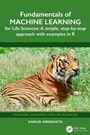
Ankur Awadhiya
Fundamentals of Machine Learning for Life Sciences
A Simple, Step-by-Step Approach with Examples in R
E-Book
05/2026
1st Edition
CRC Press
€69.99
Available for download
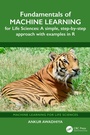
Ankur Awadhiya
Fundamentals of Machine Learning for Life Sciences
A Simple, Step-by-Step Approach with Examples in R
E-Book
05/2026
1st Edition
CRC Press
€69.99
Available for download
Person
Dr. Ankur Awadhiya (b. 1987) is an officer of the Indian Forest Service and an en-gineer by training. He received his B.Tech and Ph.D. from IIT Kanpur, earned his AIGNFA (Master's in Forestry) from the Indira Gandhi National Forest Academy, and completed an Honours Post Graduate Diploma in Advanced Wildlife Management from the Wildlife Institute of India.
He has pursued advanced specializations in Artificial Intelligence from Oxford, Mind and Decision Making from Cambridge, and Applied Machine Learning from Johns Hopkins. He also holds professional certifications in Data Science, Com-puter Science, and Artificial Intelligence from Harvard, along with a MicroMasters in Data, Economics, and Development Policy from MIT.
As Deputy Director at the Forest Survey of India, Dr. Awadhiya works at the inter-section of technology and ecology, integrating Artificial Intelligence and Machine Learning into natural resource monitoring and management. His interests span biodiversity conservation, forest management, and scientific research. A prolific writer, he has over fifty publications and holds two patents.
Dr. Awadhiya is the recipient of several prestigious honors, including the NTSE Scholarship, KVPY Fellowship, Vanyaprani Sanrakshan Puraskar, Shri P. Srinivas Memorial Prize, K. P. Sagriya Shreshta Vaniki Puraskar, and the S. K. Seth Prize. Beyond his professional life, he enjoys teaching, photography, painting, filmmak-ing, and creative writing.
He has pursued advanced specializations in Artificial Intelligence from Oxford, Mind and Decision Making from Cambridge, and Applied Machine Learning from Johns Hopkins. He also holds professional certifications in Data Science, Com-puter Science, and Artificial Intelligence from Harvard, along with a MicroMasters in Data, Economics, and Development Policy from MIT.
As Deputy Director at the Forest Survey of India, Dr. Awadhiya works at the inter-section of technology and ecology, integrating Artificial Intelligence and Machine Learning into natural resource monitoring and management. His interests span biodiversity conservation, forest management, and scientific research. A prolific writer, he has over fifty publications and holds two patents.
Dr. Awadhiya is the recipient of several prestigious honors, including the NTSE Scholarship, KVPY Fellowship, Vanyaprani Sanrakshan Puraskar, Shri P. Srinivas Memorial Prize, K. P. Sagriya Shreshta Vaniki Puraskar, and the S. K. Seth Prize. Beyond his professional life, he enjoys teaching, photography, painting, filmmak-ing, and creative writing.
Content
1 What is machine learning? 2 Basic setup 3 Machine learning in practice 4 Linear regression 5 Polynomial regression 6 Logistic regression 7 K-Nearest Neighbors 8 Support Vector Machines 9 Decision trees and forests 10 Neural networks and deep learning 11 What to do next? 12 References 13 Index