


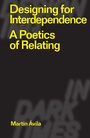
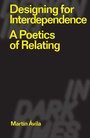
Designing for Interdependence
A Poetics of Relating
Published on 20. October 2022
Book
Paperback/Softback
192 pages
978-1-350-33738-1 (ISBN)
Description
Challenging the dominant design paradigm that centres humanity in its practice, Designing for Interdependence puts forward an ecocentric mode of designing that privileges a harmonious relationship between all life forms that share our planet. This book is about the practice of designing and design's capacity to relate (or not) to beings of all kinds, human and others, in ways that are life-affirming.
Sensitive to power differentials and the responsibility that this entails, Martin Avila develops the notion of alter-natives, a concept that exposes the alterity of artificial things and the potential of these things to participate in the sustainment of natural environments. He proposes a design practice that encompasses humans, artificial things and other-than-human species in a 'poetics of relating', and provides methods that support the rewilding necessary for maintaining cultural and biological diversity and the stabilization of planetary dynamics. The book features real-life project case studies that illustrate some of the political-ecological implications of an ecocentric paradigm, which can help us to imagine alternative modes of relating to local environments and alternative modes of inter-species cohabitation.
Avoiding dualistic thinking and the dichotomies harmful-benefit, construction-destruction, natural-artificial and life-death, Avila pursues the work of caring for how our mattering through design can become constructive in creating more-than-human ecologies.
Sensitive to power differentials and the responsibility that this entails, Martin Avila develops the notion of alter-natives, a concept that exposes the alterity of artificial things and the potential of these things to participate in the sustainment of natural environments. He proposes a design practice that encompasses humans, artificial things and other-than-human species in a 'poetics of relating', and provides methods that support the rewilding necessary for maintaining cultural and biological diversity and the stabilization of planetary dynamics. The book features real-life project case studies that illustrate some of the political-ecological implications of an ecocentric paradigm, which can help us to imagine alternative modes of relating to local environments and alternative modes of inter-species cohabitation.
Avoiding dualistic thinking and the dichotomies harmful-benefit, construction-destruction, natural-artificial and life-death, Avila pursues the work of caring for how our mattering through design can become constructive in creating more-than-human ecologies.
Reviews / Votes
The book's greatest strength is its insistence that more-than human beings be taken seriously as co-habitants of human habitations. But instead of simply making the case for his thesis in words, the author has practiced and built experiments in creating interspecies co-habitations. In this original book, Avila does not romanticize or demonize interspecies relations, but treats them with the nuance they deserve, giving due respect to the complexities of our relations, our attractions, our revulsions. -- Kriti Sharma, California Institute of Technology, USAMore details
Series
Language
English
Place of publication
London
United Kingdom
Publishing group
Bloomsbury Publishing PLC
Target group
College/higher education
Illustrations
41 bw illus
Dimensions
Height: 193 mm
Width: 125 mm
Thickness: 11 mm
Weight
298 gr
ISBN-13
978-1-350-33738-1 (9781350337381)
Copyright in bibliographic data and cover images is held by Nielsen Book Services Limited or by the publishers or by their respective licensors: all rights reserved.
Schweitzer Classification
Other editions
Additional editions
E-Book
09/2022
1st Edition
Bloomsbury Visual Arts
€19.99
Available for download
E-Book
09/2022
1st Edition
Bloomsbury Visual Arts
€19.99
Available for download
Person
Martin Avila is a designer, researcher, and Professor of Design at Konstfack University of Arts, Crafts and Design in Stockholm, Sweden. Martin's postdoctoral project Symbiotic Tactics (2013-2016) was the first of its kind to be financed by the Swedish Research Council. His research is design-driven and addresses forms of interspecies cohabitation.
Content
List of Figures
Foreword, Andreas Weber (Bard College Berlin, Germany)
Acknowledgements
Introduction: Bio-centric?
1. Poetics of Relating
2. Responding
3. Alter-natives
4. (De)signing Alter-natives
As a Mode of Closing: Encounters
Bibliography
Index
Foreword, Andreas Weber (Bard College Berlin, Germany)
Acknowledgements
Introduction: Bio-centric?
1. Poetics of Relating
2. Responding
3. Alter-natives
4. (De)signing Alter-natives
As a Mode of Closing: Encounters
Bibliography
Index